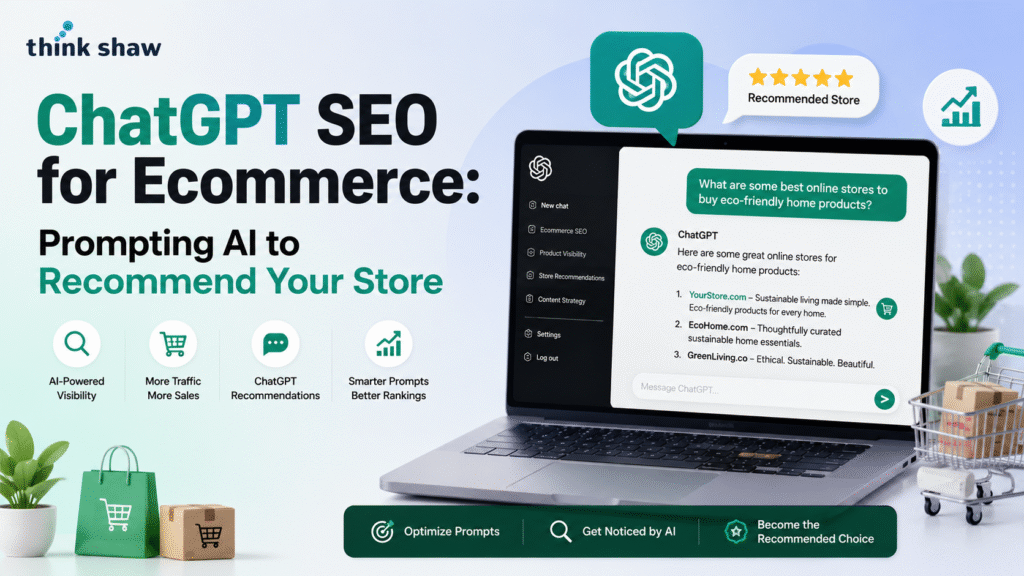
AI-driven discovery is changing how people shop online. Instead of scrolling through pages of search results, many buyers now ask conversational tools what to buy, which brand to trust, and where to shop first. For ecommerce businesses, that shift means visibility is no longer limited to traditional rankings. It also depends on whether your store content is clear, credible, structured, and useful enough for AI systems like ChatGPT to interpret and surface.
In this blog, we’ll explore how ChatGPT SEO for ecommerce goes beyond keywords to include product clarity, intent-led content, structured data, trust signals, and prompt-friendly formatting.
Summary: ChatGPT SEO for Ecommerce
|
What Is ChatGPT SEO for Ecommerce?
ChatGPT SEO for ecommerce is the practice of optimizing your store’s product pages, supporting content, and structured data so AI tools can better understand, extract, and recommend your products in conversational search experiences. It builds on traditional conversational SEO but puts more emphasis on clear product details, question-based content, internal linking, reviews, and schema markup that help AI systems interpret buyer intent and store credibility.
Why AI Recommendations Matter for Online Stores?
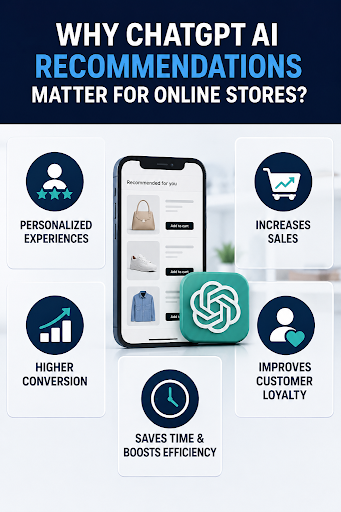
ChatGPT AI recommendations help online stores deliver personalized shopping experiences by understanding customer preferences, browsing behavior, and purchase history. Instead of showing the same products to everyone, AI suggests the most relevant items, making it easier for shoppers to find what they need. This increases engagement, improves customer satisfaction, and builds loyalty. Personalized recommendations also boost conversion rates and average order value by encouraging additional purchases. For businesses, AI automates product discovery, saves time, and enhances marketing effectiveness. As online competition grows, ChatGPT-powered AI shopping agents give stores a significant advantage by creating smarter, faster, and more customer-focused shopping experiences.
How ChatGPT Chooses Which Stores to Mention?
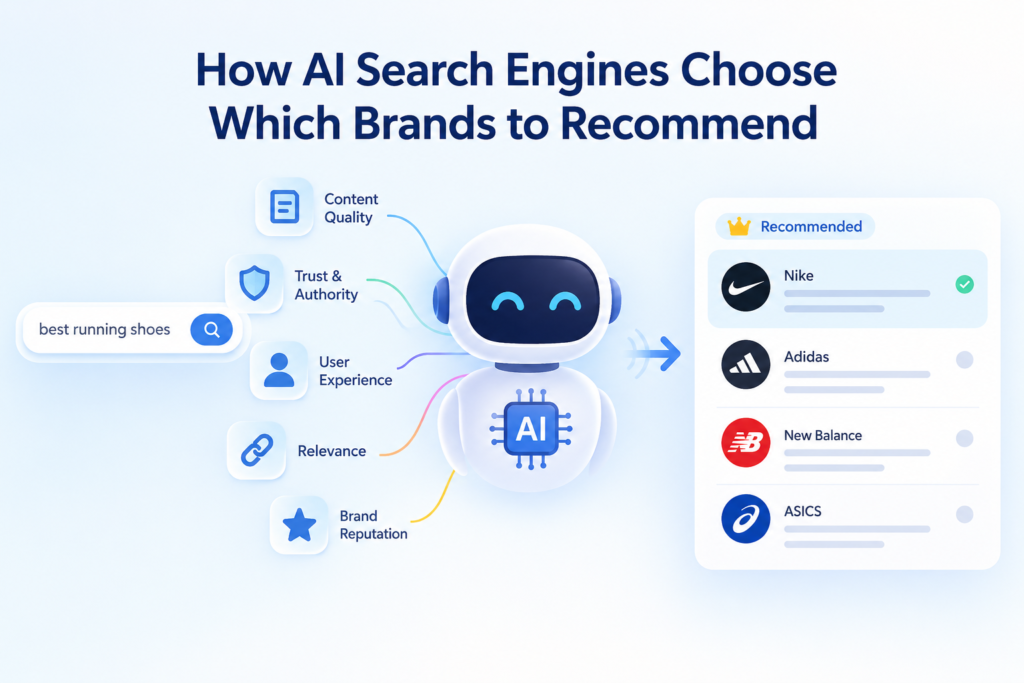
ChatGPT for ecommerce tends to mention stores that are easiest to understand, trust, and reuse in a helpful answer. When browsing is involved, source selection often reflects search intent, keyword relevance, recency, credibility, and trustworthiness, with a stronger preference for clear, well-structured, and authoritative pages. It also favors content that directly answers buyer questions through headings, FAQs, transparent policies, and detailed product information. In broader brand recall, repeated associations matter too: stores are more likely to be surfaced when they consistently appear across the web with clear category relevance, reliable descriptions, and recognizable expertise signals that reduce ambiguity for the model.
How to Make Your Ecommerce Store Easier for AI to Recommend?
Here are some strategies to make your ecommerce store easier for ChatGPT and similar AI tools to recommend:
Create Product Pages With Complete, Clear Information
ChatGPT and similar AI‑driven product discovery tools explain exactly what the product is, who it is for, and why it matters. Make sure every product page includes a descriptive title, product overview, key specifications, use cases, pricing context, shipping details, return information, and answers to common customer questions. This gives AI systems enough context to understand your products and match them to relevant buyer queries.
Write Content Around Real Buyer Questions
To improve AI visibility, build content around the actual prompts shoppers use when researching products. That means targeting conversational queries such as “best office chair for back pain” or “affordable skincare for sensitive skin,” then turning those into category copy, blog content, FAQs, and comparison pages. This approach aligns your store with natural-language search behavior and helps AI systems connect your pages to specific purchase intent.
Use Structured Data to Help AI Interpret Your Pages
Schema markup helps search engines and AI systems understand your store content more accurately. Add structured data such as Product, Review, FAQ, Offer, and Article schema where relevant so machines can identify key information like price, availability, ratings, and product attributes. When your content is easier to interpret technically, it becomes easier to include in AI-generated product suggestions and search summaries.
Publish Supporting Content Beyond Product Pages
Your product pages alone are not enough to build strong AI visibility. Create supporting content such as buying guides, comparison articles, how-to posts, use-case pages, and “best for” lists that answer customer questions at different stages of the buying journey. This broader content ecosystem helps establish topical authority and gives AI tools more reasons to recognize your brand as a relevant source.
Strengthen Internal Linking Across Your Store
Internal linking helps connect your informational and commercial content into a clear content network. Link blog posts to related category pages, category pages to products, and comparison content to high-intent landing pages using natural anchor text. This improves discoverability, distributes relevance across your site, and helps AI systems understand how your content fits together.
Keep Important Content Crawlable and Accessible
Even well-written content can be overlooked if it is hard for search systems to access or understand. Make sure your important pages are indexable, included in your XML sitemap, free from broken links, and not dependent on hidden content or image-only text for essential product details. Fast-loading, technically clean pages are easier for both search engines and AI-powered systems to process.
Build Trust Signals Across the Entire Store
AI tools are more likely to rely on stores that appear credible and well-maintained. Strengthen trust by publishing accurate product information, showcasing authentic customer reviews, displaying clear shipping and return policies, and maintaining a consistent brand presence across your site. You should also review AI-generated copy carefully so it reflects human expertise instead of sounding vague, repetitive, or generic.
Earn Mentions From Reputable Third-Party Sources
Your store’s visibility does not depend only on what is published on your own website. Mentions in trusted publications, review platforms, creator roundups, niche directories, and partner websites can reinforce brand credibility and help AI systems recognize your store as a known entity. Strong off-site signals can improve the likelihood that your store is considered a trustworthy recommendation.
Test How Your Store Appears in AI-Led Discovery
A practical way to improve ChatGPT SEO is to test the same prompts your customers would use. Search for commercial queries related to your products, review whether your brand appears, and identify gaps in your page structure, supporting content, or trust signals. Repeating this process helps you refine your content based on how AI discovery is actually evolving.
Conclusion
As AI-led shopping continues to evolve, brands that adapt early will be better positioned to capture attention before competitors do. The next stage of ecommerce growth will depend on how effectively your store communicates value across emerging discovery experiences. If you want expert support with AI-focused ecommerce SEO, content strategy, and on-page optimization, Think Shaw can help.
Contact us today to build a store that earns smarter visibility and stronger results.
FAQs About ChatGPT SEO for Ecommerce
Does ChatGPT use product feeds for shopping recommendations?
In some AI-shopping environments, product feeds can support visibility by supplying updated product details such as pricing, availability, and attributes in a machine-readable format.
Do images matter for ChatGPT SEO?
Yes, indirectly. Clear image alt text, descriptive file names, and surrounding context help search systems understand product visuals and improve overall content accessibility.
Should ecommerce brands create content for long-tail prompts?
Yes. Long-tail queries often reflect stronger buying intent and more specific needs, which makes them valuable for attracting qualified traffic and matching conversational AI searches.
Does brand sentiment affect AI recommendations?
Yes, it can. Consistent positive reviews, better customer experiences, and favorable mentions across the web may strengthen how trustworthy your brand appears.
What is the biggest mistake brands make with AI-focused ecommerce SEO?
Many brands rely on automation without editorial review. Publishing generic, inaccurate, or thin AI-generated content can weaken trust, usability, and recommendation potential.