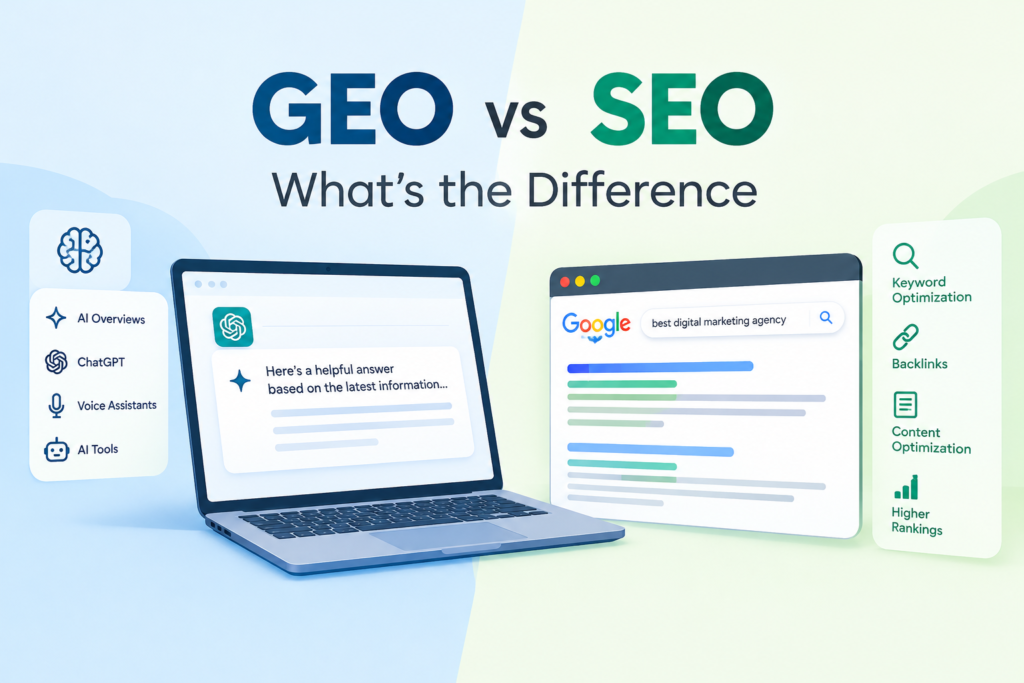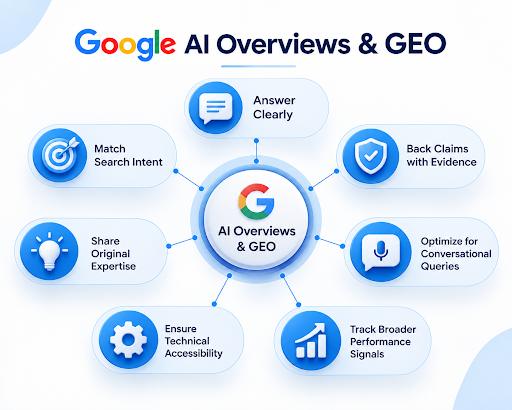
Google AI Overviews have changed how users discover information by generating concise answers from multiple sources rather than relying solely on traditional organic listings. This makes optimizing content for AI Overviews less about adding isolated SEO tactics and more about making information easy for search systems to retrieve, interpret, verify, and cite. Content should address the search intent directly, use descriptive headings and clear answer-focused passages, establish topical depth through relevant supporting information, and demonstrate expertise through accurate, original evidence. Technical foundations also matter: pages must be crawlable, indexable, eligible for Search snippets, and supported by logical internal linking and accessible text. Google confirms that there are no special AI Overview requirements or dedicated schema; established SEO fundamentals remain the foundation for AI-search visibility.
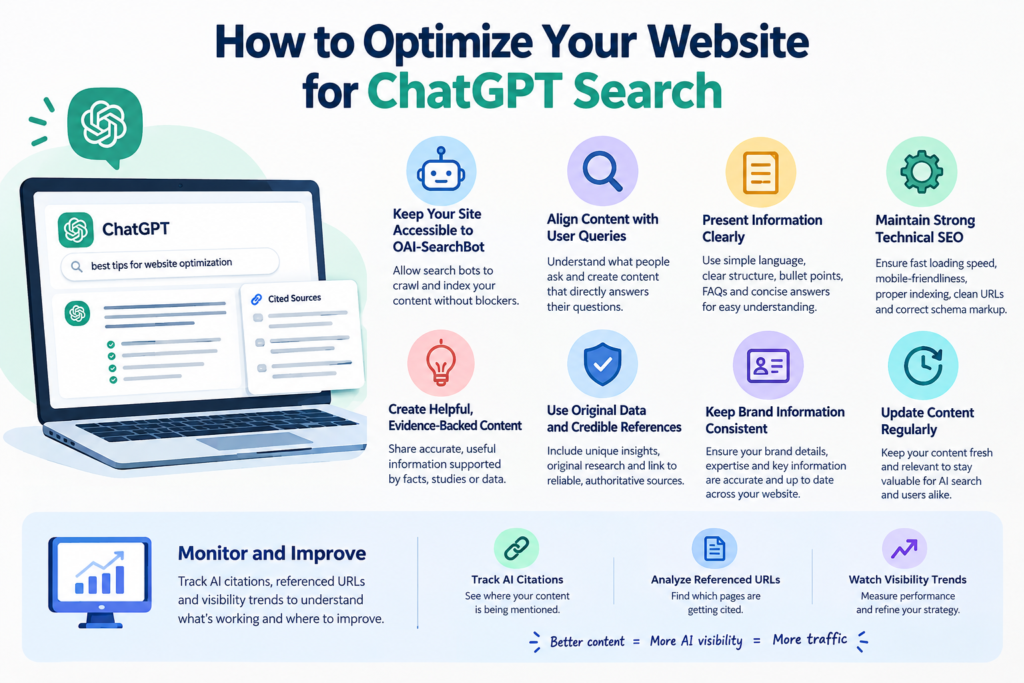
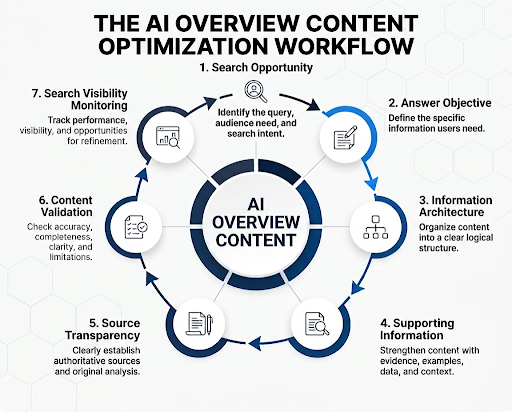
AI Overview Optimization at a GlanceAI Overview optimization requires content that directly addresses search intent, provides comprehensive topic coverage, and supports factual claims with reliable evidence. Clear question-based structures, descriptive headings, original insights, and authoritative sources help make information easier to interpret and retrieve. A continuous workflow brings together search opportunities, answer objectives, information architecture, supporting evidence, source transparency, validation, and visibility monitoring to strengthen content for AI-powered search experiences. |
Understand What AI Overviews Look for in Content
Clear Answers to the Core Search Intent
AI Overviews need content that directly resolves the query rather than forcing interpretation across lengthy introductions. Structure the primary answer near the relevant heading, then support it with conditions, exceptions, examples, and evidence. This creates a clear semantic relationship between the user’s question and the page’s substantive answer, improving information retrieval.
Semantically Complete Topic Coverage
Cover the entities, attributes, relationships, and qualifying factors that genuinely define the topic instead of repeating the primary keyword. For example, a page about optimizing content should address information structure, sourcing, authorship, content originality, and other concepts that genuinely define the topic. This establishes topical completeness without relying on keyword-density manipulation.
Evidence That Supports Factual Claims
AI-generated answers can synthesize information from multiple sources, making factual reliability particularly important. Support consequential claims with authoritative primary or expert sources, distinguish established facts from interpretation, and provide context around statistics, dates, methodologies, or recommendations. Google Search Central emphasizes original research and analysis, clear sourcing, demonstrated expertise, and factual accuracy when evaluating helpful, reliable content.
Original Information Beyond Commodity Content
Pages that merely paraphrase information already available across search results offer limited differentiation. Add first-hand observations, original analysis, proprietary data, documented processes, comparisons, examples, or expert interpretation where appropriate. Google explicitly encourages original information, research, analysis, and substantial additional value rather than content that simply rewrites other sources.
Make Key Information Easy to Extract and Interpret
Present important information in clearly defined sections, concise paragraphs, descriptive headings, and logically ordered explanations. Place essential facts close to the concepts they explain rather than separating them across unrelated sections. This structure helps search systems identify individual claims, understand their context, and accurately synthesize relevant information when generating AI Overview responses.
Structure Content Around Questions AI Search Can Answer Directly
Map Primary Questions to Dedicated Content Sections
Identify the distinct questions implied by the main topic and assign each a dedicated section rather than answering several intents within one paragraph. For example, separate “what,” “why,” “how,” “when,” and “which” questions when they require different reasoning. This creates clearer question-to-answer relationships for retrieval and synthesis.
Use Question-Specific Headings With Immediate Answers
Write headings that correspond to recognizable user questions, then answer that question immediately beneath the heading before expanding into supporting detail. Avoid vague headings such as “Key Considerations” when the actual intent is “What factors affect AI Overview visibility?” This gives the section a precise semantic role and reduces interpretive distance.
Build Follow-Up Questions Into a Logical Sequence
Organize related questions according to the user’s likely information journey rather than treating them as disconnected FAQs. A technical sequence might move from definition to mechanism, implementation, limitations, and troubleshooting. This creates contextual continuity between sections while allowing individual questions to remain independently understandable during search retrieval.
Address Query Variations Without Creating Separate Pages
Consolidate closely related formulations of the same underlying question within one authoritative section instead of producing multiple near-duplicate pages. For example, “How does X work?” and “What is the process behind X?” may share one answer when their intent is equivalent. This reduces content fragmentation while preserving useful query coverage.
Match Question Type to the Appropriate Answer Structure
The form of an answer should reflect the question being asked. Use ordered steps for procedural queries, criteria or decision factors for evaluation queries, comparisons for “X vs. Y” queries, and concise explanations for definitional queries. This alignment reduces unnecessary interpretation and makes the requested information easier to retrieve and synthesize.
Build Topic Depth With Supporting Evidence and Related Context
Connect Claims to Authoritative Source Material
Support important statements with sources that have direct expertise or primary responsibility for the subject. Prefer original research, government publications, technical documentation, regulatory material, or recognised industry standards over secondary summaries. Link the specific claim to its supporting source so readers and search systems can distinguish documented information from interpretation or unsupported assertions.
Explain the Mechanism Behind Important Claims
Go beyond stating that something works by explaining the causal mechanism responsible for the outcome. Where technically appropriate, describe the relevant process, inputs, dependencies, and resulting effects. Mechanistic explanations add substantive context because they show why a conclusion follows rather than presenting isolated facts that provide little explanatory depth.
Add Quantitative Context Where It Changes Interpretation
Numbers become more meaningful when accompanied by their measurement context. When using statistics, include the relevant timeframe, population or dataset, measurement unit, methodology, and comparison point where available. This prevents figures from being interpreted without necessary context and allows readers to understand whether a reported change, threshold, or percentage is actually significant.
Show the Strength and Certainty of Evidence
Indicate how strongly available evidence supports each claim by distinguishing established findings, consistent research, preliminary observations, and professional interpretation. Avoid presenting correlation as causation or limited studies as universal conclusions. Where evidence is uncertain or mixed, state those limitations explicitly. This gives AI systems clearer contextual signals when synthesizing information.
Address Relevant Limitations and Boundary Conditions
Topic depth requires explaining where a finding, recommendation, or method may not apply. Identify important constraints such as dataset limitations, environmental conditions, technical prerequisites, population differences, or exceptions that can change the outcome. Boundary conditions prevent broad statements from being interpreted universally and provide the contextual precision needed for technically reliable content.
The AI Overview Content Optimization Workflow
Optimizing content for AI Overviews works best as a structured, continuous process rather than a one-time task. The workflow begins by identifying the right search opportunity and defining the answer users need, then moves through content structure, supporting information, source transparency, and validation. After publication, monitoring search visibility provides insights that can guide further refinement and strengthen the content over time.
Conclusion
AI search is creating new opportunities for businesses to strengthen their online visibility and connect with audiences at the moment they are looking for answers. If your website needs a strategy that goes beyond traditional rankings, Think Shaw can help turn your search presence into a stronger digital growth channel. With SEO expertise, data-driven strategy, and experience across multiple digital marketing disciplines, Think Shaw can help businesses develop a more competitive online presence and build a search strategy aligned with their long-term growth objectives.
| Turn AI search opportunities into meaningful digital growth with Think Shaw’s strategic expertise, tailored to your brand’s goals and audience! |
FAQ’s About Optimizing Content for AI Overviews
Do AI Overviews Require Special Schema Markup?
No. Google does not require dedicated schema for AI Overviews. Standard structured data can help search engines understand eligible page content when implemented correctly, but it does not guarantee inclusion or preferential placement in AI-generated results.
Can AI-Generated Content Appear in Google AI Overviews?
AI-assisted content can appear when it provides original, accurate, useful information and follows Google’s quality guidelines. The use of AI itself does not guarantee or prevent visibility; the content’s value, accuracy, and compliance remain important.
How Does Google Select Sources for AI Overviews?
Google may generate an AI Overview using information from multiple web sources that its systems determine can help answer the query. Inclusion is not guaranteed, and traditional organic ranking does not automatically ensure citation in an Overview.
Can a Website Appear in an AI Overview Without Ranking First?
Yes. AI Overviews can reference multiple sources rather than relying exclusively on the top-ranking organic result. Therefore, appearing first organically is not a prerequisite for being considered a supporting source within an AI-generated response.
How Can You Check Whether Your Content Appears in AI Overviews?
Search important target queries while signed into the relevant Google environment and monitor whether your pages are cited. Search Console can provide broader Search performance data, but it does not provide a dedicated AI Overview ranking report.