Global ecommerce is surging toward $6.88 trillion in 2026, and your Shopify store is sitting right in the middle of that opportunity. But here’s the uncomfortable truth: Most store owners are leaving serious money on the table simply because SEO sounds like a foreign language full of crawl budgets, canonical tags, and Core Web Vitals. Well, let’s burst this bubble, as you don’t need a computer science degree to get this right. In 2026, Shopify SEO has evolved beyond just keywords. Google now rewards stores that are fast, trustworthy, and genuinely helpful to real people. And with AI-powered search reshaping how shoppers discover products, showing up in the right place at the right time has never mattered more.
This Shopify SEO checklist breaks it all down in plain English, no jargon, no overwhelm, just clear steps that actually move the needle for your store.
Shopify SEO Essentials Overview 2026Successful Shopify SEO in 2026 depends on improving buyer-focused keywords, product content, collection pages, mobile usability, site speed, image optimization, structured data, and internal linking. Stores must also adapt to AI-driven search experiences, maintain clean URLs, manage duplicate content, and build trust through customer reviews. Consistent SEO tracking helps identify growth opportunities and improve visibility, traffic, and conversions while reducing dependence on paid advertising for long-term ecommerce success. |
What Is Shopify SEO in Simple Words?
Shopify SEO means improving your online store so search engines can easily understand, rank, and show your products to the right shoppers. When someone searches for “organic cotton baby clothes” or “best leather laptop bag,” SEO helps your Shopify product pages, collections, and blog content appear in those results. For store owners, this includes using the right keywords, writing clear product titles and descriptions, improving page speed, adding image alt text, creating helpful content, and making the store easy to navigate.
The goal is simple: bring more qualified visitors to your store without depending only on paid ads.
The 2026 Shopify SEO Checklist for Store Owners
Here is what to track when doing Shopify SEO for beginners:
Start with keyword research based on buyer intent
Do not choose keywords just because they have high search volume. In 2026, Shopify SEO works best when keywords match what shoppers actually want to do: compare, learn, or buy. For example, “best waterproof hiking shoes” shows stronger purchase intent than “shoes.” Shopify recommends using keyword research to understand what your audience searches for before optimizing product pages, collections, and blog content. Good keywords help search engines connect your store with shoppers who are already closer to buying. This is one of the most important ecommerce SEO basics because every successful optimization step starts with understanding search intent.
Optimize every product title and meta description
Your product title and meta description are often the first things shoppers see in Google results, so they must be clear, keyword-focused, and click-worthy. A good title should describe the product naturally, while the meta description should explain the benefit and encourage action. Shopify’s SEO guidance highlights titles and descriptions as key on-page elements for helping search engines understand store pages. This matters because better snippets can improve clicks, even when rankings stay the same.
Write unique product descriptions, not manufacturer copy
Many Shopify stores use the same product descriptions provided by suppliers, which can create duplicate or thin content across the web. Instead, write original descriptions that explain features, benefits, use cases, sizing, materials, care instructions, and FAQs. Shopify’s SEO resources emphasize useful page content as part of store optimization. Unique descriptions also build trust because shoppers get answers before they ask, which can support both rankings and conversions.
Make collection pages useful, not just product grids
Collection pages often rank better than individual products because they target broader buying searches like “women’s running shoes” or “organic skincare sets.” In 2026, a strong Shopify collection page should include a clear heading, short intro copy, filters, internal links, and helpful buying guidance. Current Shopify SEO guides recommend optimizing collection and category pages because they help organize products for both users and search engines. Treat collections like mini buying guides, not empty shelves.
Improve site speed and Core Web Vitals
A slow Shopify store can hurt both search visibility and sales because shoppers leave when pages take too long to load. Google’s page experience systems include Core Web Vitals, which measure loading speed, interactivity, and visual stability. Store owners can improve speed by compressing images, removing unused apps, using a lightweight theme, and avoiding heavy pop-ups. Faster pages create a smoother shopping experience, especially on mobile, where most ecommerce browsing happens. If your store has too many plugins slowing it down, review your Shopify apps for SEO and remove any tools that duplicate features or add unnecessary code.
Optimize images with compression and alt text
Shopify stores are image-heavy, so unoptimized images can slow pages and weaken SEO. Compress product images before uploading, use descriptive file names, and add alt text that explains the image naturally. Shopify SEO checklist includes image optimization because search engines use image signals to understand page content. Alt text also improves accessibility for users with screen readers. A simple example is “black leather laptop bag with front zipper,” not “IMG_4567.” Image optimization is a simple product page SEO win because better visuals, faster loading, and descriptive alt text all improve the shopping experience.
Keep URLs short, clean, and readable
Clean URLs help both shoppers and search engines understand what a page is about before opening it. A URL like /collections/men-running-shoes is clearer than a messy URL with random numbers or symbols. Shopify SEO best practices recommend readable, keyword-relevant URLs as part of technical and on-page optimization. For store owners, this is a simple but important habit: make URLs human-friendly, avoid unnecessary words, and do not change old URLs without redirects.
Add structured data for rich results
Structured data, also called schema markup, helps search engines understand details like product price, availability, ratings, reviews, and breadcrumbs. Many Shopify themes include some schema automatically, but store owners should still check that product pages show accurate information. Shopify SEO guides for 2026 continue to highlight schema because it can support rich results in search. Rich results do not guarantee higher rankings, but they can make your listing more useful and attractive.
Build internal links between products, collections, and blogs
Internal links guide shoppers through your store and help search engines discover important pages. For example, a blog about “how to choose running shoes” should link to your running shoe collection and relevant product pages. Shopify’s SEO resources recommend improving site structure and navigation as part of store optimization. This spreads authority across your site, reduces orphan pages, and helps customers move naturally from information to purchase.
Make your store mobile-first
Most shoppers browse and compare products on mobile, so your Shopify store must feel smooth on small screens. Buttons should be easy to tap, product images should load quickly, menus should be simple, and checkout should not feel cramped. Shopify SEO checklists for 2026 consistently include mobile usability and page experience as key ranking and conversion factors. If your mobile store is frustrating, better keywords alone will not save your traffic.
Optimize for AI search and answer engines
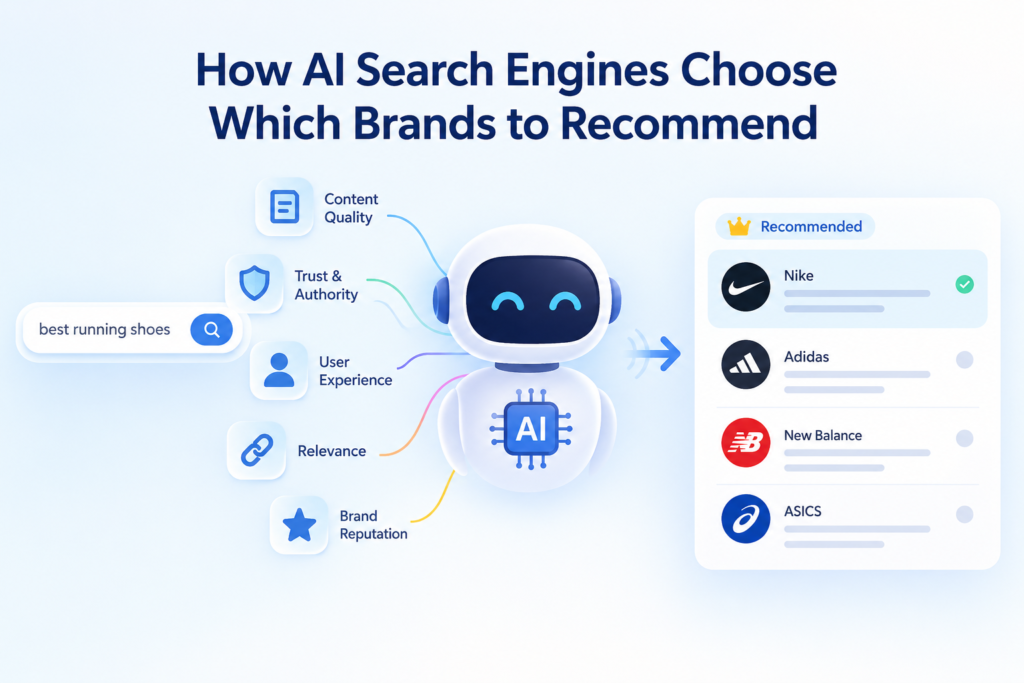
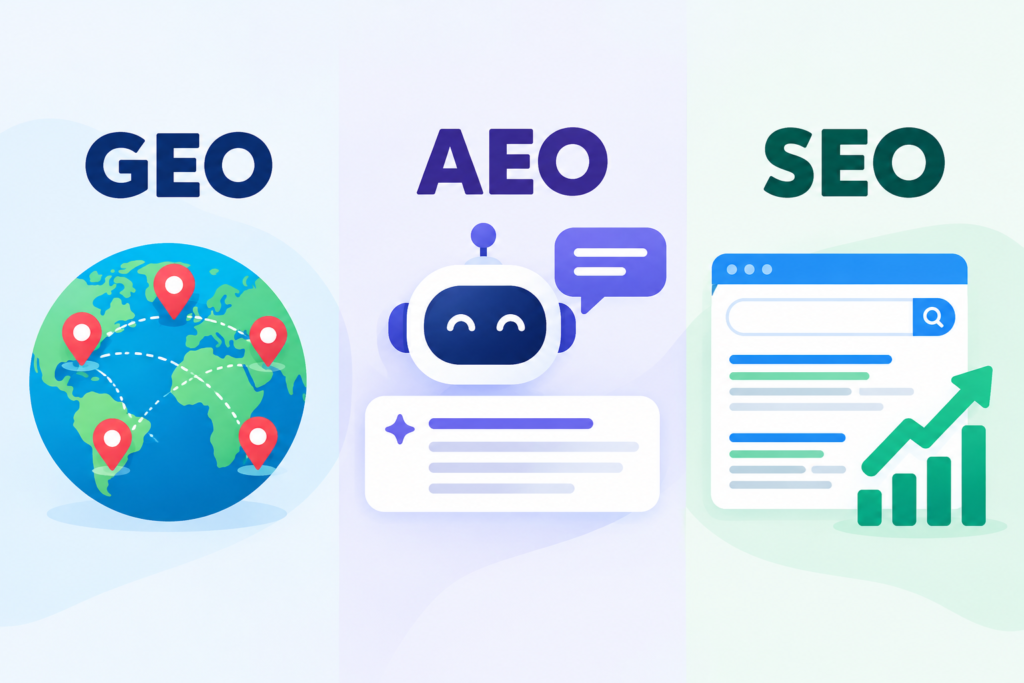
In 2026, shoppers are not only searching on Google; they are also asking AI tools for product suggestions, comparisons, and buying advice. To appear in these experiences, your content must be clear, structured, factual, and easy to extract. Recent Shopify SEO guides mention AI search as an emerging area for ecommerce visibility. Use concise FAQs, comparison tables, product specs, and direct answers so both search engines and AI systems can understand your store.
Collect and display genuine customer reviews
Reviews help shoppers trust your products because they show real customer experience. They also add fresh, user-generated content to product pages, including natural phrases customers use when describing fit, quality, shipping, or results. Shopify marketing and SEO guides highlight trust signals, reviews, and customer loyalty as important parts of ecommerce growth. For SEO, reviews can also support rich result eligibility when proper review markup is used.
Fix duplicate content and canonical issues
Shopify stores can create duplicate versions of pages through product variants, tags, filters, and collection paths. If search engines find too many similar URLs, they may struggle to choose the best one to rank. Shopify SEO guides for 2026 regularly mention canonical issues as a technical priority. Store owners do not need to code this manually, but they should audit duplicate pages, avoid copying content, and use SEO apps or expert help when needed.
Track SEO performance every month
SEO is not a one-time setup; it is an ongoing growth system. Store owners should track organic traffic, keyword rankings, indexed pages, top landing pages, conversion rate, and revenue from organic search. Shopify’s SEO campaign guidance recommends measuring performance so you can improve based on real data. Monthly tracking helps you see what is working, what needs fixing, and which pages deserve more content, links, or optimization.
Common Shopify SEO Mistakes to Avoid in 2026
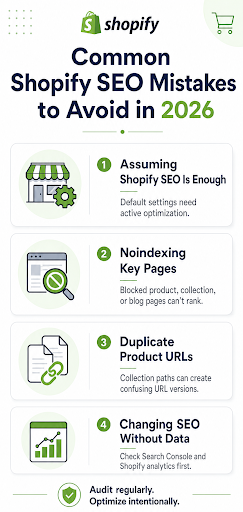
Before you start fixing Shopify SEO mistakes, it helps to know which issues can quietly hold your store back. Some problems are not obvious from the storefront, but they can affect how search engines crawl, understand, and rank your pages. The infographic below highlights four common mistakes store owners should watch for in 2026, especially if they want more organic traffic without relying only on paid ads.
Conclusion
As ecommerce competition grows, Shopify SEO is no longer optional for store owners who want consistent, long-term sales growth. Small improvements across your store, from faster pages to clearer content and stronger trust signals, can create a major impact over time. If managing SEO still feels overwhelming, partnering with experts can save time and prevent costly mistakes. Think Shaw helps Shopify brands simplify SEO with strategies built for real business growth. From Shopify SEO strategy and technical optimization to content marketing and performance-driven ecommerce solutions, we help brands build stronger online visibility without unnecessary complexity.
Ready to turn more searches into sales? Connect with Think Shaw today.
FAQs
Do Shopify apps help improve SEO performance?
Yes, SEO apps can help manage redirects, optimize images, add schema markup, fix broken links, and simplify technical SEO tasks for non-technical store owners.
What are backlinks, and why do Shopify stores need them?
Backlinks are links from other websites pointing to your store. They help build authority, trust, and credibility, which can improve search engine visibility.
Why is bounce rate important for Shopify stores?
A high bounce rate may signal poor user experience or irrelevant content. Better navigation, engaging pages, and faster loading speeds can encourage shoppers to stay longer.
Should I hire a Shopify SEO expert?
Hire an expert if organic traffic is flat, rankings are dropping, technical issues keep appearing, or you lack time to manage audits, content, and optimization consistently.
Does website security affect Shopify SEO?
Secure websites improve user trust and search performance. Shopify includes SSL certificates by default, helping stores maintain safer browsing and checkout experiences.