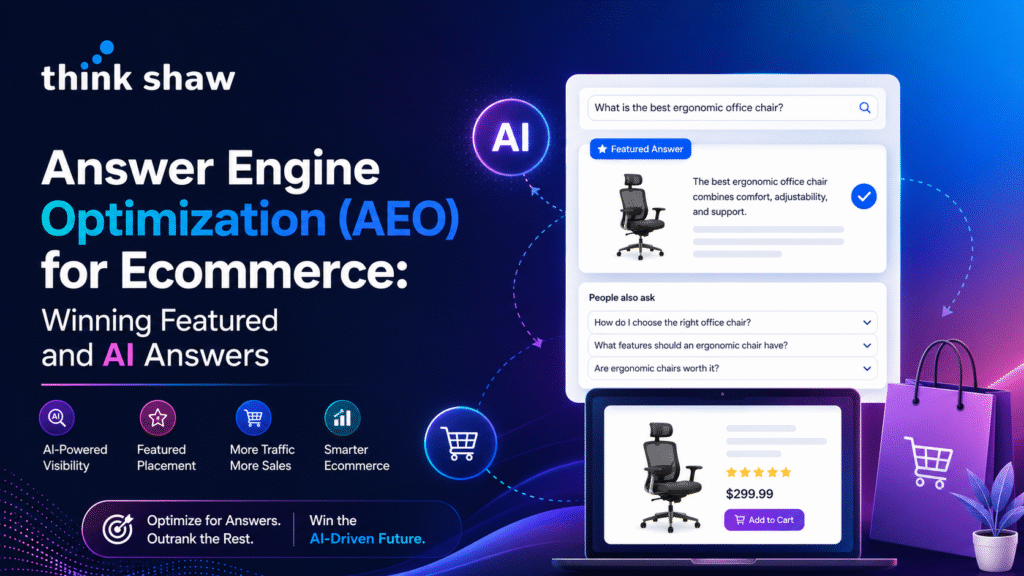
Answer Engine Optimization (AEO) is changing how ecommerce brands get discovered online, as shoppers now expect quick, reliable answers instead of scrolling through multiple search results. For online stores, that means it is no longer enough to only rank product and category pages; brands also need content that clearly answers common buying questions, comparisons, and product-specific concerns. This shift is especially important as featured snippets and AI-generated answers play a bigger role in how people research products before making a purchase.
In this blog, we will explore what E-commerce AEO means, why it matters for modern search visibility, and how brands can optimize their content to improve their chances of appearing in featured and AI-powered answers.
Ecommerce Answer Engine Optimization (AEO): Key TakeawayAnswer Engine Optimization AEO helps ecommerce brands improve visibility by making content easier for search engines and AI platforms to extract and present as direct answers. Success depends on understanding shopper intent, using question-led structure, optimizing product, category, and guide pages, strengthening E-E-A-T signals, and supporting content with schema, internal linking, and technical SEO. Together, these efforts help brands earn trust, capture high-intent traffic, and stand out in answer-driven search experiences. |
What Is Answer Engine Optimization AEO in Ecommerce?
E-commerce AEO means creating and structuring content so search engines and AI platforms can pull direct answers from your website instead of only showing it as a link. In Google’s terms, it helps your store appear in featured snippets, AI-generated answers, and voice search ecommerce results when shoppers ask product-related questions.
For example, if someone searches “What is the best laptop bag for travel?”, a well-optimized ecommerce guide or category page with a clear, concise answer, scannable headings, and useful details may be selected as the answer shown by Google or an AI tool. This makes AEO especially valuable for ecommerce brands competing for visibility and trust before the click.
Read Also: Ecommerce SEO and How It Works for Online Stores
Why AEO Matters for Ecommerce Brands Today?
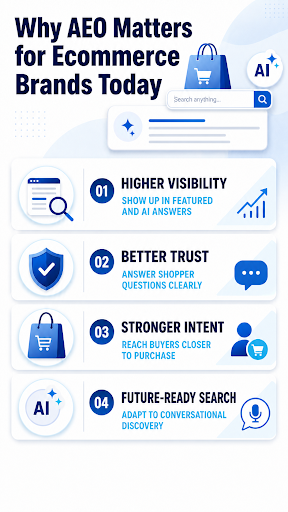
E-commerce AEO matters for brands because today’s shoppers often expect immediate, reliable answers while researching products, comparing options, and narrowing purchase decisions. As search engines increasingly surface featured snippets, AI-generated responses, and other answer-led results, brands that provide clear, well-structured, and trustworthy content can gain stronger visibility before a customer even reaches a product page. For ecommerce businesses, answer engine optimization creates an opportunity to build authority, improve discoverability, and connect with high-intent buyers earlier in the journey by answering the exact questions that influence purchase behavior.
How to Optimize Ecommerce Content for Featured and AI Answers?
To optimize ecommerce content for featured snippets for products and AI answers, brands need to make their pages easy for both users and search systems to understand, extract, and trust. E-commerce AEO involves:
Query intent
Start with question-based keyword research, because featured snippets and AI answers often appear for informational, comparison, and problem-solving searches rather than only transactional terms. Focus on real ecommerce questions such as
- “Which product is best for…,”
- “How does product A compare to product B?”
- “What size should I choose?”
- “Is this compatible with…”
because these reflect how shoppers research before buying. Prioritize queries that already trigger featured snippets or answer boxes, since those are proven opportunities where Google is already rewarding direct-answer formats.
Content structure
Use question-led headings and follow them immediately with a concise answer, ideally in the first few lines of the section, because direct placement improves extractability for snippets and AI-generated responses. Here’s how you can do that:
- Keep answer-first paragraphs short, specific, and unambiguous, then expand with supporting details, comparisons, or examples underneath.
- Break content into scannable chunks with clear H2s, H3s, bullet points, and tables, since structured formatting helps both users and answer engines process information quickly.
- Add FAQ schema sections to product pages, category pages, and buying guides so common shopper concerns are addressed in a format that is naturally aligned with answer-driven search.
Page types
The structure of the content also plays a major role. Pages should use clear headings that reflect common search queries, followed by short and direct answers near the top of each section. After the direct response, the content can expand with supporting details, examples, or comparisons. Optimize more than just product pages, because category pages, comparison pages, buying guides, and help content often perform better for question-led searches.
- On product pages, include direct information on sizing, materials, benefits, use cases, compatibility, shipping, returns, and care instructions, since these are common decision-stage questions users ask search engines and AI tools.
- On category and guide pages, include concise product summaries and clear comparison sections so the page can satisfy broader research intent before the user narrows down to a purchase.
This answer-first format makes it easier for search engines and AI systems to pull useful information while also improving readability for human visitors. Well-organized sections, bullet points, comparison tables, and FAQ blocks further strengthen the chances of visibility in answer-focused results.
Trust signals
Trust and accuracy are equally important. Featured snippets and AI-generated answers are more likely to pull from content that appears credible, specific, and well-maintained. Ecommerce brands should therefore
- Strengthen E-E-A-T by publishing accurate, up-to-date, first-party content with clear expertise signals, because answer engines favor trustworthy and authoritative information.
- Use authentic customer reviews, detailed Q&A, expert input, and transparent policy information to reinforce credibility and provide more usable language that AI systems can interpret.
- Make product details precise, including dimensions, pricing context, availability, and technical specifications, because vague or incomplete information is less useful for extractive answers.
Technical setup
Technical optimization should support the content strategy as well. Structured data, such as product and FAQ schema, can help search engines better understand page elements and important product information. Strong internal linking between product pages, guides, FAQs, and category pages also makes it easier for search systems to interpret the site’s topical depth. In addition, pages should remain crawlable, fast-loading, and properly indexed, since no content can earn answer visibility if search engines cannot access or interpret it efficiently.
For example, an ecommerce brand selling travel bags could create a category or guide page answering the question, “What is the best carry-on backpack for frequent travelers?” The page could begin with a short, direct answer, then include a comparison of top features, ideal use cases, size guidance, and FAQs about airline compatibility. This kind of structured, informative page gives search engines and AI systems clear, extractable information while also guiding shoppers toward a confident purchase decision.
Conclusion
AEO is no longer a future-focused tactic for ecommerce brands; it is becoming essential for winning visibility where modern purchase journeys now begin. By creating clear, structured, and trustworthy content, brands can improve their chances of appearing in featured snippets and AI-generated answers while guiding shoppers toward confident decisions. At Think Shaw, we help ecommerce businesses turn search shifts into growth opportunities with smarter content, SEO, and digital strategy services. Ready to make your brand the answer shoppers see first? Let us help you build an ecommerce content strategy that gets found, trusted, and chosen.
FAQs
Does AEO help ecommerce brands with zero-click searches?
Yes, AEO can improve visibility in zero-click environments by helping your content appear directly in snippets or AI answers, even when users do not immediately visit your site.
Can customer-generated content support AEO?
Yes, customer reviews, Q&A sections, and buyer feedback can reveal real search language and useful product concerns, which can strengthen answer-focused optimization opportunities.
How does voice search connect with ecommerce AEO?
Voice search often relies on concise, direct answers, so ecommerce content optimized for AEO is more likely to align with how voice assistants select responses.
Should ecommerce brands track AEO separately from SEO?
Yes, because snippet visibility, AI mentions, question-based impressions, and assisted conversions may reveal performance gains that standard ranking reports do not fully capture.
What is the biggest mistake ecommerce brands make with AEO?
A common mistake is publishing vague, keyword-heavy content instead of genuinely helpful answers that solve shopper questions with clarity, specificity, and credible supporting information.