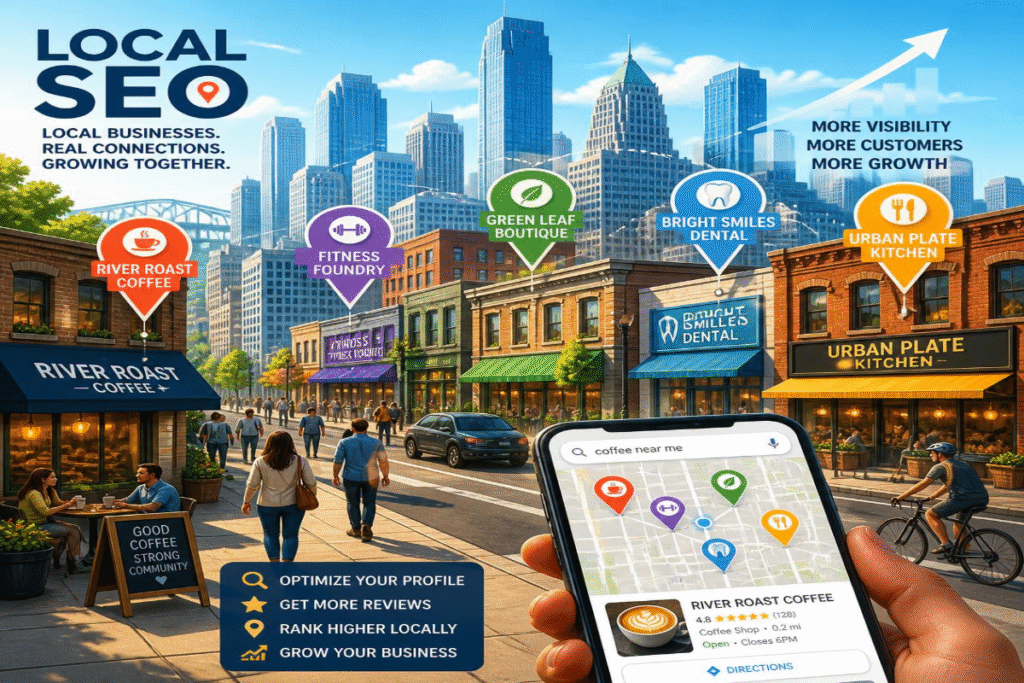
For small businesses, appearing in Google Maps is no longer just an advantage, as it has become an essential part of attracting nearby customers. Whether people are searching for a restaurant, plumbing service, dental clinic, or retail store, Google often displays local map results before traditional organic listings. This is where local SEO plays a critical role. By optimizing a business’s online presence for location-based searches, local SEO helps improve visibility, credibility, and the chances of appearing in Google’s Local Pack and Maps results. However, ranking on Google Maps involves much more than simply creating a business profile. It requires a combination of accurate business information, relevance, proximity, prominence, and ongoing optimization. In this guide, we’ll explore how local SEO helps small businesses achieve stronger Google Maps rankings.
Local SEO and Google Maps OverviewLocal SEO helps small businesses improve Google Maps visibility by strengthening ranking signals such as relevance, proximity, prominence, reviews, citations, and website optimization. A well-optimized Google Business Profile, accurate business information, local backlinks, and consistent engagement improve search performance and customer discovery. Avoiding common optimization mistakes and continuously monitoring local SEO efforts helps businesses build authority, attract nearby customers, and achieve sustainable growth in competitive local markets. |
What is Local SEO and Why Does it Matter for Google Maps?
Local SEO (Local Search Engine Optimization) is the process of optimizing a business’s online presence to improve its visibility in location-based search results across Google Search and Google Maps. Unlike traditional SEO, which targets national or global rankings, local SEO focuses on searches with geographic intent, such as “coffee shop near me” or “electrician in Dallas.”
Improves Visibility in Google Maps and the Local Pack
Local SEO optimizes ranking signals that Google uses to display businesses in Google Maps and the Local Pack. By improving business relevance, profile completeness, citation consistency, and local authority, it increases the likelihood of appearing for location-based searches, helping businesses attract highly qualified users with strong purchase or visit intent.
Strengthens Google’s Local Ranking Signals
An effective local SEO strategy reinforces Google’s core ranking factors, like relevance, distance, and prominence, through optimized business categories, service-area details, structured data, local citations, customer reviews, and location-specific website content. These signals enable Google’s algorithms to better evaluate a business’s geographic relevance, credibility, and authority in local search results.
Increases Customer Engagement and Local Conversions
Higher Google Maps visibility increases interactions with a business profile, including calls, website visits, direction requests, bookings, and messaging. These engagement signals reflect user interest and often result in higher local conversion rates, as businesses reach customers actively searching for nearby products or services with immediate purchase intent.
Builds Long-Term Local Authority and Competitive Advantage
Consistent local SEO strengthens a business’s authority through high-quality local backlinks, accurate citations, positive customer reviews, and ongoing profile optimization. These trust signals improve long-term Google Maps rankings, enhance brand credibility, and help businesses maintain a competitive edge over nearby competitors targeting the same local audience.
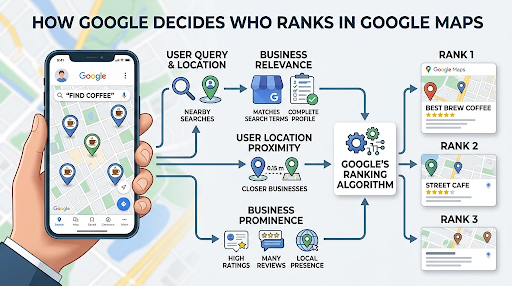
How Google Decides Who Ranks in Google Maps
Google Maps rankings aren’t random. Google evaluates relevance, distance, and prominence to decide which businesses appear first, helping users find the most trustworthy and suitable local options for their search.
What are the best local SEO strategies for a small business to rank higher on Google Maps?
Fully Optimize Your Google Business Profile
A fully optimized Google Business Profile improves local search relevance by providing Google with accurate business data. Complete essential fields such as primary category, services, business description, operating hours, attributes, photos, and website details. Regular updates, Google Posts, and accurate profile information help strengthen visibility, improve user trust, and support higher rankings in Google Maps results.
Build Strong Local Relevance Through Accurate Business Information
Maintaining consistent Name, Address, and Phone Number (NAP) information across websites, directories, and online platforms helps Google validate business identity and location. Accurate citations, matching contact details, and updated business data improve entity recognition, reduce ranking inconsistencies, and strengthen local search signals that influence Google Maps visibility and geographic relevance.
Generate and Manage Customer Reviews
Customer reviews contribute to Google’s prominence and trust signals for local rankings. Businesses should develop a consistent review acquisition process by requesting feedback from genuine customers, encouraging detailed experiences, responding to reviews professionally, and addressing negative feedback constructively. Review quantity, quality, relevance, and recency collectively influence customer perception and can impact Google Maps visibility.
Strengthen Website-Based Local SEO Signals
A locally optimized website reinforces Google’s understanding of a business’s geographic relevance through location-specific landing pages, targeted local keywords, optimized title tags, internal linking, and LocalBusiness schema markup. Technical factors such as mobile responsiveness, page speed, and accurate business details further support search engine interpretation, improving alignment between website content and Google Maps ranking signals.
Increase Local Authority Through Citations and Backlinks
High-quality local citations and backlinks strengthen a business’s geographic authority by validating its presence across trusted online sources. Citations from relevant directories, industry platforms, and local organizations improve entity consistency, while backlinks from reputable regional websites enhance domain credibility. These external signals help Google evaluate business prominence and support stronger visibility in local search results.
Monitor Performance and Improve User Engagement
Regular monitoring of Google Business Profile insights, search queries, website clicks, calls, direction requests, and ranking positions helps identify local SEO performance trends. Businesses should analyze user behavior, update profile information, add fresh content, and improve listing interactions. These actions enhance engagement signals, maintain listing relevance, and support consistent Google Maps visibility over time.
Conclusion
Ready to get your business noticed by more local customers? Think Shaw helps businesses improve their Google Maps presence with powerful Local SEO strategies designed to increase visibility, attract targeted traffic, and drive real growth. Our team combines proven optimization techniques, industry expertise, and data-driven solutions to help your business stand out in competitive local markets. From improving search rankings to strengthening your online presence, Think Shaw provides the expertise you need to reach more customers and grow with confidence. Partner with Think Shaw today and take your local business visibility to the next level.
Boost your local rankings, attract more customers, and grow your business with Think Shaw’s expert Local SEO solutions. Start your success journey today!
FAQ’s About Local SEO and Google Maps Rankings
Does changing my Google Business Profile address affect my Google Maps ranking?
Changing your Google Business Profile address can affect Maps rankings because Google reassesses location relevance and proximity signals. Businesses should update citations, website details, and verification information to maintain accurate local signals and minimize ranking fluctuations.
Should small businesses invest in Local SEO if they already have a website?
Yes, small businesses should invest in Local SEO because a website alone does not guarantee local visibility. Local SEO improves Google Maps presence, strengthens geographic relevance, attracts nearby customers, and increases opportunities for calls, visits, and conversions.
What are Google Maps ranking penalties, and how can businesses avoid them?
Google Maps ranking penalties occur when businesses violate guidelines through fake reviews, keyword stuffing, duplicate listings, or inaccurate information. Avoid them by maintaining genuine data, following Google policies, managing profiles correctly, and using ethical local SEO practices.
How do Google Business Profile categories impact local rankings?
Google Business Profile categories help Google understand a business’s services and determine relevant search matches. Selecting accurate primary and secondary categories improves relevance signals, increases visibility for targeted queries, and helps businesses appear in appropriate Google Maps results.
What is the difference between Google Maps SEO and traditional SEO?
Google Maps SEO focuses on improving local visibility through location-based signals like Google Business Profile optimization, reviews, and proximity. Traditional SEO targets broader website rankings using content, backlinks, and technical optimization without relying primarily on geographic factors.