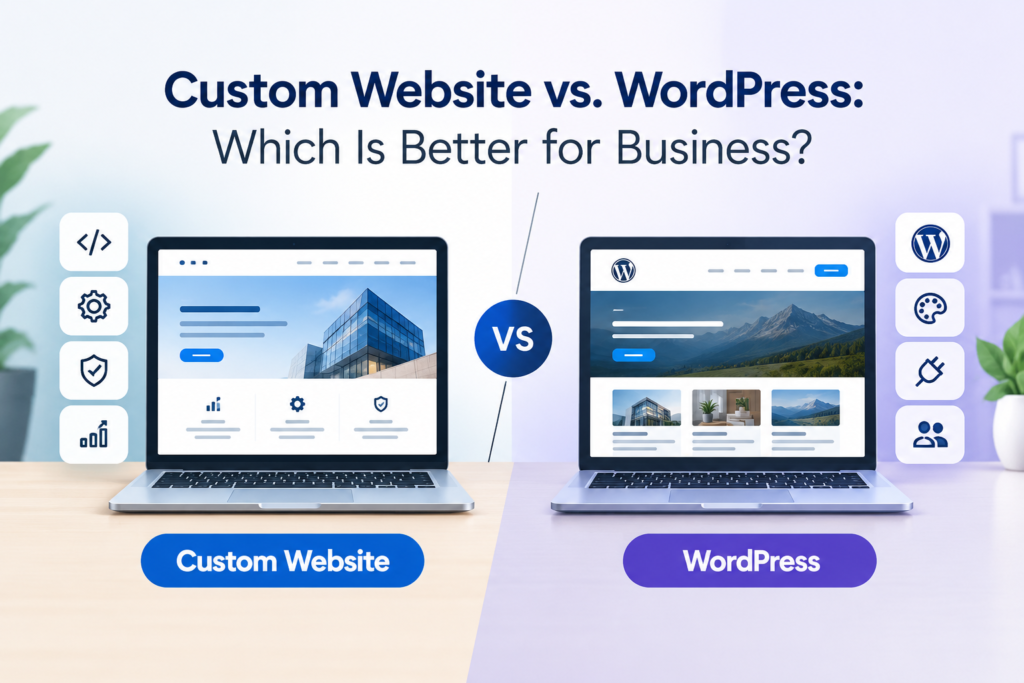
A business website is more than an online presence; it supports visibility, credibility, customer engagement, and long-term growth. Choosing how that website is built can therefore affect everything from design flexibility and content management to scalability, maintenance, and technical performance. A custom website can be developed around specific business requirements, while WordPress provides an established content management system with extensive themes, plugins, and customization options. WordPress currently powers more than 43% of websites, demonstrating its widespread adoption. However, popularity alone does not determine which approach is right. Understanding the differences can help businesses make a more informed decision.
Custom Website vs. WordPress OverviewCustom websites and WordPress provide different ways to build a business website. Custom development offers greater freedom for unique designs, specialized functionality, integrations, and technical control, while WordPress provides an established platform with accessible content management and a broad ecosystem of themes and plugins. The right choice ultimately depends on the business’s specific requirements, resources, website goals, expected growth, and level of customization needed for long-term success. |
What Should You Consider Before Building Your Business Website?
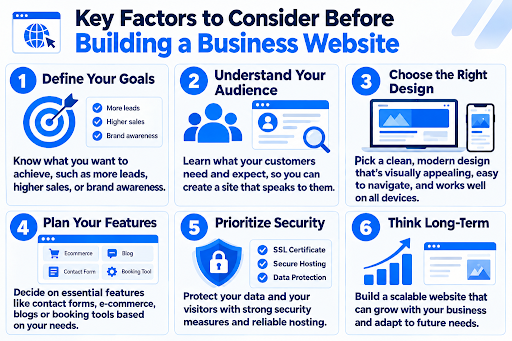
Before building a business website, it is important to define what the website needs to accomplish and how it will support your wider business objectives. Factors such as your target audience, required features, content structure, budget, branding, security, and future expansion can influence development decisions. Considering these elements early helps establish a clearer direction for the project and reduces the likelihood of costly changes later. Reviewing the following considerations can help you plan a website that is practical, relevant, and prepared for future needs.
How Custom Websites and WordPress Differ at the Core
Custom websites and WordPress differ in their underlying development, customization, management, and functionality, shaping how each option can meet different business requirements. Here are the core distinctions to consider.
Development and Technical Foundation
A custom website is developed specifically around a business’s requirements, giving developers greater control over its code, architecture, and functionality. WordPress provides an established content management foundation that can be customized through themes, plugins, and additional development to create the required website.
Design and Customization Flexibility
Custom development allows designers to create layouts and user experiences specifically for a business without depending on predefined themes. WordPress also supports substantial customization through themes, page builders, and coding. However, its design flexibility can depend on the chosen theme, plugins, and development approach. For both approaches, responsive design can help a website adapt its presentation to different screen sizes; Google Search Central specifically recommends responsive web design as an approach for creating mobile-friendly websites.
Content Management and Website Control
WordPress includes a dashboard that allows users to create, edit, organize, and publish content without extensive coding knowledge. A custom website can also include a content management system, but its editing interface depends on how it was developed. This can affect everyday management and update requirements.
Functionality, Integrations, and Growth
Custom websites can be engineered around specialized workflows, integrations, and business functions from the beginning. WordPress supports many features through plugins and custom development, but complex requirements may need additional coding. The right choice depends on required functionality, integrations, expected growth, and long-term technical needs.
| Build a website that aligns with your business goals, customer needs, and future growth with the right development approach. |
Custom Website vs. WordPress: Key Differences for Business-Specific Needs
Choosing between a custom website and WordPress depends on your business goals, technical requirements, and desired level of control. Here’s how they compare.
| Key Difference | Custom Website | WordPress |
| Design & Branding | Provides complete control over the website’s visual structure, allowing every element to be designed around specific branding and user experience requirements. | Offers extensive customization through themes, builders, and custom code, but the starting design is often based on an existing theme or framework. |
| Business-Specific Functionality | Features can be developed specifically for unique business processes, customer journeys, tools, and specialized requirements without relying on pre-existing solutions. | Supports many business functions through plugins and integrations, while highly specialized requirements may require additional customization or development. |
| Content Management | The content management system can be tailored to the business, creating an editing experience based on its specific content and operational needs. | Provides an established dashboard for managing pages, blog posts, media, and other content without requiring users to directly modify website code. |
| Scalability & Future Growth | The underlying architecture can be planned around expected growth, complex functionality, increasing traffic, and future business requirements from the beginning. | Can scale with appropriate hosting, optimization, and development, while its broader ecosystem makes adding many common features relatively straightforward. |
| Maintenance & Control | Gives developers greater control over the codebase, technical architecture, updates, and future modifications, but typically requires more specialized development support. | Simplifies many website management tasks but requires regular WordPress core, theme, and plugin updates to maintain security, compatibility, and functionality. |
Which Website Approach Fits Your Business Best?
Your business goals, budget, technical needs, and plans for growth can help determine the website approach that suits you best. Let’s explore.
When a Custom Website Makes More Sense
A custom website is worth considering when your business requires unique functionality, specialized workflows, complex integrations, or a highly tailored user experience that standard website solutions may not provide.
When WordPress Is the More Practical Choice
WordPress can be a strong option when your priority is managing content easily while using established themes, plugins, and integrations. It can provide flexibility without requiring every website feature to be developed from scratch. Forbes Agency Council notes that WordPress offers thousands of plugins and an open-source structure, allowing businesses to add integrations and functionality as their needs change. This flexibility can make it easier to expand a website as business requirements evolve.
Match the Platform to Your Business Goals
Your choice should reflect your website’s purpose, target audience, expected growth, functionality, and management requirements. Looking beyond the initial build helps ensure the selected approach remains practical as your business and website needs evolve.
Consider Development and Maintenance Requirements
The decision should also account for the technical expertise needed to build, maintain, secure, and update the website. Understanding these ongoing responsibilities can help businesses choose an approach that fits their available resources and long-term plans.
Conclusion
The right website platform can influence your business’s online performance, functionality, and ability to grow. A solution aligned with your specific requirements can provide lasting value and a stronger digital foundation. Think Shaw delivers tailored web development solutions, including custom websites and WordPress development, helping businesses create functional, scalable, and user-focused websites designed around their goals and requirements.
| Not sure which website approach is right for your business? Let’s discuss your goals, requirements, and plans to build a website that works for you. |
Frequently Asked Questions About Custom Websites vs. WordPress
Can a custom website be migrated to WordPress later?
Yes. A custom website can be migrated to WordPress, although the process may require rebuilding templates, transferring content, recreating functionality, and preserving URLs to minimize disruption.
Can I switch from WordPress to a custom website?
Yes. Businesses can move from WordPress to a custom platform when their requirements change. Content, media, data, and selected functionality can typically be migrated during redevelopment.
Can both website types be mobile-friendly?
Yes. Both can be designed responsively so pages adapt to different screen sizes. Mobile performance ultimately depends on the design, development practices, and optimization applied.
Is WordPress suitable for an eCommerce website?
Yes. WordPress can support eCommerce through platforms such as WooCommerce, allowing businesses to add product catalogs, shopping carts, payment processing, and other online-store functionality.
Can WordPress websites be redesigned without changing their content?
Generally, yes. A WordPress website can undergo a theme or design overhaul while retaining existing pages, posts, media, and other content, provided the redesign is implemented carefully.