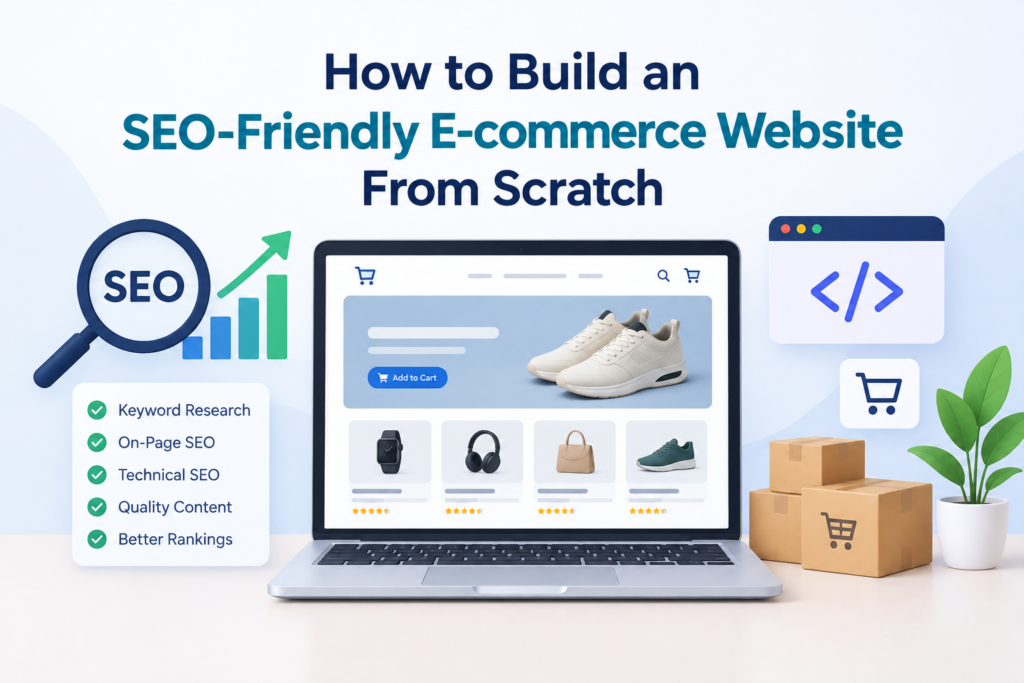
If you’re also setting up an e-commerce website, you’ll eventually hit the same wall every new store owner does: how does anyone actually find my website? Then come the unfamiliar terms, like crawling, indexing, and ranking, which, if you get them wrong, can quietly bury your store before it ever gets a chance. That’s why setting the foundation right matters so much, because competition is only getting steeper.
According to the U.S. Census Bureau, retail e-commerce sales hit $340.2 billion in the second quarter of 2026 (seasonally adjusted), up 12.2% year over year. It is one of the strongest growth rates in recent years, and a growing share of that spending is landing on e-commerce websites that show up when people search. So, in this guide, we’ll cover how you can build an SEO-friendly e-commerce website from scratch, along with tracking whether it’s actually working or not.
Overview: Building an SEO-Friendly E-commerce Site From the BeginningBuilding an SEO-friendly e-commerce website from scratch requires choosing the right platform, structuring clean URLs and internal links, researching keywords before creating pages, and optimizing product content with unique descriptions and technical SEO. The results typically take 6–18 months, tracked through Search Console, keyword rankings, and organic conversions. |
Why an SEO-Friendly E-commerce Website Is Important
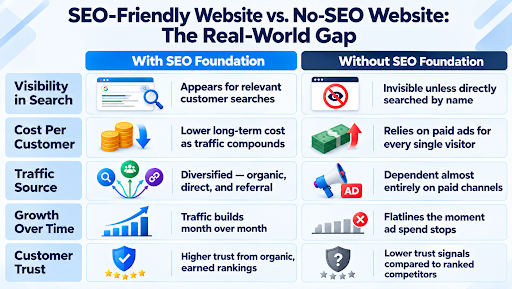
Two stores can sell the same products, use the same platform, and still end up with completely different outcomes: one gets found, the other doesn’t. That difference isn’t luck; it comes down to whether the site was actually built to be discoverable in the first place. This is exactly why it is important, as over time, that single factor shapes everything from how much you spend to acquire customers to how much you depend on ads just to stay visible. Here’s what that gap actually looks like, side by side:
How to Build an SEO-Friendly E-commerce Website From Scratch
Choose an SEO-Friendly Platform First
- Platform Selection: Pick a platform, like Shopify, WooCommerce, BigCommerce, etc., that gives you full control over URLs, meta titles, alt text, and schema markup from day one.
- Technical Readiness: Make sure the platform supports fast load times and mobile responsiveness natively, since retrofitting speed and mobile fixes later is far harder.
Plan Your Site Structure
- URL Structure: Use clean, descriptive URLs like yoursite.com/category/product-name instead of number strings, so both search engines and shoppers understand each page instantly.
- Internal Linking: Connect related categories, products, and blog content to each other early, so authority and relevance flow naturally across the site as it grows.
Research Before You Build
- Keyword Research: Identify what real customers actually search for before creating category and product pages, so titles and headers are built around demand from the start.
- Competitor & Content Gap Research: Also, study what similar stores rank for and where their content falls short, so you can build pages that fill gaps they’ve missed.
Optimize Every Page
- Product & Category Pages: Always write unique, keyword-rich descriptions and add high-quality images with descriptive alt text instead of copying manufacturer or supplier content.
- Technical SEO Basics: Set up an XML sitemap, a clean robots.txt file, and schema markup for products and reviews so search engines can crawl and understand your store.
Build Trust and Authority
- Original Content: Publish blog posts, buying guides, or FAQs that answer real customer questions, building topical authority beyond just product listings.
- Early Backlinks: Reach out for a handful of quality backlinks from relevant, credible sites early on, since this signals trustworthiness to search engines from the start.
| Building From Scratch Shouldn’t Mean Guessing at SEO
Our team handles platform setup, technical SEO, and content strategy, so your e-commerce website is built right from day one. |
How to Check If Your SEO Is Working
Here’s a list of simple ways you need to follow for your e-commerce website to track its progress:
- Track Organic Traffic in Search Console: Check how many visitors arrive from unpaid search results weekly, and watch for a steady upward trend over time.
- Monitor Keyword Rankings: Keep in mind to track your target keywords’ position monthly. A Columbia Business School study on search engine click behavior found that people click on very few results per search, and when they do click, it’s mostly on organic listings, which is exactly why ranking position matters so much.
- Check Core Web Vitals: Review the loading speed, interactivity, and visual stability scores, since slow or unstable pages quietly suppress rankings and conversions.
- Review Crawl and Indexing Status: Confirm search engines can actually access and index your pages, since uncrawled pages can’t rank no matter how good they are.
- Watch Organic Conversion Rate: Compare how often organic visitors actually purchase versus other traffic sources, since traffic without sales isn’t the real goal.
- Audit Backlink Growth: Last but not least, check periodically whether new, relevant sites are linking to your store, since this reflects real-world trust and authority.
Conclusion
Hence, SEO for e-commerce isn’t a one-time setup, but it’s an ongoing discipline that rewards patience and consistency. So, if you need help from specialists to build and manage this foundation for you, Think Shaw brings years of hands-on SEO experience helping e-commerce websites get found, trusted, and chosen.
| Every day without proper SEO on an e-commerce site is a customer lost to someone else. Come on, let us change that. |
FAQs- About SEO-Friendly E-commerce Website
What’s the biggest SEO mistake when building a new e-commerce site?
The biggest mistake has to be launching the website before the site structure and URLs are finalized, because restructuring later causes broken links and lost rankings.
How many pages should my new e–commerce site launch with?
Most small stores should launch with 10–15 core pages, such as home page, categories, key products, cart, checkout, and policy pages, then expand from there.
When starting from scratch, does the domain extension I pick (.com vs .store vs .shop) affect my SEO?
No, Google treats most extensions equally from day one; pick what’s memorable, since .com is still most recognized by shoppers.
Realistically, how long does it take for a brand-new e-commerce website to scale up through SEO?
Most new e-commerce websites take 6–18 months to gain real traction, with steady growth continuing well beyond that as authority builds.
How soon after the launch of my e-commerce website should I start tracking SEO performance?
Make sure to immediately set up Search Console and analytics before launch, so you have baseline data from day one.