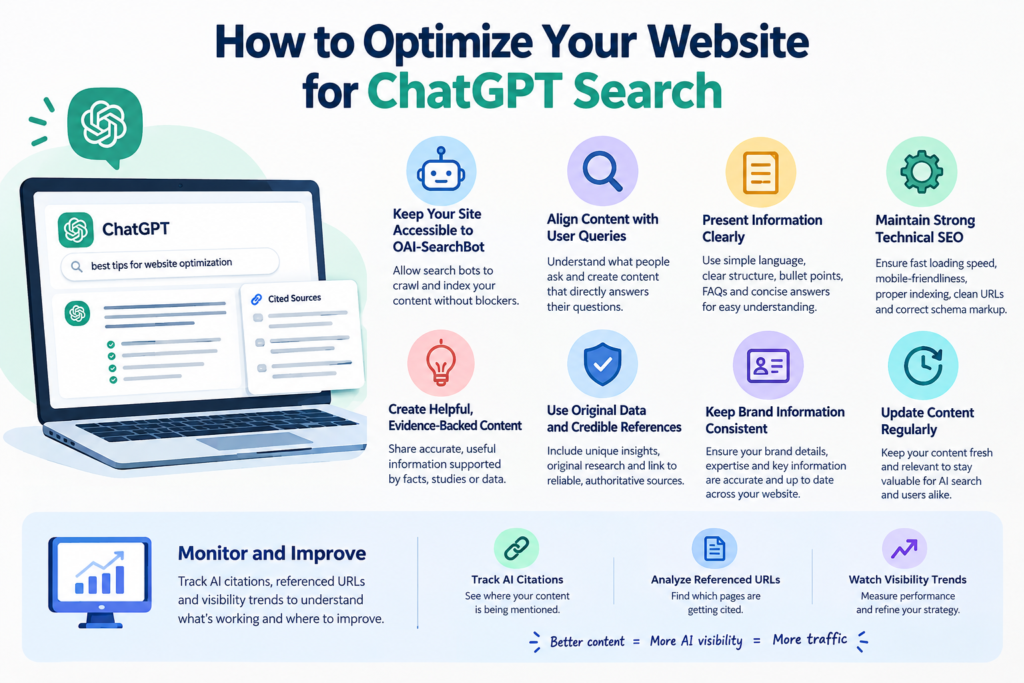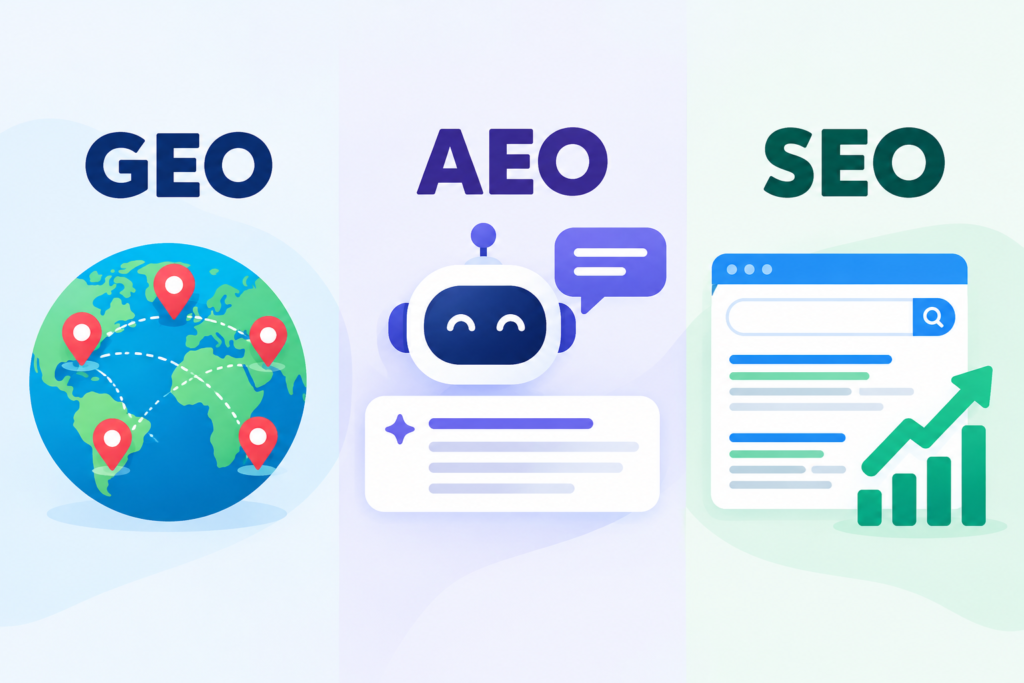
Search is evolving beyond traditional rankings as AI-generated answers and conversational search become an increasingly important part of online discovery. In 2026, Google reported that AI Overviews has more than 2.5 billion monthly active users, while AI Mode has surpassed 1 billion monthly active users globally. As these search experiences continue to expand, SEO, AEO, and GEO have become important approaches for understanding how content can remain visible across traditional search results, answer-based experiences, and generative AI.
Let’s ascertain how SEO, AEO, and GEO differ across modern search.
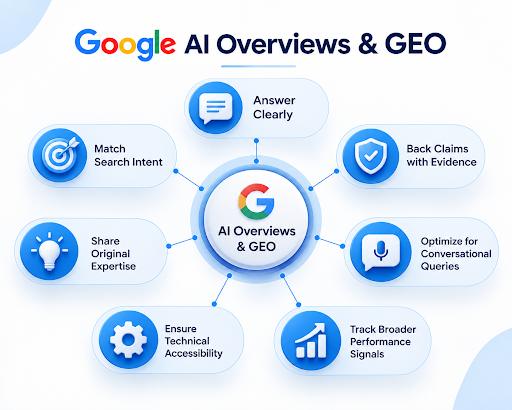
Search Visibility Strategy OverviewSEO, AEO, and GEO address different aspects of modern search visibility. SEO strengthens organic rankings through relevance, technical accessibility, content quality, and authority. AEO focuses on delivering clear, structured answers to user questions, while GEO improves the likelihood of being represented in generative AI responses. Together, they emphasize search intent, authoritative information, original expertise, logical content structure, and measurable visibility across traditional search, answer engines, and AI-powered discovery. |
SEO vs AEO vs GEO: What’s the Difference?
SEO Builds Visibility in Traditional Search
Search engine optimization focuses on making webpages discoverable, understandable, and competitive within conventional search results. It encompasses elements such as search intent, technical accessibility, relevant content, internal linking, and authority.
The primary objective is to earn organic visibility when users search for relevant topics, products, services, or information.
AEO Helps Content Become the Direct Answer
Answer Engine Optimization takes a more question-oriented approach, preparing content to satisfy searches where users expect a concise response rather than simply a list of webpages.
Clear answers, logical formatting, question-based headings, structured information, and concise explanations can make information easier for answer-focused systems to identify and present.
GEO Positions Content for Generative Search
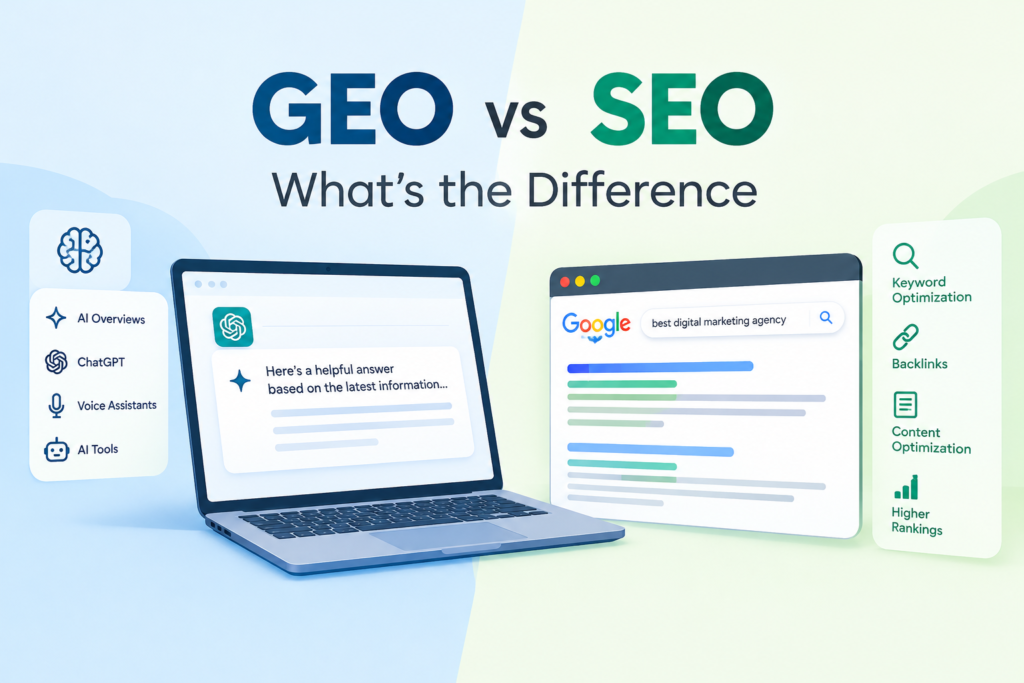
Generative Engine Optimization focuses on visibility within AI-generated responses, where systems synthesize information from multiple sources before producing an answer.
For example, Google’s VP of Search & Commerce has emphasized that established SEO fundamentals remain important for AI search rather than treating GEO as an entirely separate discipline.
| Strengthen your search visibility with a strategy built for today’s evolving search landscape. Think Shaw’s SEO services to build stronger and long-term search performance. |
How SEO, AEO, and GEO Compare Across Search and AI
- Primary objective: SEO seeks organic rankings, AEO targets direct answers, while GEO aims for visibility and inclusion within generative responses.
- Search environment: SEO primarily operates within conventional search results; AEO emphasizes answer-oriented experiences; GEO extends into AI-powered search and generative interfaces.
- Content approach: SEO prioritizes relevance and crawlability, AEO emphasizes answer clarity, while GEO places greater emphasis on context, authority, originality, and information that AI systems can confidently synthesize.
- User journey: Traditional search commonly leads users from a query to a webpage. Answer and generative experiences can satisfy more of the information need directly within the interface.
- Visibility signal: SEO performance can be evaluated through rankings and organic traffic. AEO can involve answer appearances and featured-result visibility, while GEO increasingly requires monitoring AI mentions, citations, and inclusion.
- Relationship between them: These approaches overlap substantially. Strong technical SEO, useful content, clear answers, authoritative sourcing, and genuine expertise can support visibility across all three environments.
- Important distinction: AEO and GEO should not be treated as replacements for SEO. They address changing search experiences while retaining many of the same underlying content and quality principles
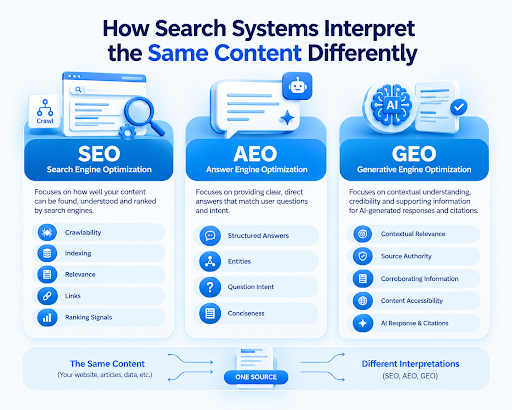
How Search Systems Interpret the Same Content Differently
SEO evaluates crawlability, indexing, relevance, links, and ranking signals; AEO identifies structured, concise answers, entities, and question intent; GEO evaluates contextual relevance, source authority, corroborating information, and content accessibility when generating AI responses and citations across modern search experiences.
How to Optimize Content for SEO, AEO, and GEO
Match Content to Search Intent Before Adding Keywords
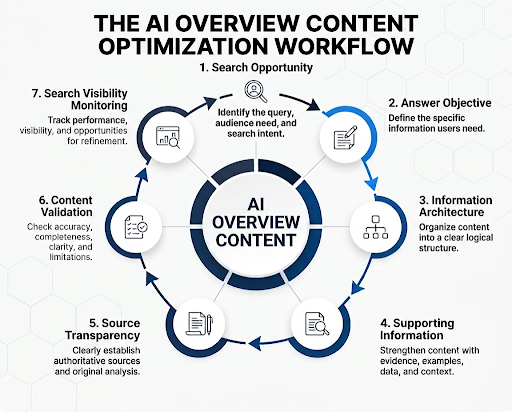
Start by identifying exactly what the audience wants to accomplish with a query. Build the page around that purpose, then use relevant terminology naturally throughout the content.
This gives search systems a clear understanding of the page while keeping the experience useful for the person reading it.
Structure Answers So Search Systems Can Understand Them
Organize important information with descriptive headings, concise explanations, lists, tables, and clearly defined concepts.
Question-led sections can make specific information easier to locate, while logical content hierarchy helps both users and automated systems understand how individual points relate to the broader topic.
Strengthen Authority With Original, Verifiable Information
Generative search depends on information it can interpret and use with confidence. Demonstrate expertise through original insights, first-hand experience, credible evidence, accurate references, identifiable authorship, and specific supporting details.
Avoid producing generic pages that simply restate information already available elsewhere.
Should You Use SEO, AEO, and GEO Together?
Rather than creating three disconnected content strategies, businesses can build one comprehensive search strategy that accommodates different discovery environments. SEO establishes the technical and topical foundation, AEO improves the accessibility of direct answers, and GEO considers how information may be interpreted and surfaced within generative experiences.
The objective is not to optimize the same paragraph three different ways. It is to create useful, authoritative, technically sound content that can perform across evolving search interfaces.
A unified approach also prevents unnecessary duplication: the same high-quality page can target conventional organic visibility while presenting information clearly enough for answer-based and AI-powered search experiences.
Conclusion
The modern search landscape increasingly combines traditional results with AI-generated answers and summaries. SEO, AEO, and GEO therefore represent different visibility considerations within an increasingly connected search ecosystem. The strongest strategy is not choosing one acronym over another. It is building content around search intent, technical quality, clear answers, credible information, genuine expertise, and strong user value—then measuring how that content performs across both conventional and AI-powered discovery.
| Build a stronger search strategy across traditional search and emerging AI experiences. Connect with ThinkShaw to discuss your goals |
Frequently Asked Questions About SEO, AEO, and GEO
Does Google require special GEO markup for AI Overviews?
No. Google says there is no special schema, AI file, or additional markup required for eligibility in AI Overviews or AI Mode.
Can AI-generated content appear in Google AI Overviews?
Yes, but Google evaluates content according to its existing Search policies and quality systems. Generative AI itself does not guarantee visibility or rankings.
Is E-E-A-T a direct ranking factor for Google Search?
Google says E-E-A-T itself is not a specific ranking factor. Its systems use various signals that can identify helpful content demonstrating experience, expertise, authoritativeness, and trustworthiness.
Does updating old content improve AI search visibility?
Updating content can help when information has become outdated or inaccurate, but changes should meaningfully improve usefulness rather than simply refresh publication dates or make superficial edits.
Are backlinks still important for AI search visibility?
Google’s AI search experiences rely on its core Search systems to retrieve relevant webpages, so established SEO principles remain relevant rather than being replaced by a separate AI-ranking system.