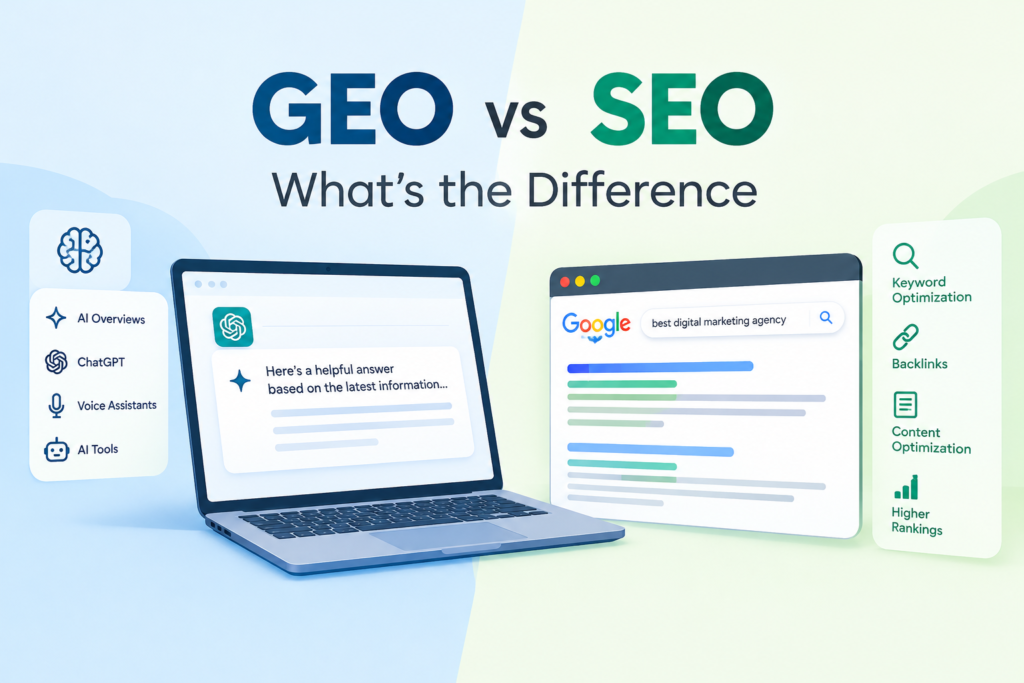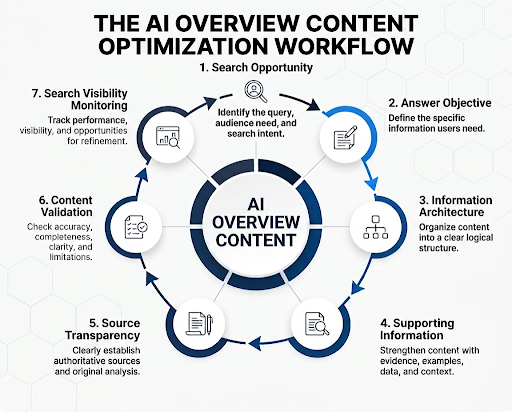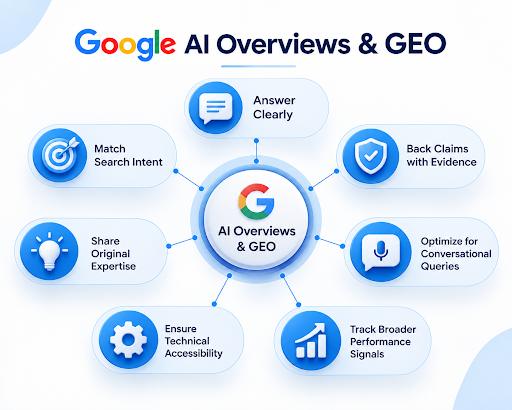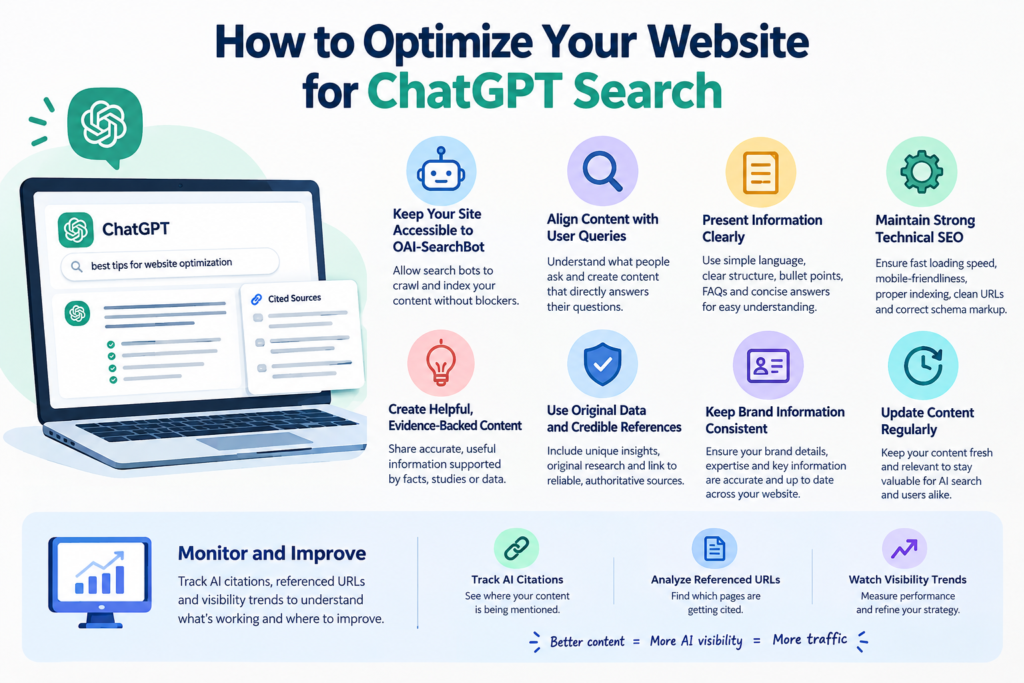
A brand can have strong rankings, detailed product pages, and years of industry experience yet still be absent from an AI-generated answer. That gap is becoming more significant as Google’s AI Overviews and AI Mode use web sources to construct responses rather than simply returning a list of links. For marketers, visibility now depends on more than targeting queries: Google must be able to crawl and index the content, understand the entities and relationships it describes, and find information that is genuinely useful, original, and supported by credible signals. Google also emphasizes that established SEO practices remain relevant to generative AI features. This guide examines the technical, content, and authority signals that can help your brand earn meaningful visibility in AI search results.
AI Search Visibility: Essential Key TakeawaysAI search visibility depends on matching query intent, maintaining crawlable content, structuring information clearly, and establishing strong relationships between a brand, its products, people, services, and locations. External authority also matters through editorial mentions, expert contributions, original research, trusted profiles, and naturally earned links. Performance can be evaluated through Google Search Console and Analytics, allowing businesses to identify exposure patterns, connect visibility with outcomes, and refine content based on measurable performance gaps. |
How AI Search Decides Which Brands to Mention
Query Intent Shapes Brand Relevance
AI search first interprets the user’s underlying intent, including the task, industry, product category, attributes, location, and commercial context. A brand becomes relevant when its indexed content directly addresses those requirements. Consequently, visibility can vary by query because AI systems may retrieve different sources for informational, comparative, transactional, or local searches.
Crawlability Determines What Google Can Access
AI Overviews and AI Mode use web sources, so Google must be able to access the underlying pages. Robots.txt restrictions, noindex directives, authentication barriers, server errors, or inaccessible rendering can prevent content from being properly crawled and indexed. Google specifically recommends using URL Inspection to verify how Googlebot accesses and renders important pages.
Content Structure Helps Systems Extract Specific Facts
AI systems need identifiable information they can interpret and use when constructing responses. Clearly organized headings, descriptive page copy, explicit product or service attributes, author information, and supporting evidence create distinct information units. Google recommends people-first content and emphasizes providing original, useful information rather than producing pages primarily to manipulate Search visibility.
Entity Relationships Clarify What a Brand Represents
AI search needs to distinguish an organization from its products, services, people, locations, and related concepts. Consistent naming and contextual relationships across relevant pages help establish those connections. Structured data can also provide machine-readable classification; Google supports types such as Organization, Product, Article, and LocalBusiness for eligible content.
Source Selection Depends on Relevance and Search Quality
AI-generated answers can draw from multiple web sources rather than treating one website as authoritative for every query. The selected material must be relevant to the specific information need and remain within Google’s broader Search quality and spam systems. Google has explicitly clarified that its spam policies also apply to generative AI responses.
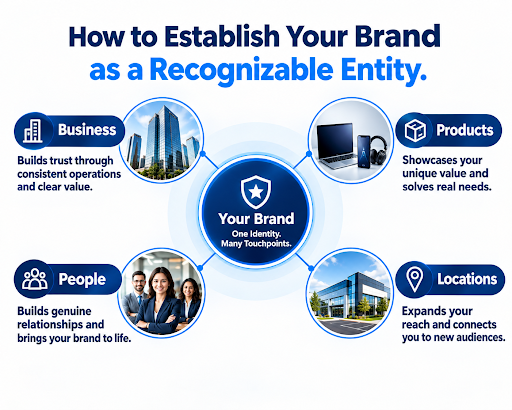
How to Establish Your Brand as a Recognizable Entity
A recognizable brand is more than a company name or visual identity. Search systems need to understand how the business connects with its products, services, people, expertise, and locations. Clear relationships between these elements create a more consistent picture of what the brand represents. Strengthening these connections across your digital presence can make your organization easier for search systems to identify, interpret, and associate with relevant queries.
| Build stronger digital authority and make your business easier to discover with Think Shaw’s integrated search marketing expertise! |
How to Build Brand Authority Beyond Your Website
Earn Editorial Mentions From Relevant Publications
Coverage from industry publications can expose a brand to audiences and sources outside its own domain. The strongest opportunities are contextually relevant articles, expert commentary, original research, and news coverage where the brand is mentioned because of genuine expertise or evidence, not because a link was purchased or artificially inserted.
Build Expert Contributions Across Industry Communities
Subject-matter expertise becomes more discoverable when professionals contribute useful knowledge outside their company website. Technical interviews, conference presentations, professional publications, webinars, and expert commentary can associate identifiable people with specific areas of expertise. The objective is substantive contribution; publishing repetitive promotional material across third-party sites can create low-value signals.
Develop Independent Evidence of Real-World Expertise
Original studies, proprietary research, documented testing, benchmarks, case studies, and technical findings give external publishers something substantive to reference. This creates authority through evidence rather than self-description. When third parties independently discuss or cite those findings, the brand becomes associated with information that exists beyond its own marketing claims.
Strengthen Consistent Brand References Across Trusted Profiles
Maintain accurate organizational information across legitimate professional directories, industry associations, review platforms, business profiles, and relevant databases. Consistency in company name, category, location, services, and other factual attributes reduces ambiguity when external sources describe the organization. These profiles should represent genuine business information rather than being created solely for search manipulation.
Earn Natural Links Instead of Manufacturing Link Signals
External authority should come from editorially earned references rather than paid or automated link-building schemes. Google identifies buying links, excessive link exchanges, automated link creation, low-quality directories, and links created primarily to manipulate rankings as link spam. Valuable resources give publishers legitimate reasons to reference a brand naturally.
How to Measure and Improve Your AI Search Visibility
Monitor Generative AI Impressions in Search Console
Google Search Console now provides a dedicated Generative AI performance report showing impressions for URLs appearing in AI features, including AI Overviews and AI Mode. Analyze impressions by page, country, device, and date to identify which content is gaining or losing visibility across generative search experiences.
Track Which URLs Earn AI Feature Exposure
Measure visibility at the URL level rather than treating the entire domain as one unit. Search Console’s Generative AI reporting identifies pages surfaced within generative AI features, allowing you to compare performance across articles, product pages, service pages, and other content types. This reveals which assets actually earn AI exposure.
Connect Search Visibility With Conversion Data
AI visibility should ultimately be evaluated against meaningful business outcomes, not impressions alone. Combine Search Console data with Google Analytics to examine sessions, engagement, conversions, and other key events associated with organic search traffic. Because the platforms calculate metrics differently, compare trends rather than expecting identical click and session totals.
Compare Visibility Trends Across Time Periods
Establish a consistent reporting window and compare generative-search impressions, clicks, landing pages, and conversion activity against previous periods. Search Console supports date-based analysis, while its Generative AI report provides hourly, daily, weekly, and monthly visibility views. This helps distinguish sustained changes from short-term fluctuations in AI exposure.
Improve Pages Based on Measured Performance Gaps
Use performance data to identify pages receiving limited generative-search exposure, then evaluate whether they provide unique, expert-led information that satisfies the relevant audience need. Google recommends improving content quality rather than pursuing specialized AI-search hacks. There are no additional technical requirements or special markup required for AI Overviews or AI Mode.
Conclusion
AI search is changing how customers discover and evaluate brands, making digital visibility more valuable than ever. Think Shaw helps businesses build a stronger presence across search through strategic SEO, content marketing, paid advertising, and web development. With a focused approach tailored to your business goals, our team can help position your brand for meaningful growth as search continues to evolve. Connect with Think Shaw to strengthen your digital strategy.
| Build a stronger AI search presence with Think Shaw’s tailored digital marketing strategies designed to increase visibility, authority, and growth! |
FAQ’s About AI Search Visibility
Does Brand Size Affect Whether AI Search Mentions a Business?
No. Brand size alone does not determine inclusion. A smaller business can appear when its information is sufficiently relevant, distinctive, and supported by reliable sources that help AI systems understand its specific offering and context.
Can a Brand Be Mentioned Without Its Website Ranking First?
Yes. AI-generated responses can reference information from different web sources, so traditional organic ranking position does not automatically determine whether a brand is included. Visibility can therefore occur without holding the first conventional search result.
How Often Should a Brand Update Content for AI Search?
There is no fixed update frequency for AI search. Refresh content when facts, products, services, regulations, research, or industry conditions change, ensuring revisions add meaningful accuracy rather than simply changing publication dates.
Can Customer Reviews Influence How AI Systems Understand a Brand?
Customer reviews can provide publicly available descriptions of products, services, and customer experiences. Their value depends on authenticity and relevance; businesses should avoid generating fabricated reviews or manipulating review platforms to influence search visibility.
Should Businesses Create Separate Content Specifically for AI Search?
Google does not require a separate content format exclusively for AI features. Businesses can focus on useful, original content that clearly serves their audience instead of producing separate pages solely because an AI search feature exists.