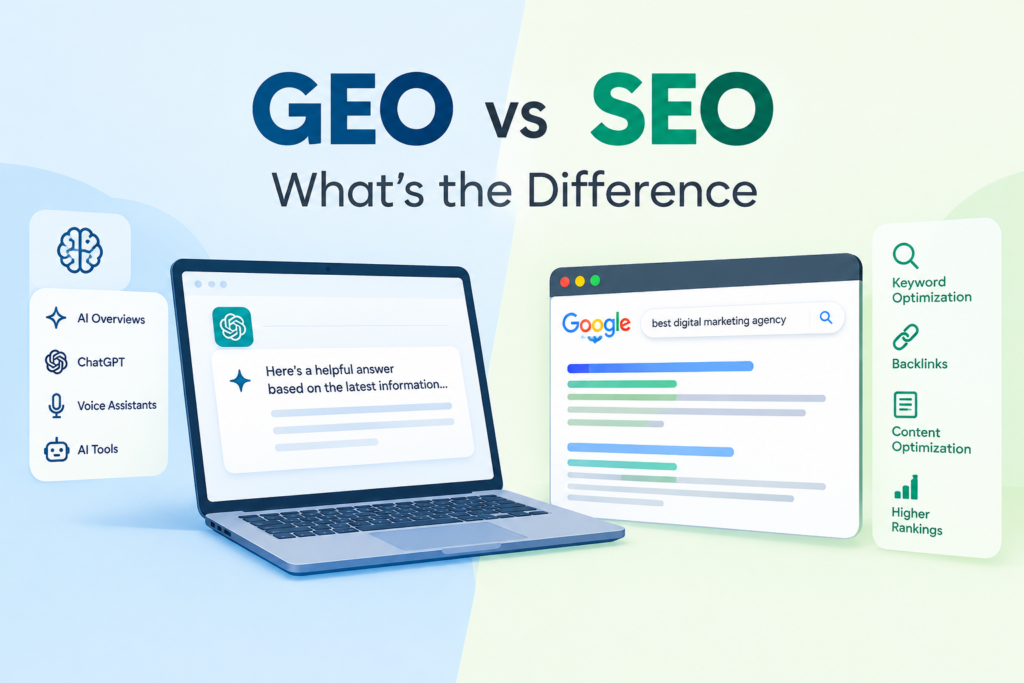
AI search is changing how people discover brands, compare options, and evaluate businesses, making visibility in generated answers an increasingly important part of modern SEO. Unlike traditional search, where performance can often be measured through rankings, AI platforms may mention a brand, cite its website, recommend competitors, or omit it entirely depending on the query and sources used. For marketers, this creates a measurement challenge: visibility must be evaluated across relevant AI search experiences using consistent queries and meaningful signals. Google now also provides a Generative AI performance report for AI Overviews and AI Mode, giving website owners additional first-party visibility data.
AI Search Visibility Tracking SummaryAI search visibility measures how often and prominently a brand appears in AI-generated answers, citations, recommendations, and comparisons. Effective tracking starts with a balanced query set covering branded, unbranded, informational, commercial, and competitor-focused searches. Key metrics include mentions, citations, query coverage, positioning, competitor presence, traffic, and conversions. AI visibility tracking platforms, response monitoring tools, SEO software, analytics platforms, and Google Search Console provide valuable data for evaluating performance and identifying opportunities. |
What Does Brand Visibility in AI Search Actually Mean?
Brand visibility in AI search shows how your brand appears, gets referenced, and earns recognition across AI-generated answers.
Being Mentioned in AI-Generated Answers
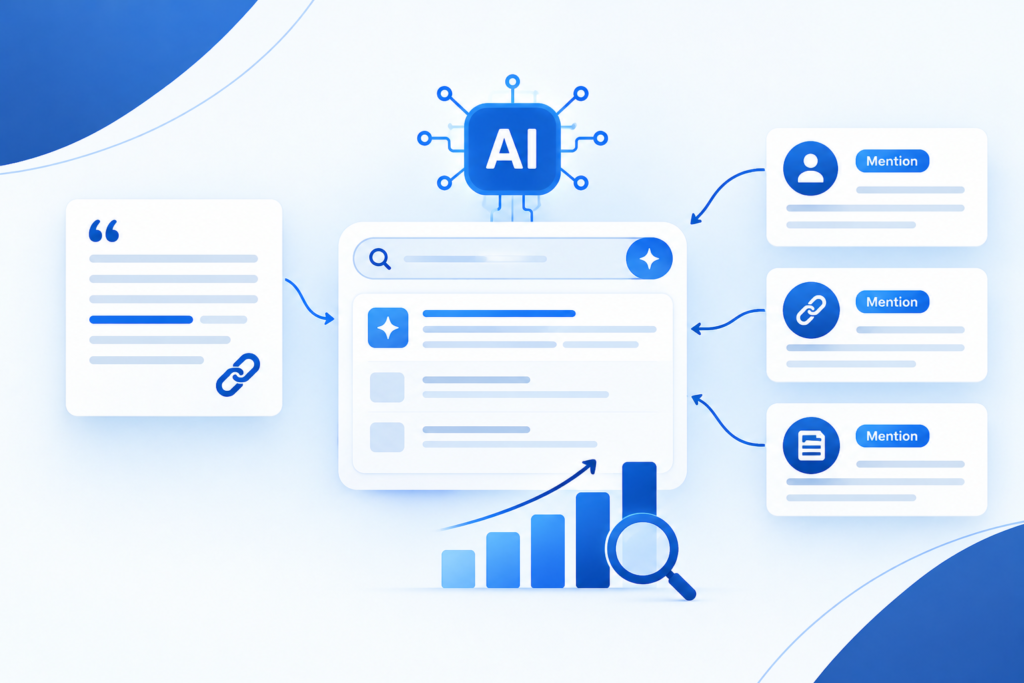
A brand becomes visible when AI platforms mention it while answering questions related to its products, services, expertise, or industry. These mentions can occur naturally within an answer, giving users direct exposure to the brand even when they do not visit a traditional search results page.
Being Cited as a Source
AI platforms may reference or cite a brand’s website when its content provides useful information for answering a query. These citations can help establish the website as a supporting source, particularly when its content is relevant, trustworthy, and directly addresses the information users are seeking. According to Microsoft Bing, AI-generated answers use web content as grounding sources, and publishers can now monitor which of their pages are cited in AI-generated responses.
Appearing in Recommendations and Comparisons
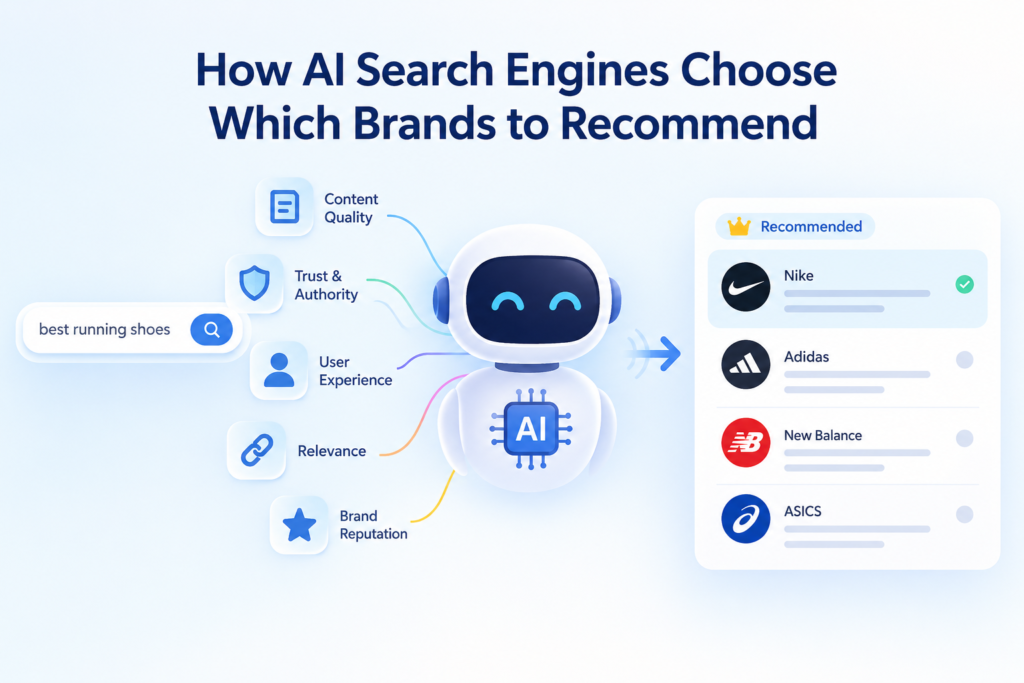
AI search may include brands when users ask for recommendations, alternatives, or comparisons. A brand’s visibility in these responses depends on how relevant it is to the query and how available online information supports its inclusion among the options presented to users.
Visibility Is More Than Traditional Rankings
Traditional search visibility is often measured through rankings, impressions, clicks, and organic traffic. AI search requires broader measurement because a brand can be mentioned or cited without receiving a conventional ranking position, making context and frequency important visibility signals.
| Want stronger AI search visibility for your brand? Partner with Think Shaw to build a strategy that strengthens digital visibility. |
How to Build an AI Search Query Set for Brand Tracking
A well-structured query set helps you measure where, when, and why your brand appears across relevant AI search experiences.
- Start With Queries Your Audience Actually Uses: Begin with real questions, problems, and comparisons your target audience is likely to ask AI search platforms. Include informational, commercial, and transactional queries rather than focusing only on keywords associated with your brand. This creates a more realistic picture of how your business may appear during different stages of the customer journey.
- Include Branded and Unbranded Queries: Branded queries specifically mention your company, products, or services, while unbranded queries describe a need without naming your business. Tracking both is important because branded searches show whether AI systems recognize your existing presence, whereas unbranded searches reveal whether your brand can surface when users are still exploring their options.
- Cover Different Search Intent Types: Organize queries around different intents, such as informational questions, product research, comparisons, recommendations, and solution-focused searches. This helps identify whether your brand visibility is limited to basic factual queries or extends into the moments when users are evaluating businesses and making purchasing decisions.
- Build Topic and Category-Based Query Groups: Create groups around your core products, services, industry topics, customer problems, and important use cases. Within each group, use variations of wording and question formats. This reduces reliance on a small set of queries and provides a broader view of how consistently AI systems associate your brand with relevant topics.
- Track Competitor and Comparison Queries: Include searches that ask AI platforms to compare brands, recommend alternatives, or identify the best options within your category. These queries can reveal whether your brand is being considered alongside competitors and how it is positioned when AI systems generate comparative recommendations.
- Standardize Queries for Consistent Tracking: Keep a defined set of queries unchanged when measuring visibility over time. Consistent wording makes it easier to identify changes in mentions, citations, recommendations, and competitor presence rather than confusing genuine changes with differences caused by constantly changing search questions.
What to Measure When Tracking AI Search Visibility
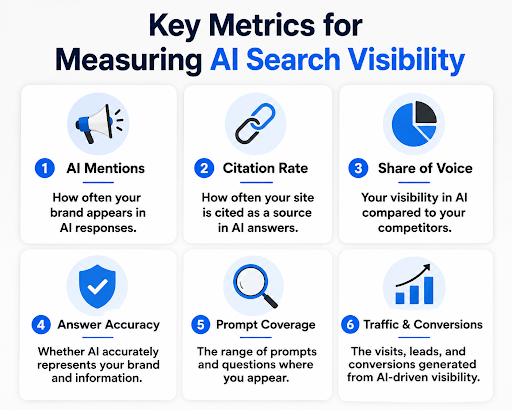
Tracking AI search visibility requires more than checking whether your brand appears in an answer. Measure how frequently your brand is mentioned, whether your website is cited, which queries generate visibility, and how prominently your brand is presented. Competitor appearances can reveal changes in market visibility, while referral traffic and conversions show whether AI exposure leads to meaningful website activity. Monitoring these signals consistently helps distinguish occasional mentions from sustained visibility and provides a clearer view of your brand’s presence across AI search.
What Tools Can You Use to Monitor AI Search Visibility?
Different tools provide different visibility signals, from AI mentions and citations to website traffic and search performance data.
AI Search Visibility Tracking Tools
These specialized platforms monitor how frequently and where a brand appears in AI-generated answers. Depending on the platform, they can track brand mentions, citations, competitor appearances, share of visibility, and changes across monitored queries over time.
AI Response Monitoring Tools
These tools let marketers monitor AI-generated responses for a defined set of questions and identify whether their brand appears in the answers. They are particularly useful for checking how consistently a brand is represented across different queries, topics, and AI search experiences.
SEO and Rank Tracking Tools
Traditional SEO platforms track organic rankings, keyword performance, search visibility, competitors, impressions, and clicks. Although these metrics do not fully represent AI visibility, they provide useful search-performance data that can be compared with AI search results to understand broader changes in brand discovery.
Website Analytics Tools
Analytics tools measure what happens after people reach a website, including traffic sources, landing pages, engagement, and conversions. This data can help determine whether increased visibility from AI-powered search experiences is contributing to measurable website activity and business outcomes.
Google Search Console
Google Search Console provides first-party data about a website’s performance in Google Search, including queries, impressions, clicks, and search traffic. Google’s Generative AI Performance Report specifically provides data for AI Overviews and AI Mode, allowing website owners to see generative-AI impressions over time, identify pages receiving those impressions, and analyze them by dimensions such as country and device.
Conclusion
Hence, tracking AI search visibility is an ongoing process that requires consistent monitoring, meaningful data, and strategic refinement. If you need expert support to strengthen your brand’s presence across AI search, Think Shaw brings proven SEO expertise to help businesses build visibility, earn trust, and stay competitive as search evolves.
| Ready to strengthen your AI search presence? Connect with Think Shaw for a tailored strategy built around your brand’s visibility goals. |
Frequently Asked Questions About Tracking Brand Visibility in AI Search
How often should I check my brand’s AI search visibility?
Check monthly for stable industries and more frequently during major campaigns, website changes, product launches, or significant algorithm and AI-search updates.
Can AI search visibility change without changing my website?
Yes. AI-generated responses can change as models, underlying sources, retrieval systems, and user queries change, even when your website remains unchanged.
Does being mentioned by AI search guarantee website traffic?
No. AI platforms can mention or cite a brand without generating a website visit, so visibility should not automatically be equated with referral traffic.
Can small businesses compete for visibility in AI search?
Yes. Smaller businesses can build visibility by demonstrating clear expertise, maintaining accurate information, publishing useful content, and developing a credible presence across relevant online sources.
How long does it take to improve AI search visibility?
There is no fixed timeframe. Results depend on your website’s authority, content quality, competition, industry, and how quickly relevant information is recognized by AI systems.