It is well known that ranking a Shopify store on search engines requires far more than adding keywords or publishing new pages. As Google’s algorithms increasingly prioritize page experience, site performance, and user satisfaction, SEO strategies that overlook usability often fail to deliver lasting results. The key is not choosing between higher rankings and a better shopping experience, but combining both through a structured, data-driven approach. By aligning technical SEO, content optimization, site architecture, and Core Web Vitals with user expectations, businesses can improve visibility while increasing engagement and conversions.
This guide explores how a Shopify SEO agency achieves that balance to support sustainable ecommerce growth.
Summary of Shopify SEO StrategiesEffective Shopify SEO combines technical optimization, semantic content, structured data, and performance improvements to strengthen search visibility without compromising user experience. A well-organized site architecture, faster page speeds, mobile-first design, and UX-friendly on-page SEO enhance crawlability, engagement, and conversions simultaneously. Continuous data-driven optimization using analytics and user behavior insights ensures sustained rankings, improved accessibility, and long-term ecommerce growth while maintaining a seamless shopping experience and stronger brand credibility. |
Understanding the Balance Between SEO Rankings and UX in Shopify Stores
Balancing SEO performance with user experience in Shopify stores requires a technical, structured approach where search visibility improvements directly support smoother navigation, faster performance, and higher conversions.
Aligning Search Intent with Information Architecture
A strong Shopify SEO company setup begins with an optimized information architecture that reflects how users search. This includes logically structured collections, silo-based category grouping, and internal linking strategies that distribute page authority. When URLs, breadcrumbs, and navigation menus follow a clear hierarchy, it improves crawl depth for search engines while reducing cognitive load for users.
Core Web Vitals and Performance Optimization
Google, a page should achieve an LCP of 2.5 seconds or less, an INP below 200 ms, and a CLS score below 0.1 for at least 75% of real-world visits to provide a good user experience. Shopify SEO agency optimizes these by compressing images using next-gen formats like WebP, deferring non-critical JavaScript, and implementing lazy loading for media-heavy pages. Theme optimization, reducing third-party app bloat, and leveraging CDN delivery also ensure faster Time to First Byte (TTFB), improving both speed scores and user satisfaction.
Structured Data and Enhanced SERP Visibility
Implementing schema markup such as Product, Breadcrumb, and Review schema helps search engines understand store content more precisely. This not only improves indexing but also enables rich results like ratings and price snippets, increasing click-through rates without disrupting on-site UX.
UX-Friendly On-Page SEO Implementation
Instead of keyword stuffing, a modern Shopify SEO agency focuses on semantic optimization using NLP-driven keyword placement. Meta titles, headings, and product descriptions are optimized for relevance while maintaining readability. The U.S. Environmental Protection Agency’s updated 2026 web standards recommend using a single H1 followed by H2–H6 in proper order, noting that skipping heading levels reduces accessibility and makes content harder to navigate.
Technical SEO Enhancements for Seamless Navigation
Canonical tags prevent duplicate content issues common in Shopify collections, while XML sitemaps ensure efficient crawling of new products. Robots.txt optimization and pagination handling improve index control, ensuring users and bots reach the most valuable pages without unnecessary friction.
How Do Shopify SEO Agencies Improve Rankings While Protecting User Experience?
Shopify SEO agency follows a structured technical workflow where every optimization is designed to improve visibility while maintaining a seamless and frictionless shopping experience.
Technical Site Architecture Optimization
Agencies first refine the backend structure of the Shopify store to ensure efficient crawling and indexing. They focus on:
- Building a logical hierarchy for collections and product pages
- Strengthening internal linking for better page authority flow
- Implementing canonical tags to prevent duplicate content issues
- Optimizing XML sitemaps for faster discovery of key URLs
This ensures search engines understand the site clearly while users navigate without confusion or redundancy.
Performance Optimization Without UX Disruption
Instead of redesigning the storefront, agencies optimize existing elements to improve speed and responsiveness key actions include:
- Compressing and lazy-loading product images
- Removing unused CSS and JavaScript from themes and apps
- Using deferred loading for non-critical scripts
- Improving Core Web Vitals (LCP, INP, CLS)
These enhancements reduce load time while preserving layout consistency and visual design.
Semantic SEO and Content Structuring
Content is optimized using a semantic and intent-driven approach rather than keyword stuffing. This includes:
- Structuring product descriptions with natural keyword integration
- Using proper heading hierarchy (H1–H3) for clarity
- Enhancing collection pages with contextual, user-focused descriptions
- Aligning content with search intent and buying behavior
This improves relevance without making content feel forced or repetitive.
UX-Aligned On-Page SEO Implementation
SEO elements are embedded naturally into the user journey to avoid disruption practices include:
- Clean meta titles and descriptions that match user intent
- Optimized filter and navigation labels for easier browsing
- Structured product grids that support scanning behavior
- Accessible design improvements for mobile-first users
This ensures SEO supports, rather than interrupts, the shopping flow.
Data-Led Continuous Optimization
Agencies rely on analytics and user behavior data to refine strategies over time they use:
- Heatmaps and session recordings for UX insights
- Search Console for keyword and indexing performance
- Conversion tracking to align SEO with revenue impact
This ensures ranking improvements remain aligned with real user engagement patterns.
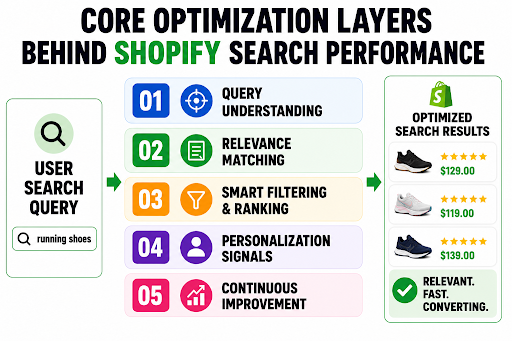
Core Optimization Layers Behind Shopify Search Performance
Understanding these core optimization layers helps create a Shopify store that performs better in search while delivering a seamless shopping experience.
Conclusion
SEO for Shopify stores is now about building performance-driven ecosystems where rankings and user experience work together to drive measurable growth. Brands need strategies that go beyond visibility and focus on speed, structure, and conversion readiness. As competition increases, a balanced approach becomes essential for long-term success. At Think Shaw, we help Shopify businesses strengthen their digital presence through technical SEO, UX-focused optimization, and data-led strategies designed to improve rankings, enhance engagement, and support sustainable ecommerce growth in a highly competitive market.
Partner with Think Shaw to boost your Shopify rankings, improve user experience, and drive sustainable ecommerce growth.
Frequently Asked Questions About Shopify SEO
Why is UX important in Shopify SEO?
UX improves engagement, reduces bounce rates, and increases conversions. Search engines also reward smooth navigation, fast loading, and mobile-friendly design, improving overall rankings.
How long does Shopify SEO take to show results?
Shopify SEO typically shows noticeable improvements within 3–6 months, depending on competition, site health, content quality, and consistency of optimization efforts.
What are common Shopify SEO mistakes?
Common mistakes include duplicate product pages, poor internal linking, slow page speed, missing meta tags, and over-optimized keyword usage that harms readability.
What makes Shopify SEO different from regular website SEO?
Shopify SEO is platform-specific, requiring optimization around product pages, collections, app dependencies, and theme limitations that affect indexing, speed, and overall search performance.
Does Shopify automatically rank products on Google?
No, Shopify does not guarantee rankings. Stores still require proper optimization, indexing setup, and content strategy to appear in search results.