When someone starts looking for a home, they usually do not search for “a real estate agent” and stop there. They search for homes in a neighborhood, the best areas for families, or an agent who understands first-time buyers. That is where the right local SEO for realtors can make a real difference. For real estate agents, ranking well means showing up when potential clients are actively exploring locations, comparing options, and getting ready to speak with a professional.
In this blog, we will look at how neighborhood-focused keywords, buyer intent searches, local content, and trusted location signals can help agents attract relevant traffic and turn search visibility into genuine enquiries from people who are already interested in the markets they serve.
Key Local SEO Insights for RealtorsReal estate SEO succeeds when agents align neighborhood-focused pages with the way buyers research, compare, and act. Strong pages combine original local insights, current market data, useful amenities, listings, internal links, and clear calls to action. Content should address early research, comparison, and transactional intent, while Google Business Profile optimization, reviews, citations, structured data, expert authorship, and accurate service-area signals strengthen local authority, GEO visibility, and qualified potential lead generation. |
How Neighborhood and Buyer Intent Searches Work in Real Estate
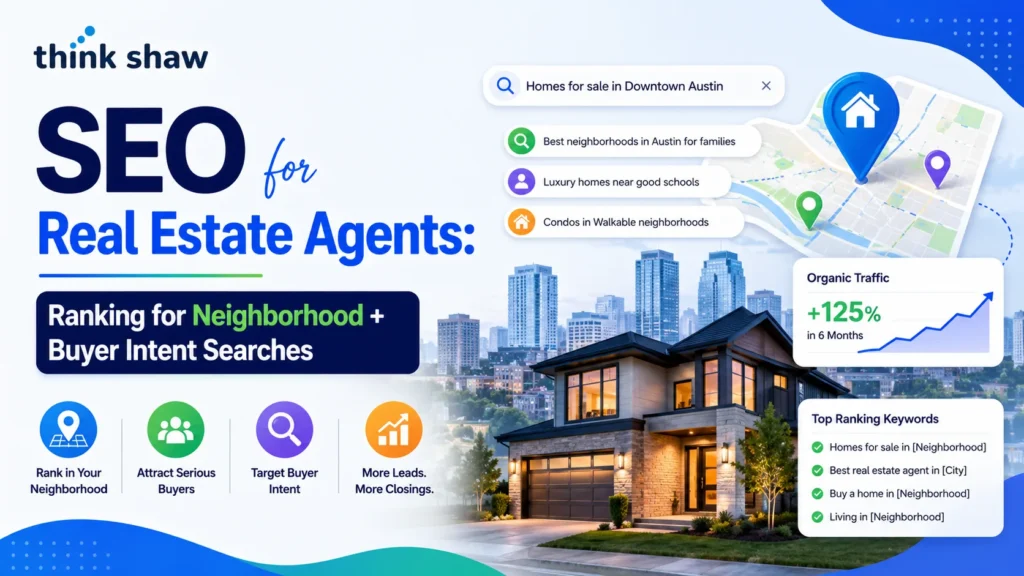
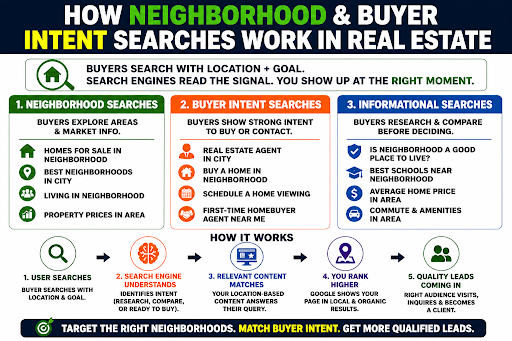
People searching for real estate online rarely use broad terms alone. Instead, they combine location-specific phrases with their buying goals, creating what are known as neighborhood and buyer intent searches. Search engines use these signals to determine whether a user is researching, comparing properties, or ready to contact an agent. Understanding this intent allows real estate professionals to create realtor local SEO content that matches what buyers are actively looking for.
Common neighborhood searches include:
- Homes for sale in [Neighborhood]
- Best neighborhoods in [City]
- Living in [Neighborhood]
- Property prices in [Area]
High buyer intent searches include:
- Real estate agent in [City]
- Buy a home in [Neighborhood]
- Schedule a home viewing
- First-time homebuyer agent near me
Targeting both search types in local SEO for real estate agents helps attract qualified visitors who are more likely to convert into genuine enquiries.
Build Location and Neighborhood Pages That Can Rank
A location page should help buyers evaluate an area, not simply repeat a generic service page with a different neighborhood name. Google recommends using the words people actually search for in prominent places such as the page title, main heading, alt text, and internal links. However, those keywords must be supported by useful, original information.
A strong neighborhood page under local SEO for realtors should include:
- A location-specific title and H1, such as “Homes for Sale in [Neighborhood].”
- Current housing information, including property types, price ranges, inventory, and market movement
- Local details, such as transport links, amenities, parks, schools, and major landmarks
- Original observations from the agent’s experience in that market
- Relevant listings and internal links to buyer services, market reports, and nearby areas
- A clear CTA, such as booking a viewing or requesting a local market consultation
Market figures should include a source and update date because outdated prices can weaken trust. Avoid producing dozens of near-identical pages by changing only the city name. Google specifically advises against creating large numbers of pages for minor query variations and instead recommends unique, valuable content based on real experience.
For U.S. agents, neighborhood descriptions should remain factual and impartial. Advertising must not imply preferences or exclusions based on protected characteristics. School or crime information should be presented consistently, using reliable third-party data rather than subjective claims about who should live in an area.
Match Real Estate Content With Different Buyer Intent Stages
Not every property searcher is ready to call an agent. Some are learning about an area, others are comparing options, and a smaller group is actively preparing to view or purchase a home. Realtor SEO content should match the specific decision being made at each stage.
Early Research Intent
These searches help buyers understand a market:
- Cost of living in [City]
- What is it like to live in [Neighborhood]?
- Average home prices in [Area]
- Commute options from [Neighborhood]
The content should provide clear facts, local context, maps, and links to deeper neighborhood resources.
Comparison Intent
These users are narrowing their options:
- [Neighborhood A] vs [Neighborhood B]
- Condos vs townhomes in [City]
- Best areas for first-time buyers in [Location]
- Buying in the city centre vs suburbs
Comparison pages should explain meaningful differences in property type, pricing, transport, amenities, and availability rather than declaring one area universally “better.”
Transactional Intent
These searches indicate stronger readiness:
- Homes for sale in [Neighborhood]
- Buyer’s agent in [City]
- Open houses near me
- Schedule a property viewing
High-intent pages in local SEO for realtors need visible listings, agent credentials, testimonials, contact options, and direct CTAs. Internal links should move readers naturally from research articles to comparison pages, neighborhood pages, listings, and enquiry forms. This creates a connected content journey while also giving search engines crawlable paths between related pages.
Strengthen Local Authority and GEO Visibility
Google states that local results are primarily influenced by relevance, distance, and prominence. An agent cannot control the searcher’s distance from the business, but they can strengthen relevance by accurately describing their services and improve prominence through reviews, links, mentions, and an established local presence.
Agents should therefore:
- Complete and verify their Google Business Profile
- Select accurate primary and secondary business categories
- Keep contact details, hours, website links, and service areas current
- Upload genuine office, team, listing, and neighborhood photos
- Request authentic client reviews and respond professionally
- Earn mentions from local publications, associations, businesses, and community websites
- Keep business information consistent across the website and trusted directories
The website should also identify the agent clearly through an author biography, licensing details, experience, office information, professional memberships, and evidence of local transactions or market knowledge. Google explains that clear authorship and demonstrated experience can help users assess a page’s trustworthiness, although E-E-A-T is not a single standalone ranking factor.
Use appropriate structured data, such as LocalBusiness or RealEstateAgent, with accurate business details. The areaServed property can describe the geographic market covered by the business. Structured data helps search engines understand page entities, but it does not guarantee rankings or enhanced search features.
For GEO and AI-search visibility, provide concise answers beneath descriptive headings, cite local data sources, include update dates, add original market observations, and ensure the pages are crawlable and indexable. Google’s current guidance states that AEO and GEO remain extensions of foundational real estate local SEO rather than separate systems requiring special tricks. Unique, expert-led, non-commodity content remains more valuable than generic articles that repeat widely available information.
Conclusion
Effective real estate SEO begins with understanding how buyers search, compare neighborhoods, and move toward a purchase decision. By creating valuable location pages, aligning content with buyer intent, and building strong local authority, real estate agents can improve visibility across traditional, local, and AI-powered search results while attracting more qualified leads. If you’re ready to strengthen your local search presence and generate consistent, high-intent enquiries, Think Shaw can help with tailored SEO strategies designed specifically for real estate businesses.
Contact us today and start turning local searches into long-term clients.
FAQs
Why is Google Business Profile important for real estate agents?
A well-optimized Google Business Profile improves local visibility, increases trust, appears in Google Maps results, and makes it easier for nearby buyers to contact you.
What are local citations in real estate SEO?
Local citations are online mentions of your business name, address, and phone number across directories and local websites, helping search engines verify business legitimacy and location.
Should real estate agents target multiple cities on one page?
No. Dedicated pages for each service area provide better relevance, improve user experience, and help search engines understand your geographic expertise more accurately.
Is mobile optimization important for real estate websites?
Absolutely. Most property searches happen on mobile devices, making fast loading speeds, responsive design, and easy navigation essential for rankings and user engagement.
What is the biggest SEO mistake real estate agents make?
Many agents rely solely on property listings while neglecting educational content, technical SEO, website performance, and local authority signals that support long-term organic growth.