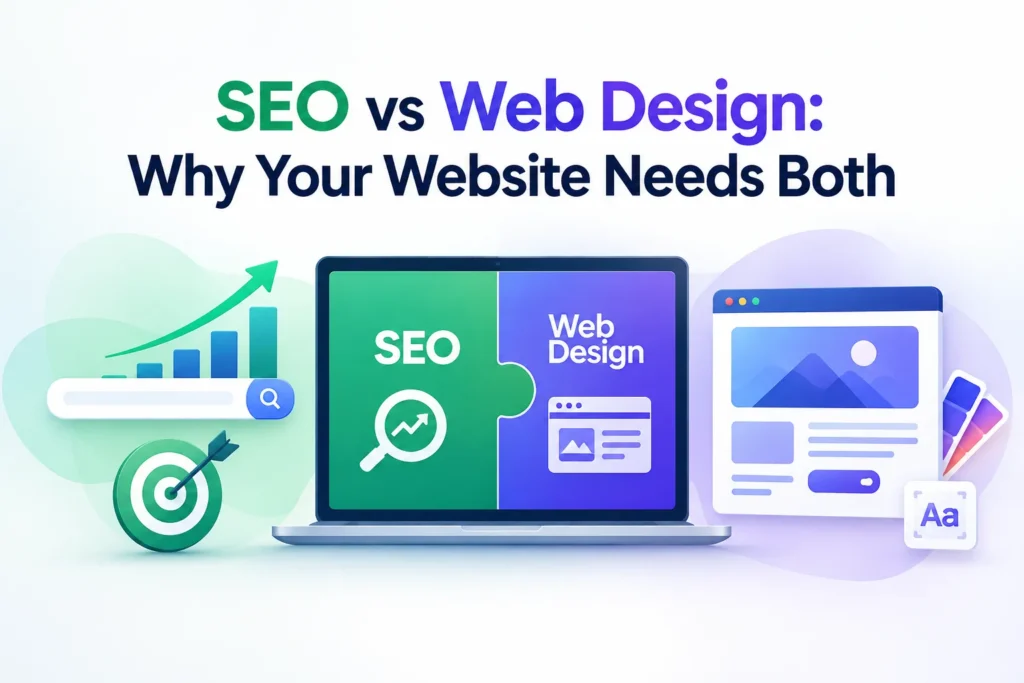
Search engine optimization (SEO) and web design address different aspects of a website, but both influence how well it serves visitors and supports goals. SEO helps search engines discover, understand, and rank pages, while web design shapes usability, navigation, accessibility, and user experience. A website can have visual appeal yet struggle to attract organic traffic, or rank well while frustrating visitors with usability. Understanding the relationship between these disciplines helps businesses make practical decisions when planning and maintaining a website.
This guide examines where SEO and web design differ, where they intersect, and how to integrate them from the beginning.
SEO and Web Design: Key TakeawaysSEO and web design work best when integrated to create websites that attract relevant traffic and deliver strong user experiences. SEO supports discoverability through search-friendly content, structure, and technical foundations, while design influences usability, accessibility, engagement, and conversions. Combining both disciplines helps businesses avoid ranking and usability issues, establish effective information architecture, optimize performance, and create user-focused experiences. Ongoing measurement and testing further ensure the website evolves with audience needs, search behavior, and business objectives. |
What SEO and Web Design Each Do for a Website
SEO and web design serve different purposes, but their impact on a website is closely connected. SEO helps search engines discover, understand, and index content, while web design determines how easily visitors can access, understand, and interact with that information. Research from the World Wide Web Consortium (W3C) Web Accessibility Initiative (WAI) emphasizes that meaningful headings, clear link text, logical page structure, and consistent navigation improve usability and accessibility. W3C also notes that properly structured content can help search engines better index website information. This highlights why SEO and design should not operate independently. SEO can strengthen discoverability, while thoughtful design makes discovered content easier to navigate and use. Combining both creates a website that supports search visibility, accessibility, user engagement, and business objectives.
Where SEO and Web Design Directly Intersect
SEO and web design overlap at several practical points where technical decisions can affect both rankings and visitor experience.
Mobile Responsiveness
Responsive design allows website layouts to adapt to different screen sizes, making pages easier to use across smartphones, tablets, and desktops. Mobile usability also matters for search performance because Google uses mobile-first indexing, meaning it primarily uses the mobile version of content for indexing and ranking. Designing responsively therefore supports both accessibility and search visibility.
Website Speed and Performance
Page performance affects how efficiently users access content and interact with a website. Research from Google Search Central confirms that Core Web Vitals measure real-world loading performance, interactivity, and visual stability, making these factors important for page experience. Large images, excessive scripts, and inefficient code can slow websites down. Optimizing resources and improving technical implementation can therefore support smoother usability while strengthening overall SEO performance.
Navigation and Site Structure
Clear navigation helps visitors find important information without unnecessary effort while also helping search engines understand relationships between pages. Logical categories, descriptive navigation labels, and internal links can establish a useful site hierarchy. A well-organized structure makes content easier to discover, supports efficient crawling, and creates a more predictable experience for users.
Content and Visual Hierarchy
Design determines how content is presented, while SEO helps ensure that content can be discovered and understood through search. Clear headings, readable typography, descriptive links, and well-structured sections help visitors scan information. Using meaningful HTML elements and organizing content logically can also provide search engines with stronger contextual signals about each page.
| Create a website that combines strategic SEO with thoughtful web design to improve visibility, strengthen user experience, and support long-term business growth. |
The Problems That Arise When SEO and Web Design Work Separately
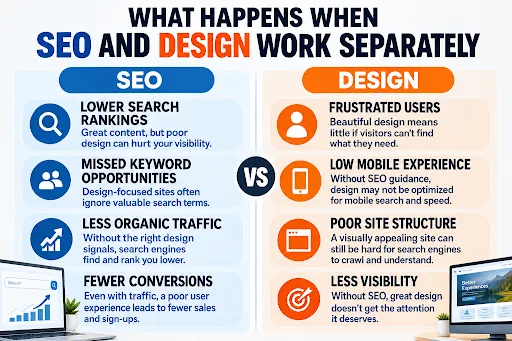
When SEO and web design work separately, websites often struggle to achieve both strong visibility and a positive user experience. Designers may create visually appealing pages without considering search intent, site structure, page speed, mobile usability, or crawlability. At the same time, SEO strategies can become difficult to implement after design decisions are finalized. This disconnect can lead to poor rankings, slower performance, confusing navigation, and missed conversion opportunities. Integrating SEO from the beginning ensures the website looks professional while remaining accessible, search-friendly, and effective.
How to Build a Website With Both From the Start
Integrating SEO during the design process prevents avoidable technical and content problems while creating a stronger foundation for long-term growth.
Plan Information Architecture
Start by organizing pages around user needs, business objectives, and relevant search topics. Create a logical hierarchy that connects major sections with supporting pages, then establish intuitive navigation between them. Planning the information architecture early can prevent confusing URL structures, unnecessary duplicate pages, and disconnected content that becomes difficult for visitors and search engines to navigate.
Design for Users and Search
Build page layouts around clear user journeys while leaving sufficient space for useful, crawlable content. Establish consistent heading structures, readable typography, descriptive links, and accessible navigation. Designers and SEO specialists should collaborate before templates are finalized so visual decisions do not unintentionally hide important content, create confusing interactions, or restrict search engines from accessing essential information.
Prioritize Technical Performance
Choose lightweight design elements and development practices that support fast, stable page experiences. Optimize images, minimize unnecessary scripts, use efficient code, and ensure pages work properly across devices. Performance should be considered during design and development rather than treated as a final-stage fix. This approach can reduce technical rework while creating a smoother experience for visitors.
Measure, Test, and Improve
A website should be evaluated after launch using both user-experience and SEO performance data. Monitor organic visibility, search queries, engagement patterns, conversions, page performance, and technical issues to identify opportunities for improvement. Regular testing can reveal problems that were not obvious during development, allowing teams to refine content, navigation, templates, and technical elements based on evidence.
Conclusion
A successful website brings SEO and web design together from the start. Strong search visibility attracts the right audience, while purposeful design keeps visitors engaged and encourages conversions. At Think Shaw, we combine SEO strategy, creative web design, technical performance, and user-focused experiences to build websites designed for sustainable growth. Our approach helps businesses improve rankings, enhance website performance, generate quality leads, and turn digital traffic into measurable results while building a stronger, more competitive online presence.
| Build a website that looks professional, attracts the right audience, and supports your business goals with SEO and strategic web design working together from the start. |
FAQs About SEO vs. Web Design
How often should a business redesign its website?
There is no fixed schedule. Consider redesigning when your website looks outdated, performs poorly, no longer supports business goals, or delivers an ineffective customer experience.
Is SEO more important than having a modern-looking website?
Neither should be prioritized alone. SEO attracts relevant visitors, while effective design builds credibility and encourages those visitors to explore, trust, and contact your business.
Can a new website improve my business’s conversion rate?
Yes. A strategically redesigned website can improve conversions by addressing user concerns, strengthening messaging, simplifying decision-making, and creating clearer paths toward enquiries or purchases.
What should I prepare before starting an SEO-focused website redesign?
Gather existing website data, important URLs, analytics, conversion goals, brand assets, customer insights, and existing content to help your team make informed redesign decisions.
Can SEO and web design work together for ecommerce websites?
Yes. Ecommerce sites benefit from combining search strategy with product discovery, category organization, persuasive product pages, trust-building elements, and streamlined purchasing journeys.