A website redesign can improve usability, performance, and conversions, but changing its structure without considering SEO can put established organic visibility at risk. Search engines rely on signals from URLs, content, internal links, canonical tags, and crawlable site architecture to understand and rank pages. Google recommends planning changes carefully, mapping old URLs to relevant new destinations, and using permanent redirects when URLs change. A successful website redesign SEO strategy therefore begins before development starts, protecting valuable search equity while creating a stronger foundation for users and search engines alike. This guide explores the key considerations involved.
Website Redesign SEO: Key TakeawaysA successful redesign preserves SEO while improving usability, performance, and conversions. Key priorities include auditing existing rankings, URLs, backlinks, and content; mapping URL changes and implementing redirects; preserving valuable content and internal links; checking technical SEO elements; thoroughly testing before launch; and monitoring traffic, rankings, indexing, and crawl issues afterward. A strategic approach helps maintain search visibility, protect existing SEO value, and create a stronger foundation for sustainable online growth. |
What Can Cause SEO Loss During a Website Redesign?
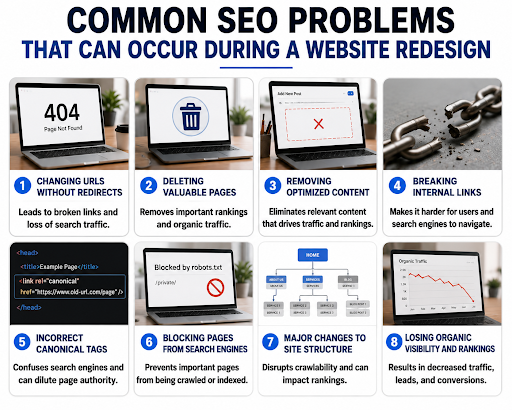
SEO loss during a website redesign can happen when key search signals are changed or removed without proper planning. Common issues include changing URLs without redirects, deleting valuable pages, removing optimized content, breaking internal links, incorrect canonical tags, and accidentally blocking pages from search engines. Major changes to site structure can also affect how search engines crawl and understand important pages. These problems can reduce organic visibility and rankings, especially when high-performing pages are altered without preserving their existing SEO value.
The Website Redesign Process Without Hurting SEO
A careful redesign process helps preserve existing rankings while improving your website’s structure, performance, and user experience.
- Audit the Existing Website: Review your current website to identify high-performing pages, rankings, organic traffic, URLs, content, backlinks, metadata, and internal links. This establishes a clear SEO baseline and helps determine which elements need to be preserved during the redesign, reducing the risk of accidentally removing valuable search signals.
- Create an SEO-Friendly URL Map: List your existing URLs and match them with their corresponding new URLs before making structural changes. For every URL that changes, create a relevant permanent redirect to the appropriate new page. This helps search engines understand where existing content has moved and preserves valuable SEO signals.
- Preserve Valuable Content: Keep important content that currently attracts organic traffic, rankings, backlinks, or conversions. Avoid removing useful pages simply to create a cleaner design. When content needs updating, retain its important topics, search intent, and valuable information while improving readability, structure, and relevance for the redesigned website.
- Maintain Internal Linking: Review internal links throughout the redesigned website and ensure important pages remain easily accessible. Update links to point directly to the correct new URLs and maintain logical connections between related pages. Strong internal linking helps users navigate the website while allowing search engines to discover and understand important content.
- Test the New Website Before Launch: Thoroughly test the redesigned website before making it live. Check redirects, broken links, page accessibility, canonical tags, indexing settings, metadata, navigation, mobile usability, and technical elements. Testing helps identify SEO problems before launch and prevents temporary development settings from accidentally blocking search engines from accessing important pages.
- Update Sitemap and SEO Elements: Update the XML sitemap with the redesigned website’s correct URLs and review canonical tags, internal links, headings, metadata, and other important SEO elements. Make sure these signals consistently reference the new page structure so search engines can efficiently discover, understand, and index the redesigned website.
- Monitor SEO Performance After Launch: Continue monitoring organic traffic, rankings, indexed pages, crawl issues, redirects, and user behavior after launch. Compare performance with your pre-redesign baseline to identify unexpected changes. Address technical errors, missing pages, broken redirects, or indexing problems quickly to minimize their potential impact on search visibility.
| Experience expert website redesign and SEO strategies designed to protect rankings, strengthen visibility, and drive sustainable business growth. |
How to Protect SEO Before and During the Redesign
Protecting SEO during a redesign starts with preserving the signals that already contribute to search visibility.
- Audit Existing SEO: Identify high-ranking pages, organic traffic, backlinks, keywords, metadata, and indexed URLs before making changes.
- Preserve Important URLs: Keep existing URLs where possible to avoid unnecessary ranking disruption and maintain established search signals.
- Create Redirects: Map changed URLs to relevant new pages using permanent redirects so users and search engines can follow the new structure.
- Retain Valuable Content: Keep useful, ranking content and important keywords instead of removing them solely for design or layout changes.
- Test Before Launch: Check links, redirects, indexing, canonical tags, mobile usability, and crawlability to identify SEO issues before the redesigned site goes live.
How to Launch a Redesigned Website Without Losing Rankings
A strategic launch protects existing SEO signals while ensuring the redesigned website remains accessible, crawlable, and search-friendly.
Set Up URL Redirects
Create permanent redirects for URLs that have changed during the redesign. Each old URL should lead to its most relevant new page rather than an unrelated destination. Proper redirects help preserve existing search value and prevent users from encountering broken pages after the website goes live.
Check Technical SEO
Review robots.txt, indexing settings, canonical tags, XML sitemap, page status codes, and internal links before launch. Make sure important pages remain accessible to search engines and free from accidental restrictions. According to Google Search Central, accurate sitemaps, accessible pages, and consistent canonical signals support effective crawling and indexing. These checks help prevent technical configuration errors from affecting search visibility.
Test the Website Before Launch
Crawl and thoroughly test the redesigned website before making it live. Check important pages, redirects, links, navigation, metadata, mobile usability, and page accessibility. Testing provides an opportunity to identify and fix SEO issues before they affect users, search engines, rankings, or organic traffic.
How to Monitor SEO After a Website Redesign
Monitoring SEO after a redesign helps identify ranking changes and technical issues that may affect organic visibility. Compare organic traffic, keyword rankings, indexed pages, and landing-page performance with your previous baseline. According to Google’s Analyzing Google Search Traffic Drops article recommends comparing Search Console data across periods and examining affected queries and URLs to understand significant traffic changes. Check important URLs regularly to confirm redirects work correctly, pages remain accessible, and canonical tags are accurate. Monitor high-performing pages closely so unexpected declines in rankings or traffic can be investigated and corrected promptly.
Conclusion
A successful website redesign should protect SEO while creating a stronger foundation for growth. At Think Shaw, we combine our SEO expertise with purposeful web design, technical performance, and user-focused strategies to build websites that support visibility and conversions. Our approach helps businesses preserve valuable rankings, improve performance, attract qualified visitors, and create a competitive online presence built for long-term digital growth.
| Protect your rankings and elevate your online presence with our expert SEO-focused website redesign solutions. |
Frequently Asked Questions About Website Redesign SEO
How long does it take for SEO to recover after a website redesign?
SEO recovery varies depending on the scale of changes, website authority, and crawling frequency. Minor fluctuations may stabilize within weeks, while larger changes can take longer.
Can a website redesign improve SEO?
Yes. A redesign can create opportunities to improve site speed, mobile experience, accessibility, content organization, and overall usability, which can contribute to stronger organic search performance.
How often should a business redesign its website?
There is no fixed redesign schedule. Businesses should consider redesigning when technology becomes outdated, user needs change, performance declines, or the website no longer supports current business objectives.
Should I redesign my website before or after an SEO campaign?
Ideally, SEO considerations should be incorporated before and during the redesign. This allows the new website structure, content, and technical foundation to support search visibility from the beginning.
How can I tell if my redesigned website has SEO problems?
Look for unusual drops in organic traffic, impressions, clicks, indexed pages, or conversions. Comparing these metrics with pre-redesign performance can help reveal potential problems.