
A blog post getting thousands of monthly clicks doesn’t mean much if everyone leaves without taking action. You don’t need more content; you need to master blog lead generation so you can turn the attention you already have into real relationships.
That’s where smart lead magnets and email capture come in. By transforming your best posts into subscriber-generating tools, you can turn casual readers into a steady stream of qualified business opportunities.
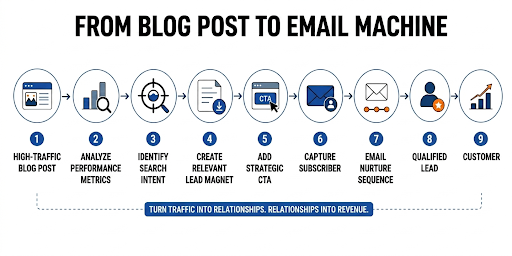
This guide breaks down exactly how to do it. You’ll learn how to pick the right content, create offers your audience actually wants, and set up automated email systems that quietly turn blog traffic into loyal subscribers.
Key Takeaways and Strategic OverviewHigh-performing blog posts can become powerful lead-generation assets when paired with relevant lead magnets and optimized conversion opportunities. Identifying content with strong traffic, engagement, and search intent creates the foundation for sustainable email list growth. Strategic content upgrades, well-placed CTAs, and automated email nurture sequences help transform passive readers into engaged subscribers. By connecting valuable content with targeted offers and follow-up automation, businesses can create a scalable system that turns existing blog traffic into long-term customer relationships and qualified leads. |
How to Identify Blog Posts That Already Have Lead Generation Potential
Not every high-traffic blog post can become an effective lead magnet. The best candidates are posts that already attract readers actively looking for solutions, frameworks, or actionable guidance. Start by identifying articles that consistently generate organic traffic over several months rather than posts driven by short-term trends. These posts have already proven their ability to attract the right audience, making them ideal for subscriber generation and long-term email list building.
Look for blog posts that demonstrate:
- Consistent organic traffic over several months
- High average time on page
- Strong scroll depth and engagement
- Problem-solving search intent
- Low conversion rates despite high visibility
- Evergreen relevance rather than seasonal interest
Another important indicator is search intent. A blog targeting queries like “how to create an email marketing strategy” or “SEO audit checklist” naturally creates opportunities for downloadable resources because readers are already seeking implementation support. The goal is to find content where visitors have demonstrated interest but are leaving without taking the next step. These posts provide the strongest foundation for creating effective lead magnets from blogs that convert visitors into subscribers.
Converting High-Traffic Blog Posts into Irresistible Lead Magnets
The most successful lead magnets are not created from scratch; they are extensions of content that readers already find valuable. Instead of offering a generic newsletter subscription, transform the blog’s core topic into a practical resource that helps readers achieve a faster result.
For example, a blog explaining how to perform a content audit can be upgraded with a downloadable content audit template. A post discussing email campaign planning can offer a ready-to-use campaign calendar. The key is relevance. The lead magnet should solve the same problem as the blog while reducing the effort required to implement the advice. This is where strategically designed content upgrades become highly effective.
The most effective lead magnets typically include:
- Checklists for step-by-step implementation
- Templates that save readers time
- Worksheets that guide execution
- Frameworks for strategic planning
These formats work because they help readers apply the information immediately rather than simply consuming more content. Well-designed content upgrades increase the perceived value of the article and encourage more sign-ups. When readers see a direct connection between the article they are consuming and the resource being offered, subscription rates often increase significantly.
| Blog Post Type | Ideal Lead Magnet |
| How-To Guide | Checklist |
| Tutorial | Worksheet |
| Strategy Article | Framework |
| List Post | Resource Toolkit |
| Case Study | Process Template |
| Comparison Guide | Buyer’s Checklist |
Optimizing Blog Content to Capture More Email Subscribers
Even the most valuable lead magnet will underperform if readers never see it. To maximize conversions, subscription opportunities should be strategically integrated throughout the content experience rather than placed only at the end of the article.
One effective approach is positioning a content upgrade immediately after a major takeaway or actionable insight. At this point, readers have already experienced value and are more likely to engage with a related offer. Mid-content CTAs often outperform end-of-post offers because they capture visitors before they leave the page.
Another proven tactic is using two-step opt-ins. Instead of displaying a form immediately, ask readers to click a button to access the resource. This small commitment increases the likelihood of completing the subscription process and supports stronger email list-building efforts.
The messaging itself also matters. Generic phrases such as “Subscribe Now” rarely perform as well as benefit-driven CTAs. Readers are more likely to respond to specific outcomes, such as “Download the Content Audit Template” or “Get the Email Campaign Checklist.” Every element of the blog should make the next step feel like a natural continuation of the reader’s journey.
Building Automated Email Funnels That Turn Subscribers into Customers
Capturing an email address is only the beginning. A blog becomes a true email machine when every new subscriber enters a structured nurture sequence designed to deepen engagement and move them toward a business objective.
The first email should immediately deliver the promised lead magnet while reinforcing the value readers can expect. The following emails should expand on the original topic, answer related questions, and provide practical examples that help subscribers achieve better results. This keeps the conversation aligned with the reason they subscribed in the first place.
A simple nurture sequence may include:
- Email 1: Deliver the promised lead magnet
- Email 2: Expand on the original topic
- Email 3: Share a practical example or case study
- Email 4: Address common challenges and objections
- Email 5: Introduce a relevant product or service
This progression builds trust before presenting a commercial offer. The effectiveness of the funnel should be measured through metrics such as subscriber engagement, click-through rates, lead quality, and subscriber-to-customer conversion rates. When implemented correctly, the process transforms a single blog visit into an ongoing relationship, creating a predictable system for generating qualified leads and future customers.
Conclusion
Every time someone leaves your website without subscribing, you’ve missed a real chance to connect. Writing great content is only half the battle; the real magic happens when you build a system that actually turns casual readers into loyal fans.
That’s where ThinkShaw comes in. We help you get more value out of the content you already have. By using smart lead magnets, optimizing your site for actual conversions, and setting up automated email funnels, we turn your existing traffic into a growing audience and steady, long-term business opportunities.
Curious to see how we do it? Meet the team at ThinkShaw and learn how we can help you start converting your traffic today.
Frequently Asked Questions About Turning Blog Posts into Lead Magnets
What is the ideal conversion rate for a blog-based lead magnet?
While rates vary by industry, many successful lead magnets convert between 2% and 10% of blog visitors.
Should I create a separate lead magnet for every top-performing blog post?
Not necessarily; closely related posts can often share a single lead magnet if the audience’s intent is similar.
Can lead magnets help reduce dependence on paid advertising?
Yes, growing an email list from existing blog traffic creates an owned audience that doesn’t rely on ad spend.
How often should I update a lead magnet connected to an evergreen blog post?
Review it at least every 6–12 months to ensure the information remains accurate and valuable.
Can a lead magnet work if my blog receives only a few hundred visitors per month?
Yes, highly targeted traffic often produces better subscriber quality than large amounts of untargeted traffic.