
A visually appealing Squarespace SEO agency website can still struggle to attract organic traffic if its SEO fundamentals are overlooked. Many businesses assume they need a complete redesign to improve search rankings, but in reality, targeted optimizations often deliver stronger results with far less time and expense. From refining page structure to improving content relevance and technical performance, small adjustments can significantly enhance search visibility while preserving your existing design. This guide explores practical Squarespace SEO improvements that help search engines better understand your website, increase discoverability, and support long-term organic growth without requiring a complete website rebuild.
SEO Optimization SummaryImproving Squarespace SEO starts with strengthening page structure, metadata, image optimization, and internal linking before considering a redesign. Advanced strategies such as aligning content with search intent, improving technical SEO, monitoring indexability, and expanding topical authority through relevant content further increase organic visibility. Regular SEO audits and continuous optimization help maintain search performance, enabling businesses to attract qualified traffic, improve rankings, and achieve sustainable long-term growth without changing their website’s design. |
Common Squarespace SEO Issues That Limit Organic Visibility
Even well-designed Squarespace SEO agency websites can experience ranking challenges when important SEO elements are neglected. Addressing these common issues helps search engines crawl, interpret, and rank your pages more effectively.
Weak Heading Structure and Content Hierarchy
Search engines rely on headings to understand page topics and content relationships. A Squarespace SEO company will often identify heading structure as one of the first elements to review during an SEO audit. Many Squarespace websites either use multiple H1 headings or replace heading tags with styled text purely for visual purposes. This weakens content organization and reduces keyword relevance. Every page should include a single descriptive H1 followed by logically structured H2 and H3 headings that guide both users and search engines through the content.
Missing or Generic Metadata
Title tags and meta descriptions remain essential ranking and click-through factors. According to BrightEdge research published by Search Engine Land, 95% of pages ranking in Google’s top 10 have meta descriptions, highlighting the importance of well-optimized metadata for search visibility. Generic titles such as “Home” or duplicated metadata make it difficult for search engines to distinguish content. Creating unique, keyword-focused title tags and meta descriptions for every page helps improve relevance, visibility, and user engagement
Unoptimized Images and Internal Links
Large image files can slow loading speeds, affecting both user experience and search performance. Additionally, missing alt text limits image accessibility and reduces opportunities for image search visibility. Internal links are equally important, helping search engines discover related content while distributing authority across your website. Linking relevant pages naturally creates stronger topical relationships and improves navigation.
Advanced Squarespace SEO Improvements That Deliver Results Without Changing Your Design
Once foundational Squarespace SEO agency issues are resolved, more advanced optimizations can further improve visibility while maintaining your existing Squarespace layout and branding.
Strengthen Keyword Intent Across Key Pages
Rather than inserting keywords repeatedly, align each page with a specific search intent. Product pages, service pages, blogs, and landing pages should each target unique search queries that match what potential visitors are actually looking for. Updating headings, introductory paragraphs, FAQs, and supporting content around user intent helps search engines better determine page relevance.
Improve Technical SEO and Indexability
Squarespace automatically manages many technical SEO settings, but website owners should still review XML sitemaps, robots.txt configurations, canonical URLs, and page indexing within Google Search Console. According to the 2026 HTTP Archive and Chrome UX Report, only 42% of websites pass all three Core Web Vitals, highlighting the competitive advantage of regularly monitoring performance and technical health. Fixing crawl errors, removing duplicate pages from indexing, and improving page experience help build a stronger foundation for long-term organic visibility.
Build Topical Authority Through Content Expansion
Instead of redesigning your website, expand your content ecosystem. Create supporting blog articles that answer related questions, address common customer concerns, and cover complementary topics within your industry. Linking these articles to core service pages signals topical expertise, strengthens internal linking architecture, and increases opportunities to rank for long-tail search queries that drive qualified organic traffic.
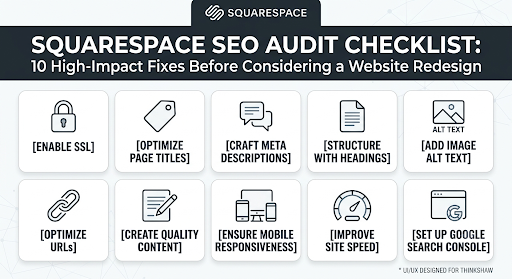
Squarespace SEO Audit Checklist: 10 High-Impact Fixes Before Considering a Website Redesign
Start with an SEO audit before redesigning your Squarespace website. This checklist highlights the most impactful fixes to improve rankings, crawlability, and user experience.
Conclusion
Improving Squarespace SEO is about making consistent, strategic improvements rather than investing in a complete website redesign. Businesses that regularly optimize technical SEO, content, site structure, and on-page elements build stronger search visibility and long-term organic growth. If you need expert support, Think Shaw is here to help. As a trusted Squarespace SEO agency, we deliver comprehensive SEO audits, technical optimizations, content enhancements, and performance-driven strategies that improve rankings, attract qualified traffic, and maximize your website’s potential without unnecessary redevelopment.
Frequently Asked Questions About Squarespace SEO
Can Squarespace rank well on Google without redesigning the website?
Yes. Optimizing content, metadata, internal linking, page speed, and technical SEO can significantly improve rankings without changing your site’s visual design.
How often should I perform a Squarespace SEO audit?
A comprehensive SEO audit every three to six months helps identify technical issues, outdated content, and optimization opportunities before they affect search performance.
Does Squarespace automatically handle technical SEO?
Squarespace includes built-in SEO features like XML sitemaps, SSL certificates, and clean URLs, but website owners should still monitor indexing, metadata, redirects, and crawl performance.
What is the biggest SEO mistake Squarespace users make?
One of the most common mistakes is publishing pages with duplicate metadata, poor heading structure, and limited internal linking, which weakens search engine understanding of the website.
Which SEO improvements typically deliver the fastest results?
Updating title tags, improving page content based on search intent, fixing technical errors, enhancing internal links, and optimizing image performance often produce noticeable improvements over time.