
Visual Search and e-commerce image SEO are changing how customers discover products online. Instead of typing keywords, shoppers can now search using a photo or screenshot, and search engines use artificial intelligence to identify products with similar visual features. To appear in these results, online stores need images that search engines can easily understand, not just high-quality visuals. This is where image SEO becomes essential. It involves optimizing product images with descriptive file names, relevant metadata, structured data, and accurate alt text so search engines can correctly interpret and index them. These signals help connect images to the right product information across visual search experiences.
In this blog, we’ll explore why it has become essential for online stores, how visual search is changing the way customers shop, the best practices for optimizing product images, and the trends shaping the future of image-based search.
Visual Search and Image SEO OverviewEffective e-commerce image SEO enables search engines and AI-powered visual search tools to better understand product images, improving visibility across image search and shopping experiences. Optimizing image quality, file names, alt text, structured data, and technical elements strengthens product discoverability while supporting accessibility and user experience. As visual search adoption continues to grow, image optimization has become an essential strategy for attracting high-intent shoppers and achieving sustainable organic ecommerce growth. |
Why E-commerce Image SEO Matters More Than Ever?
As more shoppers use tools like Google Lens to search with images instead of keywords, product image SEO helps improve visibility in visual search and Google Images, creating more opportunities for customers to discover products.
How Search Engines Identify Product Images?
Search engines use AI and multiple on-page signals to understand what a product image represents before deciding where it should appear. Optimizing these elements increases the likelihood of your images being surfaced in visual search results, Google Images, and shopping experiences.
- Image content: AI analyzes visual elements such as colors, shapes, textures, patterns, logos, and objects within the image.
- Alt text for e-commerce: According to the W3C’s image accessibility guidelines, descriptive alternative text helps search engines accurately interpret product images while improving accessibility for users who rely on assistive technologies.
- Descriptive file names: Clear, keyword-relevant file names offer additional information about the product.
- Structured data: Product schema connects images with details like price, availability, brand, and reviews.
- Page context: Headings, product descriptions, and surrounding content help confirm the image’s relevance to the page.
- High-quality visuals: Sharp, well-lit images from multiple angles improve product recognition and user experience.
How Visual Search Is Changing Online Shopping?
Visual search uses AI to recognize objects within an image and match them with visually similar products in search results. Instead of typing keywords, shoppers can upload a photo or screenshot using platforms like Google Lens, Google Images, Pinterest Lens, Bing Visual Search, Amazon Lens, and eBay Image Search to quickly discover relevant products.
Why Visual Search Is Becoming More Popular?
Several factors are driving the rapid adoption of these technologies in e-commerce:
- Image-first shopping behavior: Consumers often discover products through social media, online marketplaces, blogs, and videos before they know what the product is called.
- Mobile shopping growth: Smartphones make it easy to search using a photo or screenshot instead of typing long product descriptions.
- Faster product discovery: Visual search reduces the time needed to find products by matching images directly with similar items.
- Improved shopping accuracy: Searching with an image often produces more relevant results than broad text queries, especially for visually distinctive products.
By investing in visual search optimization, e-commerce businesses can increase product visibility, attract high-intent shoppers, and create more opportunities to convert visual searches into sales.
E-commerce Image SEO Best Practices for Product Pages
Optimizing product images requires both visual quality and technical accuracy. Following these e-commerce SEO best practices helps search engines index product images correctly while improving the overall shopping experience.
Optimize Image Quality and Performance
Use high-resolution product images with multiple angles to showcase important details without misleading customers. Choose appropriate image dimensions, compress files to reduce load times, and serve responsive images that display correctly across desktops and mobile devices. For file formats, use WebP whenever possible, JPEG for product photography, and PNG only when transparency is required.
Improve Image Relevance
Rename image files with descriptive, keyword-relevant names instead of generic filenames like IMG_1234.jpg. Add accurate alt text for e-commerce that clearly describes the product to improve accessibility and help search engines interpret the image. Keep image metadata consistent with the product title, description, and structured data so all page elements reinforce the same information.
Support Efficient Crawling
Enable lazy loading to improve page performance without affecting user experience, and create an image sitemap to help search engines discover and index product images more efficiently, according to Google’s image sitemap guidelines, especially on large e-commerce websites.
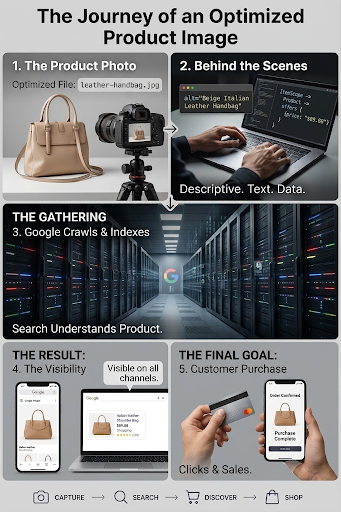
The Journey of an Optimized Product Image
Optimizing product images with descriptive file names, alt text, and structured data helps search engines crawl and index them accurately, improving visibility across Google Images, visual search, and the Google Shopping Graph, where customers can discover relevant products more easily.
Conclusion
As visual search continues to reshape online shopping, optimizing product images is becoming a fundamental part of staying competitive in search results. Businesses that invest in image-focused SEO today will be better prepared for evolving search technologies and changing customer behavior. Think Shaw can help you implement effective e-commerce image SEO strategies that improve visibility and drive long-term growth.
FAQs About E-commerce Image SEO and Visual Search
How often should e-commerce product images be updated?
Update product images whenever designs, colors, packaging, or features change. Refreshing outdated visuals also helps maintain accuracy and improves the overall shopping experience.
Can duplicate product images affect SEO?
Using the same image across multiple product pages can reduce uniqueness. Original product photos help differentiate listings and provide stronger signals for search engines.
What is the ideal image resolution for e-commerce websites?
There isn’t a universal size, but images should be high enough to support zoom functionality while remaining optimized for fast loading across all devices.
Do customer-generated product photos help SEO?
Customer photos can enrich product pages by adding unique visual content, increasing engagement, and providing additional context that supports a better shopping experience.
How can I measure the success of e-commerce image SEO?
Track metrics such as image search impressions, clicks, organic traffic, product page engagement, and conversions using tools like Google Search Console and web analytics platforms.