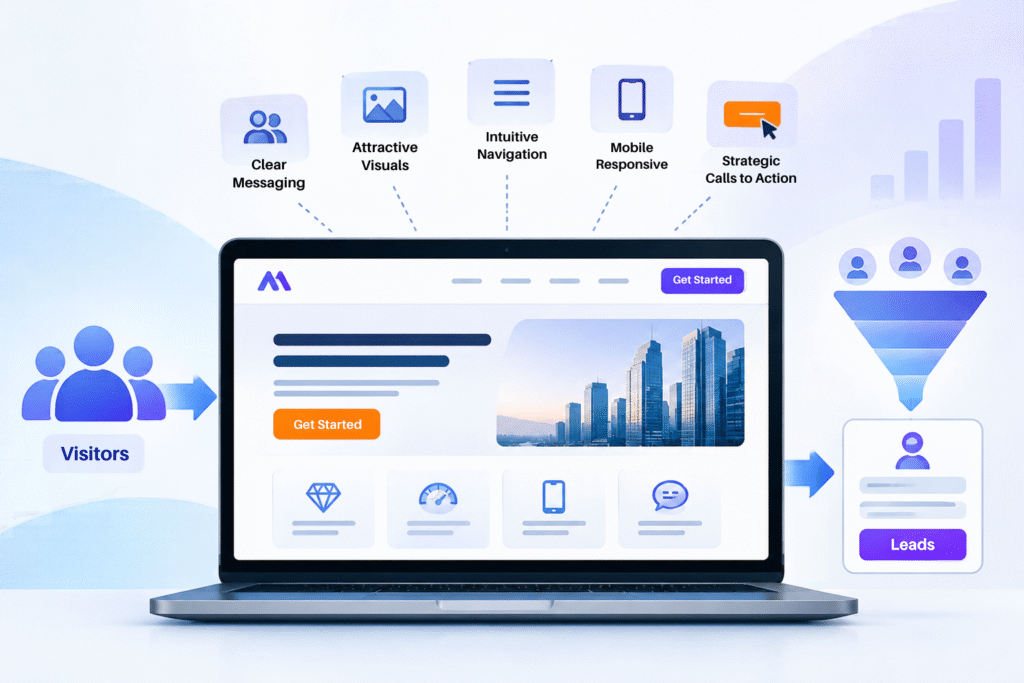
A business website may attract plenty of visitors, but turning that traffic into leads depends on how effectively the website is designed. According to Unbounce’s 2024 Conversion Benchmark Report, which analyzed more than 41,000 landing pages, 464 million visitors, and 57 million conversions, the median conversion rate across industries was 6.6%. The research also highlights how factors such as mobile optimization, clear messaging, and easy-to-understand content can influence conversions. This shows that website design is not only about visual appeal—it should guide visitors toward taking action. Below, we explore the key design elements that can help businesses convert more website visitors into valuable leads.
A Quick Overview of Lead ConversionEffective website design transforms visitor interest into valuable business opportunities by combining clear messaging, intuitive navigation, strategic calls to action, responsive performance, trust-building elements, and simple lead capture processes. Each element should support a smooth customer journey while reducing confusion and hesitation. Regular performance reviews, conversion tracking, audience-focused copy, and testing further help businesses refine their approach, improve engagement, and generate more qualified leads over time. |
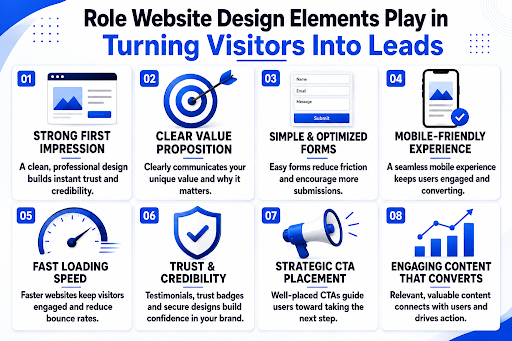
Role Website Design Elements Play in Turning Visitors Into Leads
Website design elements play a critical role in turning visitors into leads because they shape how easily users understand, navigate, and trust a business. A clear layout and strong visual hierarchy direct attention toward important information, while simple navigation helps visitors find relevant services without confusion. According to Stanford University’s Web Credibility Project, 46.1% of participant comments about website credibility focused on a site’s design look, including elements such as layout, typography, images, and colour schemes. Source: Stanford University’s Web Credibility Project. Strategic calls to action encourage users to take the next step, such as requesting a quote, booking a consultation, or submitting an enquiry.
Trust-building elements, including testimonials, reviews, certifications, and client logos, can reduce hesitation and strengthen credibility. Fast loading speeds and mobile-friendly design also create a smoother experience. When these elements work together, they reduce friction, build confidence, and guide visitors naturally from initial interest toward meaningful action and lead generation.
| Experience the benefits of conversion-focused website design with a strategic approach that helps attract qualified leads and supports meaningful business growth. |
Key Website Design Elements That Turn Visitors Into Leads
The right website design elements can guide visitor behaviour, build trust, and create clear conversion paths, including the following key elements:
Clear Value Proposition
Visitors should quickly understand what a business offers, who it serves, and how it solves a specific problem. A clear, benefit-focused value proposition communicates this immediately, captures attention, and gives potential customers a compelling reason to continue exploring and consider taking action.
Intuitive Navigation and User-Friendly Layout
Simple navigation and a well-organised layout help visitors locate important information without confusion or unnecessary effort. When users can easily explore services, pricing, resources, and contact options, they are more likely to remain engaged, understand the offering, and progress towards becoming a lead.
Strong and Strategic Calls to Action
Clear calls to action give visitors direct guidance on what to do next, whether requesting a quote, booking a consultation, or submitting an enquiry. Strategically placing relevant CTAs throughout the website creates visible conversion opportunities and encourages users to take meaningful action.
Mobile-Friendly and Fast-Loading Design
A website should provide a smooth experience across smartphones, tablets, and desktops. Responsive design and fast loading speeds reduce frustration and support engagement. According to GOV.UK’s Service Manual, responsive design helps users access content effectively across different devices. Source: GOV.UK’s Service Manual. These factors can support easier interactions and encourage potential customers to take action.
Trust Signals and Social Proof
Testimonials, reviews, case studies, certifications, and client logos help demonstrate credibility and reassure potential customers. By showing evidence of positive experiences and professional expertise, these trust signals can reduce uncertainty, strengthen confidence, and make visitors more comfortable sharing their details or contacting the business.
Simple Lead Capture Forms
Lead capture forms should be easy to locate, understand, and complete without unnecessary steps. Requesting only essential information reduces effort and hesitation, while clear labels and instructions help visitors feel confident about submitting their details and taking the next step towards becoming a qualified lead.
Conclusion
Turning website visitors into leads requires more than an attractive design. Strategic elements such as clear messaging, intuitive navigation, strong calls to action, trust signals, responsive layouts, and simple forms work together to create a seamless conversion journey. When every design element supports user needs and business goals, visitors are more likely to take meaningful action. Think Shaw creates conversion-focused websites that combine strategic design, user experience, and clear lead-generation pathways to help businesses attract qualified prospects, increase enquiries, and achieve sustainable digital growth.
| Transform more website visitors into qualified leads with conversion-focused website design built to create clear, engaging, and action-driven customer journeys. |
Frequently Asked Questions About Website Design and Lead Generation
What is a good website conversion rate for lead generation?
A good conversion rate varies by industry, audience, and offer. Businesses should benchmark performance against their sector and continuously test improvements rather than rely on one universal figure.
How long does it take to see results from website design improvements?
Results can appear soon after launch, depending on traffic volume. Meaningful insights usually require enough visitor data to identify consistent changes in conversion behaviour.
Should every website page have a conversion goal?
Yes, but goals can differ by page. Some pages may encourage enquiries, while others can focus on newsletter sign-ups, resource downloads, calls, or product exploration.
How often should a business update its website design?
Regular performance reviews are more effective than redesigning on a fixed schedule. Updates should be considered when user behaviour, technology, branding, or business goals change.
Does website copy affect lead generation?
Yes. Persuasive, audience-focused copy can clarify benefits, address customer concerns, and motivate action. Design and content should work together to support conversion goals.