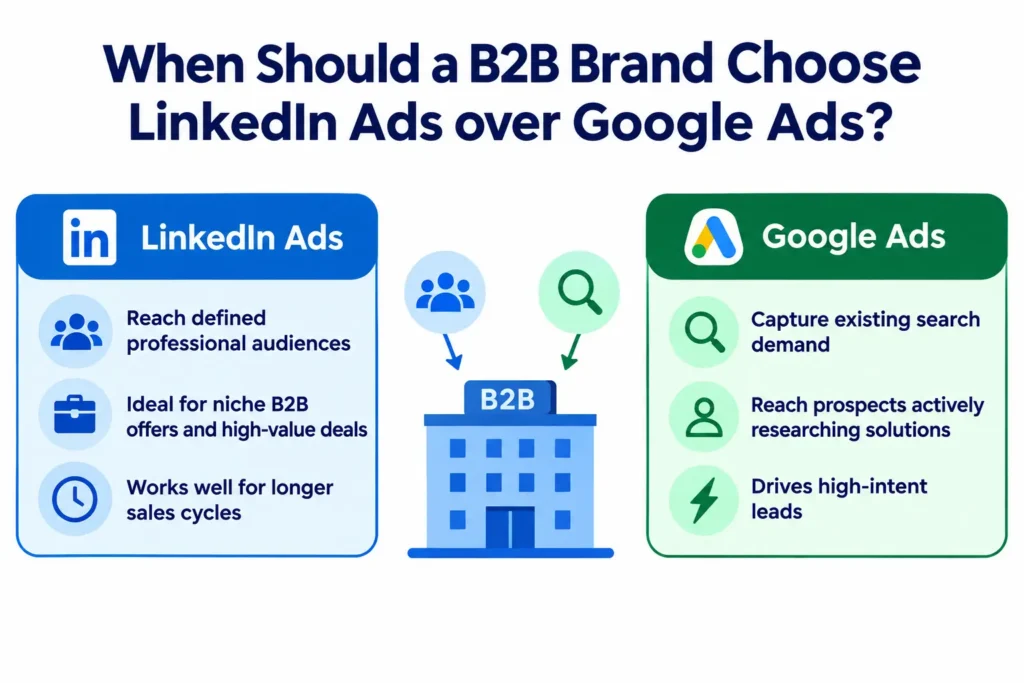
For B2B marketers, choosing between LinkedIn Ads and Google Ads starts with understanding how buyers discover and evaluate solutions. Google Search Ads can place a business in front of prospects actively searching for relevant products or services, using keywords to match ads with search terms. On the other hand, LinkedIn takes a different approach, allowing advertisers to define audiences using professional attributes such as job title, seniority, company, industry, and company size. This distinction matters when a B2B offer has a narrowly defined ideal customer profile, a complex buying process, or limited existing search demand. Understanding the relationship between search intent, audience targeting, deal value, and sales-cycle length can help determine which advertising platform deserves priority.
B2B Advertising Strategy: Key TakeawaysLinkedIn Ads excel at reaching defined professional audiences, making them valuable for niche B2B offers, high-value deals, and longer sales cycles. Google Ads is stronger for capturing existing search demand from prospects actively researching solutions. LinkedIn’s higher costs can be justified when lead quality and pipeline value matter more than click volume. Using both platforms can create full-funnel coverage, combining targeted audience reach with high-intent search capture and measurable business outcomes. |
LinkedIn Ads vs. Google Ads: Which Is Right for Your B2B Brand?
The right choice depends on how your B2B buyers discover solutions and where your ideal customer is easiest to reach. Google captures active search demand, while LinkedIn helps brands reach specific professional audiences.
Google Ads Captures Existing Search Demand
The right platform depends less on advertising preference and more on how your ideal buyers enter the purchasing process. Google Ads is built around search behavior: advertisers select keywords that can match the terms prospects use when looking for products, services, or solutions, a process explained in detail in Google Ads Help’s own documentation on keywords. This makes Google particularly useful when your market already has measurable search demand, and prospects are actively researching a solution.
LinkedIn Ads Targets Specific B2B Audiences
LinkedIn Ads approaches B2B targeting differently. Its campaigns can be built around professional characteristics such as job title, seniority, company, industry, job function, and company size, with targeting options detailed on LinkedIn Marketing Solutions’ own ad targeting page, making the platform useful when the identity of the buyer is more important than their current search activity.
Choose based on buyer intent
- Google Ads: Better suited to capturing existing demand from prospects searching for a known solution.
- LinkedIn Ads: Better suited to reaching a defined professional audience, including specific decision-makers or target accounts.
- Both platforms: Often make sense when your strategy needs to generate awareness with a defined audience and capture demand once prospects begin actively searching.
The key question is therefore not simply which platform costs less, but where your highest-value prospects are most identifiable and reachable at their current stage of the buying journey.
When Do Deal Size and Sales Cycle Make LinkedIn Ads Worth the Higher Cost?
The value of LinkedIn Ads becomes clearer when your B2B sales involve high-value deals or lengthy decision-making processes. In these situations, reaching the right decision-makers can matter more than simply generating the cheapest clicks.
When Higher LinkedIn Costs Make Business Sense
LinkedIn Ads can justify a higher advertising cost when the value of reaching a specific B2B decision-maker outweighs the cost of acquiring that audience. This becomes particularly relevant for businesses selling high-value products or services, where one qualified opportunity can have a substantial impact on revenue.
High Deal Values Can Change the Cost Equation
For a B2B company with a high average contract value (ACV), optimizing solely for low CPC can be misleading. A more useful evaluation considers the quality and commercial value of the leads generated.
LinkedIn may make sense when:
- The average deal size is high: A qualified enterprise prospect can justify a higher cost per lead than a low-value transaction.
- Your ideal customer is highly specific: Reaching decision-makers at target companies can be more valuable than generating larger volumes of broad traffic.
- Lead quality matters more than volume: A smaller number of relevant prospects may contribute more pipeline than many poorly matched leads.
Long Sales Cycles Require More Targeted Reach
Complex B2B purchases often involve multiple stakeholders, longer research periods, and several decision-making stages. LinkedIn can help keep your brand visible to professionals who match specific industries, companies, job functions, or seniority levels throughout this process.
For example, an enterprise software company targeting IT directors can stay visible while those decision-makers research solutions and compare vendors. In this case, fewer highly relevant leads may be more valuable than a larger volume of low-intent clicks.
For this reason, evaluate LinkedIn beyond CPC. Cost per qualified lead, sales opportunities, and customer acquisition cost (CAC), which Corporate Finance Institute defines as total sales and marketing costs divided by new customers gained and pipeline generated, provide a clearer picture of whether the higher advertising cost is worthwhile.
| Not sure your B2B advertising numbers justify the spend? Let’s analyze your strategy, identify opportunities, and build a stronger path to growth. |
Should You Choose LinkedIn Ads, Google Ads, or Use Both?
The best approach depends on where your buyers are in the purchasing journey, how precisely you can define your audience, and what your campaign needs to achieve. There is no single platform that works best for every B2B brand.
Choose LinkedIn Ads When Audience Targeting Is the Priority
LinkedIn Ads are a strong option when you need to reach specific professionals or companies rather than people actively searching for a solution. This can be useful for account-based marketing (ABM), niche B2B offerings, and products with limited search demand.
LinkedIn is particularly relevant when your ideal customer profile is defined by factors such as job role, seniority, industry, company, or company size.
Choose Google Ads When Capturing Existing Demand Matters
Google Ads can be the better starting point when potential customers are already searching for your product, service, or the problem it solves. Search campaigns can connect your ads with relevant queries at a point when prospects may already be comparing solutions or preparing to take action.
This makes Google especially useful for high-intent commercial searches and established B2B categories with sufficient search volume.
Use Both When Your Strategy Needs Full-Funnel Coverage
Using both platforms can make sense when your B2B strategy needs to create demand and capture it. LinkedIn can help introduce your brand to defined audiences, while Google can capture relevant searches as those prospects move into active research.
The right mix should ultimately be determined by qualified leads, conversion rates, customer acquisition cost, and pipeline contribution, rather than clicks alone.
6 Factors to Check Before Choosing a B2B Ad Platform
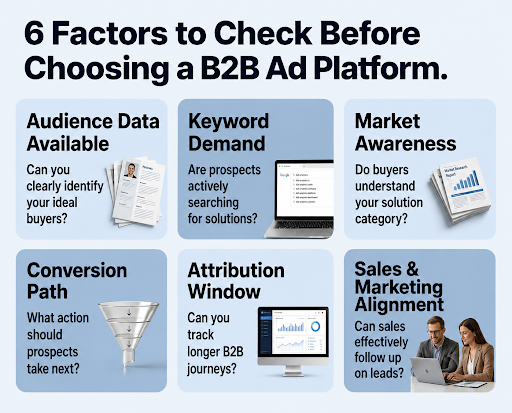
Before committing budget to LinkedIn Ads, Google Ads, or both, it helps to evaluate a few foundational factors first. Consider whether you have clear audience data on your ideal buyers, measurable keyword demand, and general market awareness of your solution category. Map out the conversion path prospects should follow, define your attribution window for tracking longer B2B journeys, and confirm sales and marketing are aligned on lead follow-up. These six checkpoints help clarify which platform or combination fits your strategy.
Turn B2B Advertising Into Growth
Choosing the right B2B advertising platform is only one part of building a stronger acquisition strategy. At Think Shaw, our SEO and paid advertising services help businesses improve search visibility, reach qualified audiences, and turn digital marketing efforts into measurable growth. When your goal is to attract the right prospects and build a stronger online presence, the right strategy starts with understanding where your customers are looking.
| Want to improve your search visibility and reach more qualified B2B prospects? Let’s discuss your goals. |
Frequently Asked Questions About LinkedIn Ads for B2B Brands
How long does it take to see results from LinkedIn Ads?
Most B2B campaigns need 30–90 days to generate meaningful data, especially for longer sales cycles where nurturing decision-makers happens gradually before conversion occurs.
What ad formats perform best for B2B on LinkedIn?
Sponsored Content, Message Ads, and Document Ads typically perform well for B2B, allowing brands to share case studies, whitepapers, or personalized outreach directly to prospects.
Is retargeting available on both platforms?
Yes. Google Ads offers remarketing based on site visitors and search behavior, while LinkedIn allows retargeting based on website visits, video views, or lead form interactions.
What industries see the best results from LinkedIn Ads?
Software, consulting, financial services, and enterprise technology companies often perform well, since these industries typically have longer sales cycles and clearly defined decision-maker roles.
How should B2B marketers measure LinkedIn advertising success?
Beyond clicks and impressions, marketers should track metrics such as qualified leads, conversion rates, opportunity creation, customer acquisition cost, and campaign-influenced revenue.