In industries where online information can directly influence a person’s health, financial security, or legal decisions, credibility is not optional; it is essential. Google classifies these as Your Money or Your Life (YMYL) websites and evaluates them using the principles of Experience, Expertise, Authoritativeness, and Trustworthiness (E-E-A-T). It plays a significant role in how search quality and content reliability are assessed, particularly for healthcare, finance, and legal brands. Websites that consistently publish accurate, expert-reviewed, and transparent content are better positioned to earn user confidence and maintain long-term search visibility.
Understanding what Google expects from YMYL websites is the first step toward building lasting authority in an increasingly competitive digital landscape. In this blog, we aim to explain E-E-A-T for medical websites, finance, and more, so let’s break in!
E-E-A-T for YMYL Sites at a GlanceE-E-A-T plays a vital role in establishing credibility for YMYL websites, particularly in healthcare, finance, and legal sectors where content accuracy directly impacts users. Demonstrating genuine experience, verified expertise, industry authority, and trustworthiness strengthens search performance and user confidence. Combining evidence-based content, transparent authorship, regular updates, structured data, and GEO-focused optimization helps brands remain competitive in both traditional Google Search and evolving AI-powered search experiences. |
Why E-E-A-T Matters More for YMYL Websites
Google holds Your Money or Your Life (YMYL) websites to a significantly higher standard because the information they publish can directly affect a person’s health, financial stability, legal rights, or overall well-being. Unlike entertainment or lifestyle content, inaccurate guidance on a medical condition, financial investment, or legal matter can lead to serious real-world consequences. As a result, Google places greater emphasis on Experience, Expertise, Authoritativeness, and Trustworthiness (E-E-A-T) when evaluating the quality of YMYL content.
For healthcare websites, Google expects content to be created or reviewed by qualified medical professionals and supported by evidence from reputable medical organizations, peer-reviewed studies, or established clinical guidelines. Inaccurate or misleading medical information can negatively impact patient decisions, which is why E-E-A-T for medical websites requires clear author credentials, transparent editorial processes, and regularly updated content. Similarly, finance websites must provide accurate, current, and verifiable information about topics such as investments, loans, taxes, insurance, and retirement planning.
The Core E-E-A-T Signals Healthcare, Finance & Legal Brands Must Demonstrate
Demonstrate Genuine Experience Through First-Hand Knowledge
Google values content created by individuals with direct, real-world experience, especially for YMYL topics. Healthcare E-E-A-T requires providers to share practical treatment insights; finance professionals can explain market scenarios based on experience, and legal experts can discuss common legal procedures without offering personal advice. Including original case studies, practical examples, expert interviews, and firsthand observations makes content more credible and useful. Experience demonstrates authenticity, helping users trust the information while strengthening overall content quality and search visibility.
Showcase Verified Expertise with Qualified Authors
For YMYL content, expertise is one of the strongest quality signals Google evaluates. Information that affects health, finances, or legal decisions should be created or reviewed by professionals who possess relevant education, certifications, licenses, or extensive industry experience.
Healthcare websites should clearly identify medical authors along with their qualifications, specialties, and professional affiliations. Medical articles should ideally undergo review by licensed physicians or healthcare specialists. Similarly, finance content should be written or reviewed by certified financial planners, accountants, economists, or investment professionals, while legal content should involve licensed attorneys or legal experts.
Author biography pages should include:
- Professional credentials and certifications
- Educational background
- Years of industry experience
- Areas of specialization
- Published research or professional contributions
- Links to professional profiles or associations
Clearly displaying author information on YMYL medical websites helps users verify the credibility of the information while reinforcing Google’s assessment of content quality.
Build Authoritativeness Through Industry Recognition
Authority is earned over time through consistent publication of accurate, high-quality content and recognition from reputable organizations. Google evaluates whether a website or author is regarded as a trusted source within its industry.
Healthcare, finance, and legal brands can strengthen authoritativeness by:
- Earning backlinks from respected government, educational, or industry websites
- Receiving mentions in reputable news publications
- Publishing original research, surveys, or whitepapers
- Speaking at industry conferences and professional events
- Collaborating with recognized experts and institutions
- Maintaining active memberships in accredited professional organizations
Strengthen Trustworthiness with Transparency and Accuracy
Trustworthiness is the foundation of E-E-A-T because users need confidence that the information is accurate, secure, and unbiased. Websites should maintain HTTPS security, publish clear privacy policies, provide accessible contact information, disclose editorial processes, and regularly update outdated content. Every factual claim should be supported by credible sources, while authors and reviewers should be clearly identified. Transparent business practices and consistently accurate information help build lasting user trust and demonstrate the reliability Google expects from YMYL websites.
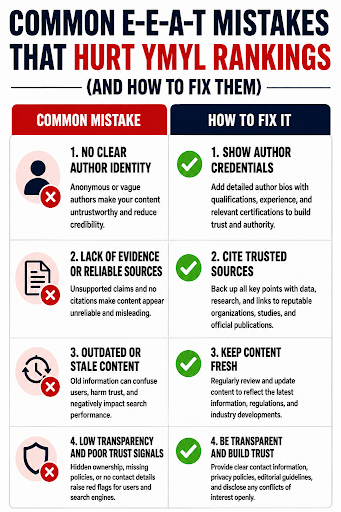
Common E-E-A-T Mistakes That Hurt YMYL Rankings (And How to Fix Them)
Even well-established healthcare, finance, and legal websites can lose search visibility if they overlook key E-E-A-T principles. Common issues such as missing author credentials, unsupported claims, outdated information, and weak trust signals can negatively impact both user confidence and Google’s quality evaluation. The infographic below highlights four of the most common E-E-A-T mistakes that affect YMYL websites, along with practical solutions to strengthen credibility, improve trust, and support long-term organic search performance.
How to Optimize YMYL Content for Google and Generative Search (GEO)
Here’s how to optimize YMYL content as per Google E-E-A-T guidelines:
Publish Evidence-Based Content Supported by Trusted Sources
Google prioritizes YMYL content that is accurate, verifiable, and supported by authoritative sources. Healthcare articles should reference peer-reviewed studies, recognized medical organizations, or official health agencies, while finance and legal content should cite government regulations, industry standards, and reputable institutions. Every factual claim should be backed by reliable evidence rather than opinions or unverified information. Using trustworthy references improves credibility, helps search engines validate content quality, and increases the likelihood of appearing in AI-generated search responses.
Structure Content for AI Readability and Search Visibility
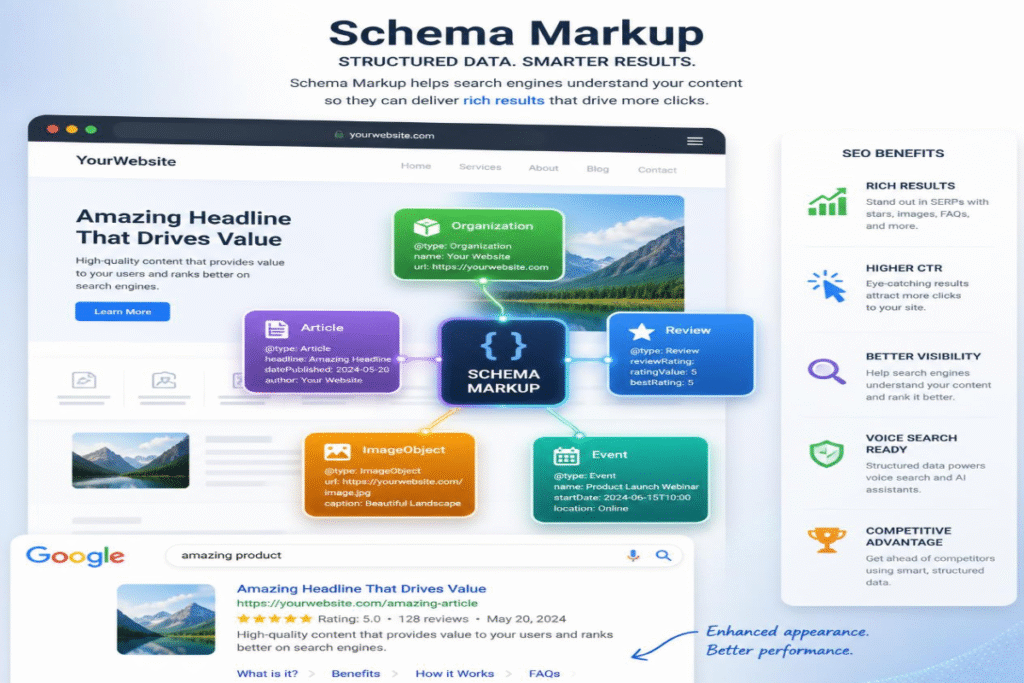
Generative search platforms prefer content that is easy to interpret and extract. Organize articles with descriptive headings, short paragraphs, bullet points, tables, and frequently asked questions that directly answer user intent. Implement structured data such as Article, FAQ, Organization, and Author schema to provide additional context for search engines. A clear content hierarchy improves readability for users while helping Google’s systems and AI-powered search experiences accurately understand, summarize, and surface important information from your website.
Keep Content Fresh with Regular Expert Reviews and Updates
Healthcare, finance, and legal information evolves frequently due to changing regulations, medical research, and industry developments. Regularly reviewing and updating content ensures users receive current, accurate guidance while reducing the risk of outdated information. Include publication dates, update timestamps, and expert review notes to demonstrate ongoing editorial oversight. Refreshing statistics, references, and recommendations strengthens E-E-A-T, signals content reliability to Google, and improves eligibility for both traditional search rankings and AI-generated search results.
Demonstrate Strong Entity Signals and Content Authority
Generative Engine Optimization (GEO) relies heavily on entity recognition and contextual authority. Clearly identify authors, organizations, services, locations, and relevant industry terminology throughout the content to help AI systems understand relationships between entities. Maintain consistent branding, comprehensive author profiles, and detailed About, Contact, and Editorial Policy pages. Publishing original research, expert opinions, and in-depth topical content further reinforces authority, increasing the likelihood that Google and AI search platforms recognize your website as a trusted source for YMYL information.
Conclusion
Meeting Google’s expectations for YMYL content requires more than technical SEO; it demands a long-term commitment to quality, accuracy, and user trust. As search continues to evolve with AI-powered experiences, brands that invest in credible, people-first content will be better positioned to maintain visibility and authority. If you’re looking to strengthen your website’s E-E-A-T strategy and sustainable organic growth, Think Shaw can help you build content that earns both search engine recognition and audience confidence.
Partner with us today to create authoritative, AI-ready content that earns Google’s trust, builds customer confidence, and drives measurable organic growth.
E-E-A-T for YMYL Sites FAQs
Can AI-generated content rank on YMYL websites?
Yes, but only if it is carefully fact-checked, reviewed by qualified experts, and enhanced with original insights. Unverified AI content alone is unlikely to meet YMYL quality expectations.
Does Google manually review every YMYL website?
No. Google’s automated ranking systems evaluate websites at scale, while Search Quality Raters assess sample results to help improve Google’s algorithms—not individual rankings.
Should every YMYL page include an author biography?
Including an author biography is highly recommended, especially for informational content. It helps users understand who created the content and supports credibility and transparency.
What types of schema markup benefit YMYL websites most?
Schema types such as Article, FAQ, Organization, Person, MedicalWebPage, and LegalService help search engines better understand content and improve its contextual relevance.
Does website performance affect YMYL search visibility?
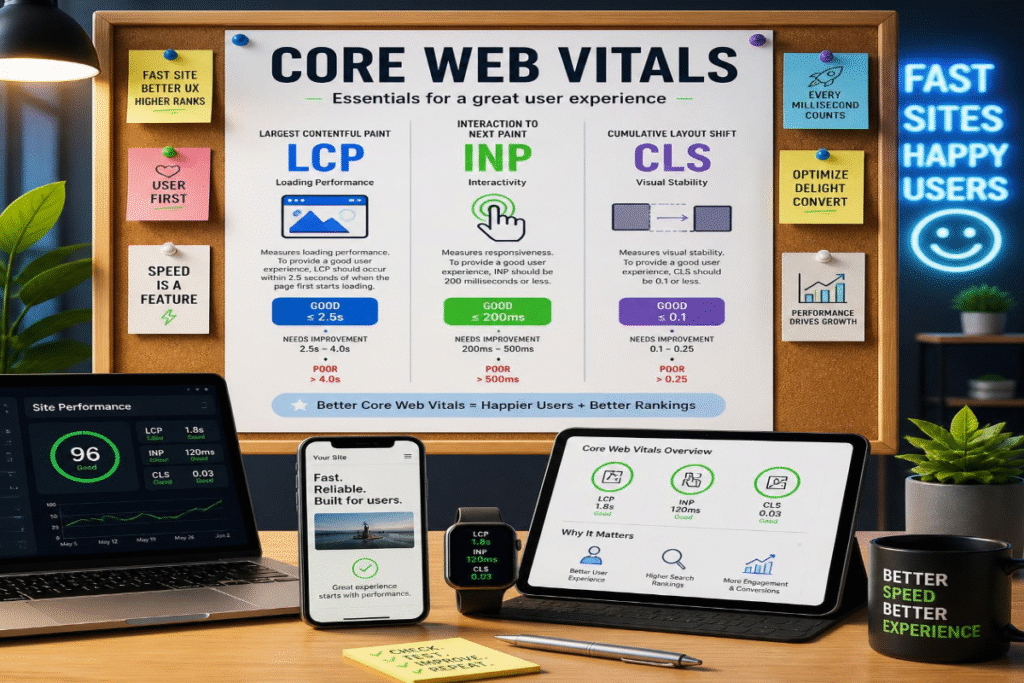
Yes. Fast loading speeds, mobile responsiveness, secure browsing, and a positive user experience contribute to overall website quality and user trust, indirectly supporting SEO performance.