You can spend time, money, and effort bringing visitors to your website, only to watch them leave without filling out a form, making a call, or taking the next step. Sound familiar? The problem is not always a lack of traffic. Sometimes, the website itself makes converting harder than it needs to be. Visitors may struggle to understand what you offer, find important information, navigate the page, or even identify what they should do next. That is where thoughtful web design becomes important. A conversion-focused approach considers how people actually use a website and what can help them move from interest to action.
In this guide, we’ll discuss how to turn more website traffic into genuine leads through smarter, user-focused design.
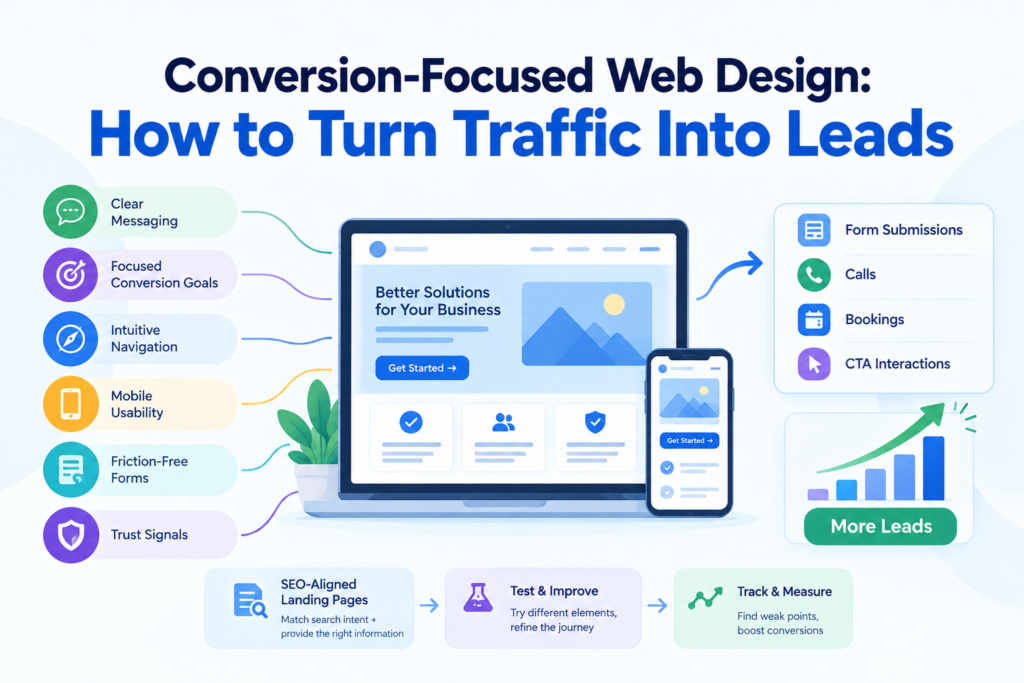
Conversion-Focused Web Design: Key TakeawaysConversion-focused web design turns website visits into meaningful actions by combining clear messaging, focused conversion goals, intuitive navigation, mobile usability, friction-free forms, and credible trust signals. Effective landing pages align content with search intent while providing the information visitors need to make decisions. Measuring form submissions, calls, bookings, and CTA interactions reveals weak points, while testing different design elements helps refine the user journey and improve lead generation over time. |
What Makes a Website Conversion-Focused?
A conversion-focused website is designed around specific user actions, such as submitting an enquiry, requesting a quote, booking a consultation, or making a call. Instead of simply presenting information, it connects that information to the visitor’s needs and decision-making process. Clear navigation, understandable messaging, relevant calls to action, and usable forms all help reduce friction along the journey. Usability research shows that when users get lost, encounter errors, or struggle to complete a task, they simply leave, making usability a core part of conversion performance.
Traffic, Engagement and Conversion Are Different Metrics
| Metric | What It Measures | What It Tells You |
| Traffic | Number of visitors reaching your website | Whether your website is attracting people |
| Engagemet | How visitors interact with pages and content | Whether the website is holding their attention |
| Conversion | Visitors completing a desired action | Whether your website is turning interest into leads |
Start With One Clear Conversion Goal
Every important page should have a defined primary conversion goal that matches its purpose. Too many competing calls to action can create decision friction and make the next step unclear. A focused action, supported by relevant content, gives visitors a straightforward path toward enquiring, booking, calling, or purchasing.
Key Web Design Elements That Turn Visitors Into Leads
A website needs more than attractive visuals to generate leads. Its design should answer visitors’ questions quickly and make the next step obvious.
Clear Value Proposition Above the Fold
The opening section should clearly explain what the business offers, who it helps, and why it matters, using simple, direct language. Visitors should grasp the full proposition immediately, without scrolling or searching through multiple sections for answers.
Strong Calls to Action
Use specific, action-oriented CTAs such as “Request a Quote” or “Book a Consultation” instead of vague phrases like “Click Here.” Place each CTA where it naturally supports the user’s journey, rather than overwhelming visitors with many competing actions at once.
Friction-Free Lead Forms
Forms should request only information needed at the initial stage. Fewer unnecessary fields, clear labels, logical layouts, and useful error messages can make completion easier. Research from the Baymard Institute has found that most sites can cut their form fields significantly without losing the information they actually need and that doing so consistently improves completion rates.
Trust Signals That Reduce Hesitation
Visitors are more likely to enquire when a website provides credible evidence. Reviews, testimonials, credentials, case studies, transparent contact details, and relevant guarantees can help establish trust when they are genuine and verifiable.
| A website that looks good but doesn’t guide visitors is just decoration; ours are built to work. |
How UX and Mobile Design Affect Lead Generation
A smooth user experience can make the difference between a visitor continuing toward an enquiry and abandoning the site. Good UX removes unnecessary friction at each stage of the journey.
Build a Simple, Intuitive User Journey
Use logical navigation, descriptive headings, and a clear content hierarchy so visitors can quickly locate services, contact details, pricing, or FAQs. Keep CTAs near relevant decision-making content and avoid unnecessary clicks, pop-ups, or confusing interactions that interrupt the path to enquiry.
Design for Mobile Visitors
Responsive layouts should adapt content to smaller screens while keeping text readable and buttons easy to tap. Forms should use clearly labelled fields, appropriate input types, and minimal typing. Test menus, CTAs, and enquiry forms across different devices to identify usability problems.
Improve Page Speed and Technical Experience
Optimise oversized images and unnecessary page elements that delay loading. Regularly check forms, links, images, and interactive features to ensure technical problems do not prevent visitors from completing an enquiry.
Use Landing Pages and Content to Match Search Intent
Landing pages and supporting content should satisfy the reason someone searched in the first place. This helps align SEO with the user journey and creates a more relevant path toward conversion.
- Match search intent: Identify whether visitors have informational, commercial, or transactional intent, then structure the page around the specific need behind their search.
- Answer key questions quickly: Provide concise, relevant information that helps visitors understand the service, product, process, or solution without unnecessary detail.
- Reduce uncertainty: Where appropriate, include useful details about pricing, processes, requirements, timelines, or what happens next.
- Create a clear next step: Once the visitor has the information needed to make a decision, provide a relevant CTA that naturally moves them toward enquiry or another desired action.
How to Measure and Improve Website Conversion Rates
Track form completion rates, click-to-call actions, bookings, and CTA clicks against the number of visitors reaching each page. Compare these figures by landing page and device to identify weak conversion points. If users reach a form but abandon it, test shorter forms or clearer fields. If a CTA receives few clicks, test its wording, placement, or surrounding content. Use the results to make evidence-based design changes.
What Happens to a Lead After Form Submission?
Once a prospect submits a form, the enquiry moves through a structured process that helps businesses manage it efficiently. The lead is recorded, its source identified, and key details categorised for better organisation. The enquiry is then assigned to the appropriate team member for follow-up. Finally, the outcome is documented, creating a clear record of what happened after initial contact and supporting better lead management.
Turning Clicks Into Customers
Turning website visitors into loyal customers takes more than good design; it demands strategy, clarity, and trust at every step. At Thinkshaw, we build conversion-focused websites, optimize user journeys, and craft SEO-driven content that transforms clicks into genuine business leads. From strong CTAs to friction-free forms, we help brands convert visibility into measurable, lasting growth.
| Great websites don’t wait for visitors to figure things out; they guide them straight to “yes.” |
Frequently Asked Questions About Conversion-Focused Web Design
Is a high bounce rate always a sign of poor conversion design?
Not necessarily. Bounce rate alone doesn’t reveal intent or outcome. It should be reviewed alongside time on page, scroll depth, and goal completions for accurate insight.
What’s a good average conversion rate for a business website?
Rates vary widely by industry, but most service-based websites see between 2% and 5% of visitors completing a desired action like a form or call.
Should every page on a website have its own conversion goal?
Not every page needs a hard conversion goal. Some pages exist to educate or build trust, guiding visitors toward pages designed specifically for enquiries or bookings.
What tools are commonly used to track website conversion behavior?
Heatmaps, session recordings, and analytics platforms help identify where visitors hesitate, click, or exit, offering insight beyond basic traffic numbers.
Is A/B testing necessary for improving conversions, or just helpful?
It’s not strictly necessary but highly valuable. A/B testing removes guesswork by showing which design or messaging choice actually performs better with real visitors.