It is well obvious that AI can generate product descriptions in seconds, but speed alone does not translate into search visibility. As search engines like Google continue prioritising helpful, original, and user-focused content, many of these descriptions fail because they are repetitive and lack the details shoppers need to make buying decisions. So, the solution is not stopping the use of AI, but instead using it within a structured workflow that has both automation and human expertise. Therefore, we have made this guide that helps store owners create AI product descriptions SEO-ready, unique, and built to support long-term organic rankings without sacrificing efficiency or content quality. Let’s begin!
At a Glance: How Ranking-Worthy AI Descriptions HappenAI-generated product descriptions can rank well in search results when they are built around buyer intent, enriched with first-hand product insights, and refined through human editing rather than published as raw AI output. The most effective workflow combines AI for speed with E-E-A-T principles, search intent optimisation, and structured data to create unique, helpful product pages that support long-term SEO performance. |
How Google Ranks Your AI Product Descriptions in 2026
Here are the five core signals Google uses to evaluate your product descriptions right now:
Helpfulness Is Now a Permanent Ranking Signal, Not a Periodic Check
Google reads your product page the same way a real customer would. It asks: Did this page answer what the person came looking for? Let’s say someone searches “best protein powder for beginners”, and your description only lists ingredients and weight, Google sees an unanswered question and sends that buyer to someone else instead.
E-E-A-T Now Applies Directly to Product Pages
When it comes to EEAT for product pages, the Experience, Expertise, Authoritativeness, and Trustworthiness now apply directly to what you write. Google wants to see that whoever wrote the description actually knows the product and not just its name and dimensions, but how it performs in real use.
Thin AI Content Gets Ignored, Not Penalised
Google does not flag AI content. Instead, it states that using generative AI to create content is acceptable, provided it adds value for users and complies with Search Essentials and spam policies rather than being used to generate large volumes of low-value content. So, if your description reads as if it could belong to any product in your category, such as the same structure, same vague claims, same generic tone, Google treats it as background noise. This is exactly why AI product descriptions SEO is not about using AI alone, but about creating buyer-focused content that adds genuine value. So, it just never shows generic pages to anyone.
Search Intent Matching at the Description Level
Every buyer query carries a specific intent, like “Best moisturiser for oily skin”, and “Neutrogena Hydro Boost moisturiser” are two different searches requiring two totally different descriptions. Google ranks the page that matches what the buyer actually meant, not just what they typed.
Structured Data Tells Google Exactly What Your Page Is About
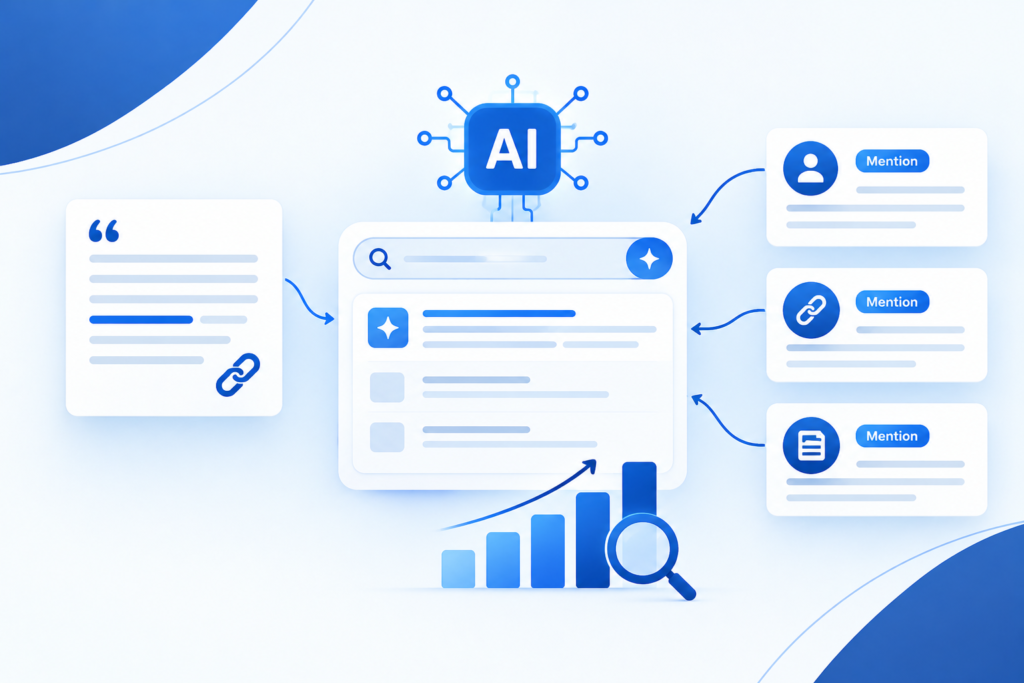
When you add schema markup to a product page, like price, availability, reviews, and FAQs, then you are essentially handing Google a labelled map of your content. Without it, Google has to guess what your page is about. With it, Google knows. That’s why the pages Google understands clearly are the ones it surfaces in AI Overviews, rich results, and voice search answers.
Strategies to Make Your AI Product Descriptions Actually Rank
Now, here are the strategies every store owner should follow as part of a sustainable AI content workflow:
Mine Your Buyers Before You Brief Your AI
Most store owners open an AI tool and type the product name. That is where the description goes wrong before it even starts. The right move is to read your own reviews, Q&A sections, and return reasons first because that is where buyers tell you exactly what they needed to know before purchasing.
For example:
- What most store owners prompt: “Write a product description for a blue yoga mat.”
- What you should prompt instead: “Write a product description for a 6mm non-slip yoga mat targeting beginners with knee pain, emphasising joint cushioning and grip on hardwood floors, in a warm and reassuring tone.”
The second prompt gives the AI something real to work with. The first permits it to write nothing.
Write for the Question, Not the Product
Remember, when it comes to AI copy for e-commerce, Google does not rank descriptions, but it ranks answers. Every buyer arrives at your product page with a question in their head. Your description’s job is to answer it before they leave.
For example:
- Generic description: “Premium stainless steel water bottle. Keeps drinks cold for 24 hours. BPA-free. Available in 3 colours.”
- Intent-matched description: “If you’re tired of reaching for a warm bottle mid-hike, this keeps your water cold for a full 24 hours, even in direct sun. No plastic taste, no leaks, no second-guessing.”
Same product. Same features. Completely different ranking potential, because one answers the question the buyer was already asking.
Add the Detail AI Will Never Know
After the AI generates your draft, read it once and ask: could this have been written by someone who has never touched this product? If the answer is yes, it is not ready. Go back in and add details that only come from actually knowing the product, how it feels, how it holds up, and what surprises buyers once they have it in their hands.
For example:
- AI draft line: “Durable construction ensures long-lasting performance.”
- After your edit: “The zips still run smoothly after a year of daily use, no snagging, no stuck pulls, no replacing after three months like most bags in this price range.”
That one line is what E-E-A-T looks like on a product page.
Match One Description to One Specific Search Query
Before you publish, type your target keyword into Google. Read the top three results. Ask yourself: what did none of them actually answer? Write your unique product descriptions around that gap. Make your primary keyword appear naturally within the first 40 words. Then write one sentence, just one, that directly answers the buyer’s most likely hesitation before clicking “add to cart.”
For example:
- What the top three results say: “Lightweight running shoes with superior cushioning and breathable mesh upper.”
- What none of them answer: Will these actually hold up if I run on roads, not tracks?
- Your one sentence: “Built for road runners, not just treadmills, the outsole handles pavement, gravel, and everything in between without wearing down after the first month.”
That one sentence is the gap. And the gap is exactly where rankings live.
Making a Product Page AI-Ready
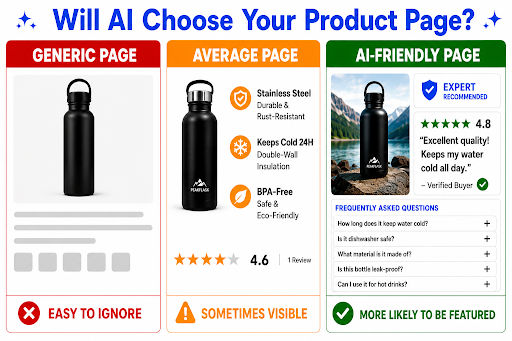
The AI-generated descriptions alone are no longer enough to stand out in search. As AI Overviews and zero-click experiences become more common, product pages need to combine helpful content and structured information to improve their visibility. The comparison below highlights which pages are more likely to be recognised.
Conclusion
Make sure you remember that the stores winning in 2026 are not the ones writing the most descriptions. They are the ones writing the right ones. Now, if you need help getting your e-commerce store to rank, from product descriptions to full-scale SEO strategy, look no further than Think Shaw. We are your trusted digital marketing agency that turns underperforming store pages into consistent traffic drivers.
Why not turn your product pages into ranking machines? Partner with Think Shaw today to make it happen!
FAQs- About AI Product Descriptions
Does AI-generated product description length affect ranking directly?
Not directly. A 60-word description that answers the buyer’s core question outperforms a 300-word description that says nothing specific.
What is the biggest mistake store owners make when using AI for product descriptions?
Publishing the first draft without editing. AI gives you a starting point. The ranking comes from what you add after, like the specificity, buyer language, and real product knowledge.
Which AI tool is best for writing e-commerce product descriptions?
No single tool wins. Successful AI product descriptions SEO depends far more on prompt quality, buyer-focused inputs, and the human editing layer applied after that.
Do AI product descriptions perform differently across product categories like fashion, electronics, or home goods?
Yes. Categories with high buyer hesitation, like electronics, need more specific details and comparison-driven language to rank and convert effectively.
Can I use AI to rewrite existing product descriptions that have stopped ranking?
Yes, but do not just paste the product name and hit generate. Give the AI your old description, a few recent customer reviews, and the exact search term you want to rank for. Without that context, it will write something just as what you already have.